
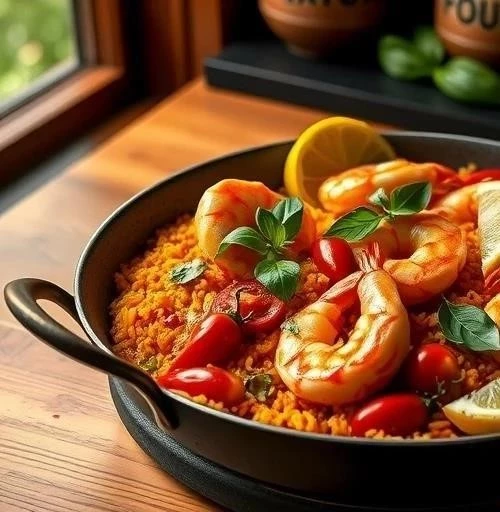
This lively paella brings together the comforting Spanish idea of rice cooked in one pan and the bright, spicy flavors of Thai-inspired tomato sauce. Sweet shrimp, fragrant rice, lime, ginger, and a little chile make a colorful dinner that feels special without requiring complicated techniques. It is not a traditional Spanish paella; it is a home-cook’s fusion dish, designed to balance savory, tangy, aromatic, and gently hot flavors.
Why this combination works
Tomatoes give the rice a rich, lightly sweet base, while garlic, ginger, and curry paste add depth and warmth. Shrimp cook quickly and take on the sauce’s flavor, so they are added near the end rather than simmered for the entire cooking time. Lime and fresh herbs brighten the finished dish. Adjust the chile and curry paste to suit your preference, and taste as you go: Thai curry pastes vary considerably in heat and saltiness.
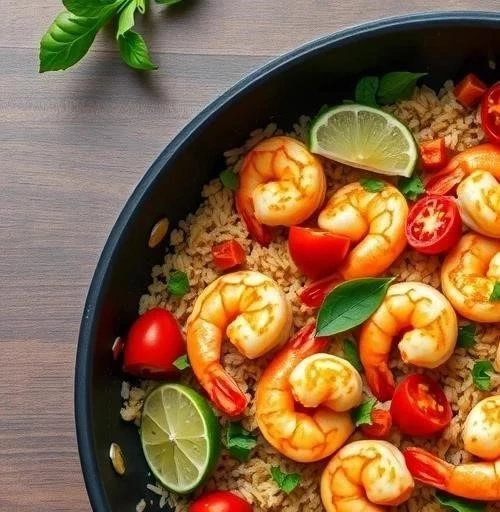
Ingredients
- 300 g (about 10 oz) raw shrimp, peeled and deveined
- 250 g (1¼ cups) short- or medium-grain rice, preferably paella rice
- 1 small onion, finely chopped
- 1 red bell pepper, diced
- 2 garlic cloves, finely chopped
- 1 teaspoon finely grated fresh ginger
- 1–2 tablespoons neutral cooking oil
- 1 tablespoon Thai red curry paste, or less to taste
- 200 g (about 7 oz) crushed tomatoes
- 600 ml (2½ cups) warm seafood or vegetable stock
- 1 teaspoon paprika
- 1 tablespoon fish sauce, or soy sauce for a different flavor
- 1 teaspoon brown sugar, optional
- ½ cup frozen peas, thawed
- 1 lime, cut into wedges
- Fresh cilantro or Thai basil, to serve
- Salt and black pepper
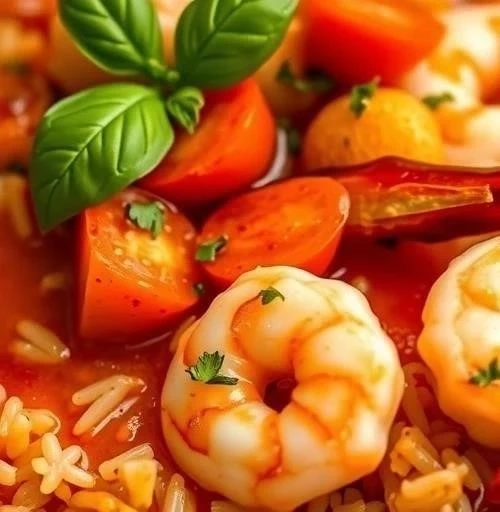
Method
- Prepare the shrimp. If frozen, thaw them completely and pat dry. Season lightly with salt, pepper, and paprika. Keep them chilled while you begin the rice. For extra flavor, you may briefly sear them in the paella pan for about a minute per side, then transfer them to a plate. They will finish cooking later.
- Build the aromatic base. Heat the oil in a wide, heavy pan over medium heat. Add the onion and bell pepper and cook for 4–5 minutes, stirring, until softened. Stir in the garlic, ginger, and curry paste; cook for about 30 seconds, just until fragrant. Avoid browning the garlic.
- Add tomato and rice. Stir in the crushed tomatoes, fish sauce, and brown sugar, if using. Let the mixture bubble gently for 2–3 minutes. Add the rice and paprika, stirring until the grains are coated. This brief toasting helps the rice absorb the sauce evenly.
- Simmer without stirring. Pour in the warm stock and spread the rice into an even layer. Bring the pan to a gentle boil, then lower the heat. Cook uncovered for 15–18 minutes, or according to the rice package, without stirring. Rotate the pan occasionally if your burner heats unevenly. If the surface becomes dry before the rice is tender, add a small splash of hot stock around the edge.
- Finish with shrimp and peas. When the rice is nearly tender and most of the liquid has been absorbed, arrange the shrimp over the top and scatter in the peas. Cover loosely and cook for 4–6 minutes, until the shrimp are opaque and just curled. Avoid overcooking, which can make them tough.
- Rest and serve. Turn off the heat and leave the paella to rest, covered, for 5 minutes. Taste and adjust the salt, pepper, or lime. Finish with chopped cilantro or Thai basil and serve with lime wedges.
Helpful tips
A broad pan gives the rice a shallow, even layer and helps moisture evaporate. If you do not have a paella pan, use your widest sturdy skillet. Choose rice that holds its shape; very soft, quick-cooking rice can become mushy. Keep the heat gentle once the stock is added, and resist the urge to stir: a settled layer cooks more evenly and may develop a delicious toasted base. If that base begins to smell burnt, lower the heat immediately.
For a milder dish, start with one teaspoon of curry paste and offer extra chile at the table. For more Thai character, add a little lime zest or a few thin slices of lemongrass to the stock, removing them before serving. A handful of cherry tomatoes can replace some of the crushed tomatoes, while sliced mushrooms or green beans can join the vegetables. These additions should not crowd the pan; the rice still needs room to cook evenly.
Serving and storage
Serve the paella straight from the pan with a crisp green salad or simple steamed vegetables. The lime is important: its acidity cuts through the tomato and makes the seafood taste vivid. Leftovers can be refrigerated in a covered container for up to two days. Reheat gently with a spoonful of water or stock until steaming hot. Shrimp are best freshly cooked, so avoid repeated reheating.
This recipe is flexible, but its central rule is simple: season the tomato base thoughtfully, cook the rice gently, and add the shrimp only when the grains are almost ready. The result is a warming one-pan meal with tender seafood, savory tomato rice, and a fragrant Thai-inspired finish.
9 Comments. Оставить новый
I like that the recipe offers options for the fish sauce and gives room to adjust the spice. The mix of peas, pepper, shrimp, and herbs sounds especially appealing.
The combination of ginger, curry paste, tomato, and lime sounds delicious. I appreciate the reminder to adjust the curry paste since different brands can vary so much in heat and saltiness.
The sweet shrimp, tomato-rich rice, and fresh lime sound like a delicious combination. I’d be tempted to serve it with extra cilantro and lime wedges.
The advice to pat the shrimp dry and avoid cooking them for too long is helpful. This recipe sounds like it balances comfort and fresh, lively flavors nicely.
This sounds like a fun, colorful dinner. The clear note that it is a fusion dish rather than traditional paella helps set expectations, and the ingredient list feels approachable.
I like the explanation of how the Thai-inspired flavors complement the paella-style rice. Adding the shrimp near the end sounds like a good way to keep it tender.
I’m intrigued by the use of Thai red curry paste in a rice dish like this. Lime and fresh herbs should make a lovely bright finish.
A creative twist on a one-pan rice dinner. I’d use vegetable stock and soy sauce for a version without seafood, and the flavor combination still sounds like it would work well.
This recipe has a thoughtful explanation of why each ingredient is included. The warm stock and wide pan tips make the cooking process sound manageable.