
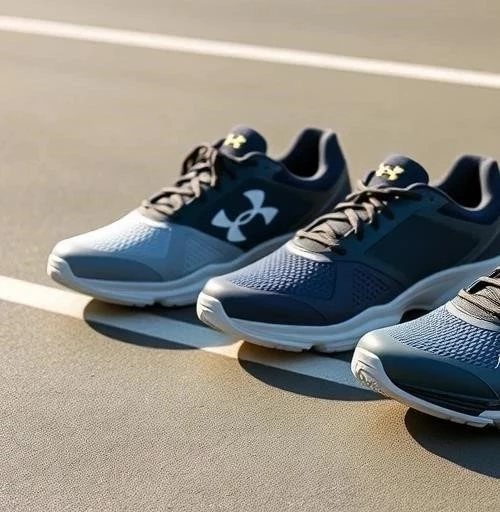
Under Armour tennis shoes: a pro-level lineup where every model is a new chess move, and player reviews redraw the court’s map. —bold new play!
The Match-Tested Formula: Cushioning for Tennis, Court-Surface Grip, a Durable Outsole, Lateral Foot Support, Stability During Sudden Moves, and Ankle Lockdown
A pro rally is a physics test disguised as theater. Under Armour tennis shoes must cushion each landing, grip the court, and answer the next cut without hesitation. Responsive cushioning softens impact yet keeps the foot connected to every pivot; a durable outsole turns abrasion into proof of purpose. Engineered lateral support braces the edge on hard plants, while a secure heel-and-ankle lockdown keeps sudden changes from becoming little earthquakes. Think of the shoe as a tiny launch platform: cushioning absorbs the landing, traction resists the skid, and the frame steadies the body as direction snaps sideways. In elite play, that calm under pressure is the hidden technology: move, brake, rise, repeat with every sudden pivot.
Surface Specialists: Tennis Shoes for Hard Courts, Clay-Court Models, and the Right Footwear for Every Tennis Court
Think of the court as a changing planet: hard court rewards a flatter, tougher tread that can take repeated abrasion, while clay asks the outsole to read loose grains like a map. Under Armour’s pro-court choices should match that terrain, not merely look fast. On hard courts, prioritize a durable, non-marking pattern built for frequent stops and long baseline exchanges. On clay, a herringbone layout helps shed dust and preserve a predictable slide, then bite when the point turns. Before choosing, check the model’s stated surface; a tread designed for one court may feel clumsy on another. Match shoe to venue, and every change of ends becomes a tactical reset rather than a gamble. Every surface has a signature of its own.
The Player’s Fit: Men’s and Women’s Tennis Shoes, a Breathable Upper, Lightweight Sports Shoes, and Comfort Throughout the Match
An elite fit should feel like a tailored instrument, not a uniform. Under Armour’s men’s and women’s tennis shoes give players distinct fit options, but the final judge is your own foot: try them on with match socks, check toe room, and make sure the heel sits comfortably. A breathable upper lets heat escape as rallies lengthen, while lightweight construction helps each step feel less like a lift and more like a quiet invitation. Seek even pressure, no pinching, and a fit that stays pleasant after a full warm-up. The best pair disappears from thought; your attention stays on the ball, not on hot spots or fussy seams. Comfort is not decoration—it is the calm rhythm beneath a long match. Fit should feel like natural motion.
The Final Rally: How to Choose Tennis Shoes and Find the Best Under Armour Model for a Professional Player
For a pro, the best Under Armour model is not a trophy; it is a choice shaped by evidence. Begin with your playing style, training demands, and competition calendar; these define the brief. Compare current models by verified features, construction, availability, and price, not by colorway alone. Professional reviews are useful clues, never commandments: a champion’s setup may suit a different game. Shortlist two or three, test them in practice, and note which model lets your tactics feel natural. Check the latest specifications before buying; names and editions can change between seasons. Ignore launch-day noise: the right choice earns trust over months, not minutes. Trust your notes; let your own strategy decide today!
9 Comments. Оставить новый
I enjoyed how the article connects cushioning, grip, and stability instead of treating them as isolated perks. The “tiny launch platform” image sticks with me.
This guide makes traction sound less like a spec-sheet number and more like a conversation between shoe and court. That’s a refreshing angle.
There’s a nice rhythm to the writing: quick pivots, clear explanations, and memorable metaphors. It reads like a short tactical briefing for your feet.
The surface-by-surface advice is practical without losing its imagination. The reminder to check a model’s intended court could save a lot of frustrated sliding.
The physics-as-theater opening is a clever way to make shoe features feel alive. It turns technical details into something you can almost feel underfoot.
A lively, useful overview that gives technical features a sense of purpose. The court-as-planet metaphor is unusual in the best way.
The “changing planet” image gives court surfaces real character. I’d love to see the same vivid approach applied to how players choose between models.
The article makes equipment choices feel personal and strategic, not merely fashionable. I’d welcome a follow-up comparing specific models for different playing styles.
The writing captures the stop-start drama of tennis while keeping the advice grounded. It leaves me thinking about how much confidence begins at the outsole.