
Correction: the title’s “самостоятельный” should read “Independent” in English.
At first glance, Las Coloradas looks like a place invented by a cheerful camera filter: shallow pools glowing rose-pink beneath an enormous Yucatán sky. But the color is only the opening scene. Come independently, and you can notice the salt crust on the wind, the geometric edges of working ponds, the birds stitching the horizon, and the small coastal town that exists beyond the famous photograph.
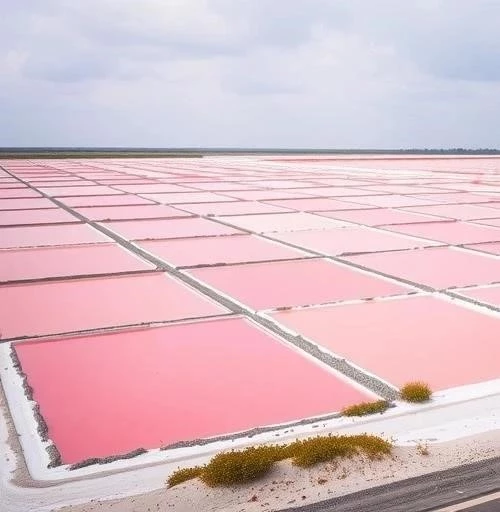
Las Coloradas is a settlement and salt-producing landscape on the northern coast of Mexico’s Yucatán Peninsula, close to the fishing town of Río Lagartos and the Río Lagartos Biosphere Reserve. It is not a wild swimming beach or an all-day attraction park. The vivid ponds are part of an industrial salt operation, and access to particular areas can depend on local rules and conditions. Treat the visit as a meeting with a living workplace, not a backdrop that belongs to you.
Why are the ponds pink?
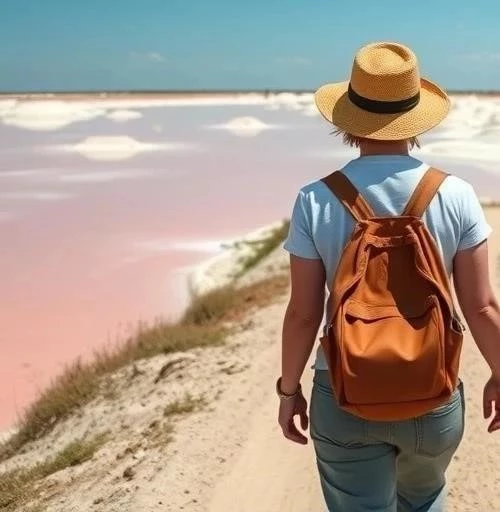
The color comes from microscopic life, including salt-loving algae and microorganisms, in highly saline water. Sunlight, water depth, salinity, weather, and the season all affect what your eyes see. One pond may look coral, another dusty orange, and another almost ordinary. A cloudy afternoon can soften the spectacle; strong sun can make the color flare. There is no switch to turn on for visitors—and no guarantee that every famous shade will appear on schedule.
That uncertainty is part of the appeal. Instead of hunting for one perfect pink, watch how color changes along the water’s edge. Look for salt crystals, wind patterns, and the contrast between the ponds and the pale, flat landscape. The place becomes less like a screensaver and more like a strange, practical collaboration between nature and human labor.
Getting there without turning it into a mission
Las Coloradas is remote by Yucatán standards. Independent travelers commonly approach from Valladolid, Mérida, or the coast, often connecting through Tizimín or Río Lagartos. Public transport can involve infrequent services and careful timing; check current schedules locally rather than relying on an old online timetable. A rental car offers flexibility, but the journey is long, and fuel, daylight, and return plans deserve attention. A taxi or locally arranged ride may work for the final leg, but agree on the price and pickup time before setting off.
Río Lagartos makes a useful base if you want more than a quick stop. It has a small-town rhythm, simple places to eat, and access to boat trips through the reserve. Staying overnight lets you arrive early, avoid squeezing the area between long drives, and experience the coast when the tour groups have thinned. If you are making a day trip, check opening arrangements, transport back, and the latest access rules before leaving your starting point.
What to do besides take the photograph
- Ask about a local visit. Some parts of the saltworks may be accessible only with an authorized guide or under changing site rules. Follow instructions, stay on permitted routes, and never cross a barrier for a better angle.
- Take a boat in the reserve. From Río Lagartos, a licensed local guide can help you look for birds and other wildlife in the mangroves. Sightings vary; the point is to travel quietly through the habitat, not demand a flamingo on cue.
- Notice the work. Salt is not a souvenir prop here. Ask respectfully how the ponds are used and what visitors are allowed to see. A short conversation can add more context than another dozen nearly identical pictures.
- Leave space in the day. Sit down for a meal, walk around town where it is appropriate, and let the landscape be quiet. Remote places often reveal themselves between planned activities.
Small choices that make a better visit
Bring drinking water, sun protection, a hat, and shoes suitable for dusty or uneven ground. Shade can be scarce, and the coast can feel intensely bright even when the air is breezy. Carry cash as a backup, but confirm fees and payment options rather than assuming every service works the same way. A charged phone is useful; mobile reception and transport availability should not be taken for granted.
Do not enter the ponds, touch the water, collect salt, or disturb birds. Besides respecting workers and wildlife, staying out protects a fragile environment and keeps you safe around unfamiliar industrial infrastructure. Ask before photographing people, vehicles, or work areas. Drones may be restricted; check first. Take your rubbish away, including small items that are easy to lose in the wind.
A day shaped by weather, not a filter
Start early if you can. Morning light is often gentler, temperatures are kinder, and the journey feels less rushed. Keep your expectations flexible: clouds, rain, maintenance, or local access decisions can change the experience. If the ponds are muted, the trip has not failed. Look toward the reserve, listen to the wind, and notice the salt’s pale geometry against the sky.
Las Coloradas is most rewarding when you resist treating it as a pink checkbox. It is a working landscape at the edge of a remarkable coastal ecosystem, connected to a town and to the people who live and work there. Come curious, ask before you enter, and leave the place as you found it. The photograph may be bright; the memory worth keeping is more layered: pink water, white salt, bird calls, warm dust, and the feeling of having seen a corner of Mexico that did not arrange itself for your camera.
5 Comments. Оставить новый
I arrived expecting a guide to pink water and left thinking about wind, salt, and the quiet geometry of labor. The article makes uncertainty part of the scenery, which is a lovely antidote to checklist travel.
A refreshing travel piece that lets the landscape remain complicated. The ponds are vivid, but so are the boundaries around them; that balance makes the destination feel real rather than staged for a feed.
This piece gives the pink ponds something a photograph can’t: context. I especially like the reminder that the color is a guest, not a guaranteed performance. It turns the visit from a hunt for a perfect picture into a chance to notice a working landscape.
The strongest detail here is the idea of meeting a workplace rather than claiming a backdrop. That small shift in attitude changes the whole journey—and feels like advice worth packing alongside sunscreen.
This reads like an invitation to lower the camera for a moment and let the coast speak in its own odd colors. Practical, respectful, and quietly imaginative—a useful map for the eyes as much as for the road.