
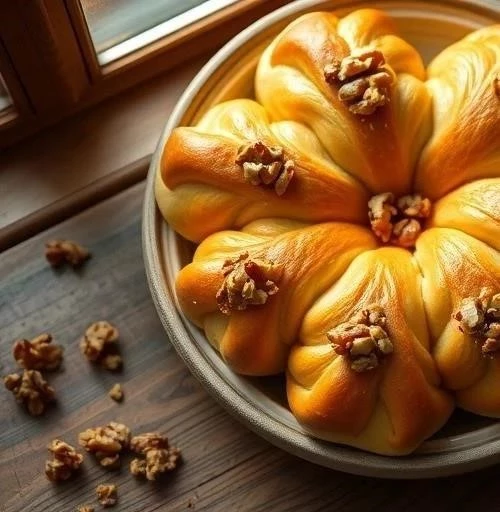
Walnut buns are a familiar part of traditional baking, bringing a gentle touch to home tables and preserving a timeless place in family food culture;
Ingredients for Enriched Yeast Dough and Walnut Filling: Wheat Flour, Milk, Butter, Eggs, Dry or Fresh Yeast, Walnuts, Sugar, Cinnamon, and Vanilla Sugar
An ingredient list for traditional walnut buns balances enriched yeast dough with a fragrant filling. Use measured wheat flour, milk, softened butter, and chicken eggs for the dough; choose dry yeast or fresh yeast according to the package guidance. Walnuts provide the main texture, while sugar, cinnamon, and vanilla sugar add measured sweetness and aroma. For a walnut filling, finely chopped walnuts may be combined with sugar and a little cinnamon; a separate sugar filling can use sugar, cinnamon, and butter. Keep the ingredient proportions consistent with the selected recipe, since flour absorption and nut size vary. This neutral ingredient overview suits a classic home-baking recipe and can accompany a photo recipe, with each component listed before any cooking begins.
Dough Preparation: Making the Sponge, Kneading the Dough, and Allowing It to Proof
Begin with the sponge: combine warm milk, yeast, and a portion of wheat flour in a bowl, then stir until smooth. Cover it and leave it in a moderately warm place until bubbles appear and the mixture looks lively. Add the remaining flour, eggs, softened butter, sugar, and vanilla sugar gradually, mixing to form a soft, even dough. Knead patiently by hand or with a mixer until the enriched yeast dough becomes elastic and no longer sticks readily. If it feels firm, add milk a teaspoon at a time; if sticky, dust lightly with flour rather than adding a large amount at once. Place it in a lightly greased bowl, cover, and allow the dough to proof until doubled in volume; timing depends on room warmth and yeast activity. Keep it covered and let it rise up free from drafts.
Shaping the Buns with Walnut or Sugar Filling
Turn the risen dough onto a floured surface and divide it into equal portions. Shape each portion into a ball, cover, then roll it into a small rectangle. For walnut buns, spread a thin layer of softened butter over the surface and distribute finely chopped walnuts mixed with sugar and cinnamon, leaving a narrow border clear. For a sugar filling, use butter with sugar and, if desired, a little cinnamon instead. Roll each piece into a snug log, pinch the seam closed, and fold it lengthwise. Cut through the fold, leaving one end joined, then open the cut sides outward to form a simple heart or twist. Alternatively, coil the filled strip into a spiral and tuck its end underneath. Arrange the shapes with space between them, keeping the filling inside and the edges sealed. Handle gently so the dough retains its shape.
Oven Baking: Achieving a Golden Crust and Presenting the Sweet Buns as Home Baking with a Photo Recipe
Preheat the oven to 180°C and place the shaped buns on a lined baking sheet, leaving enough room for expansion. Bake until the tops are evenly golden and the centers feel set, checking near the end because ovens can differ. If the surface browns too quickly, loosely cover the tray with foil while the buns finish baking. Transfer them carefully to a rack and let them cool before serving, so the crumb settles and the filling stays in place. For a photo recipe, show the baked buns on a plain plate in natural light, with one bun split to display its interior. A brief caption can note the bake time and serving temperature, keeping the presentation clear and practical.




9 Comments. Оставить новый
The dough preparation section presents the stages in a logical order, from making the sponge to allowing the dough to proof.
The ingredient overview covers both the enriched dough and the walnut filling without making the proportions seem universal.
The article gives a clear overview of the ingredients used for traditional walnut buns and explains their roles in the dough and filling.
The instructions to cover the dough and keep it away from drafts provide practical details for the rising stage.
The article notes that proofing time can vary with room temperature and yeast activity, which is helpful context for home baking.
The advice to adjust milk or flour gradually offers a measured approach to handling changes in dough texture.
The ingredient and dough sections offer a useful foundation for preparing walnut buns while acknowledging that ingredients can vary.
The article describes a traditional baking method in a straightforward way and makes the preparation steps easy to follow.
The distinction between dry and fresh yeast is useful, and the note to follow package guidance keeps the instructions practical.