
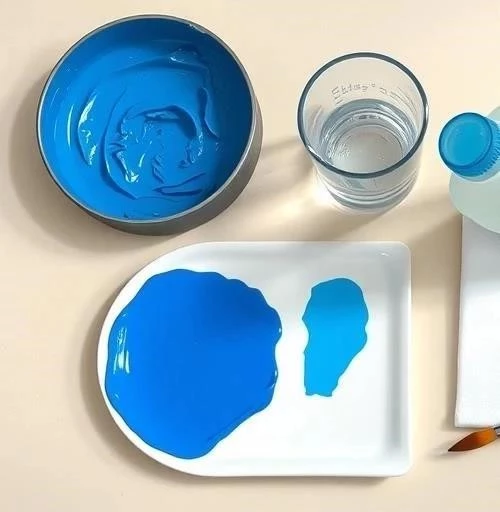
Acrylic paint is a pocket-sized weather system: it arrives thick, moves with water, and dries into a durable plastic-like film․ The right thinner can turn a stiff brushstroke into a transparent wash—or make paint so weak that it flakes away․ The trick is choosing what to add for the effect you want, not simply pouring until the paint behaves․
Water: the simplest answer
For ordinary brush painting, start with clean water․ Add a few drops to a small puddle of paint on your palette, mix, and test the result on scrap paper or canvas․ Water lowers viscosity and makes acrylic easier to spread․ It can also create translucent layers, much like watercolor, though acrylic dries into a water-resistant film․
Use water sparingly for work that needs to last․ Too much can dilute the binder—the ingredient that holds pigment to the surface—so the dry paint may look patchy, powdery, or poorly attached․ There is no universal safe ratio: formulas differ, and the surface matters․ Follow the paint maker’s guidance, especially for large or important pieces․ When you want a very fluid wash without sacrificing strength, choose a purpose-made fluid medium instead․
When a medium is the better tool
- Acrylic glazing medium thins paint while helping it stay transparent and even․ Build color in several thin layers, letting each dry before adding the next․
- Flow improver helps paint glide and settle into smooth marks․ It is concentrated, so use it as directed—often diluted first—rather than tipping a generous splash into the pot․
- Airbrush thinner or reducer is designed for spraying․ Use one compatible with your paint brand, and check the equipment instructions; ordinary water may cause sputtering or uneven coverage․
- Retarder slows drying, giving you more time to blend․ It is not simply a thinner, and too much can leave a film slow to cure or tacky․
- Pouring medium changes flow for fluid-art techniques and helps control the finished film․ It is not a shortcut for every brush-painted surface․
What not to pour in
Acrylic paint is water-based, so turpentine, mineral spirits, and other oil-paint solvents are not suitable thinners․ They can spoil the mixture, damage a surface, or create avoidable fumes․ Household cleaners, alcohol, and random craft liquids are equally poor experiments: they may destabilize the paint or interfere with adhesion․ If you need a specific effect, use a product labeled for acrylics․
A tiny test saves a big canvas
- Put a little paint on a palette; keep the original container uncontaminated․
- Add water or medium gradually, mixing thoroughly after each addition․
- Brush a test swatch onto the same kind of surface you plan to paint․
- Let it dry completely․ Check its color, feel, coverage, and adhesion before committing․
Choose by the finish you want
For easier brushing, try a little water․ For transparent, durable color, reach for glazing medium․ For spraying, choose a compatible airbrush reducer; for extra blending time, use retarder carefully․ Keep additions modest, work in a ventilated space, and clean tools before paint dries․ Think of the palette as a mixing desk: water changes the volume, mediums change the instrument․ A few measured drops can make acrylic sing; a flood can silence the binder that holds the song together․
2 Comments. Оставить новый
This guide treats thinning like a negotiation rather than a rescue mission: water asks the paint to loosen up, while mediums help preserve its promises. I especially like the practical advice to test on scrap first—every palette deserves a tiny rehearsal before opening night.
Acrylic paint has a surprisingly delicate social life: add too much water and its binder may stop holding the party together. The clear distinction between thinning, slowing, and improving flow makes this useful for artists who want to experiment without turning a canvas into a chemistry gamble.