
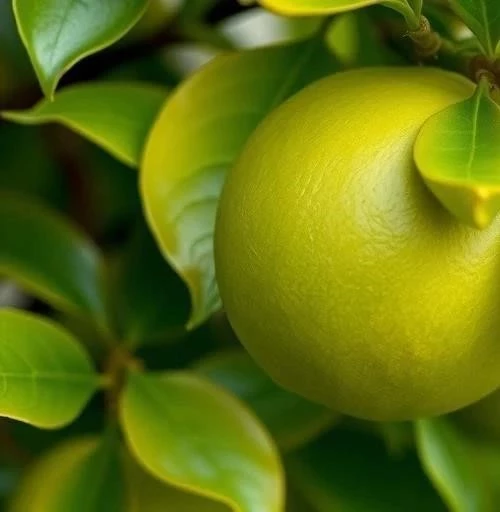
A green orange is usually called simply a green orange. The phrase does not identify one single species or a special botanical category. It describes an orange whose peel is green, and that appearance can have two different explanations: the fruit may be unripe, or it may be fully ripe while still retaining green pigment. The color alone is therefore not a dependable test of whether an orange is ready to eat.
Why can a ripe orange be green?
An orange’s peel contains chlorophyll, the pigment that makes leaves green. As many citrus fruits mature, chlorophyll breaks down and orange-colored pigments become visible. This change is strongly affected by temperature. In regions with warm days and warm nights, the peel may keep much of its chlorophyll even when the fruit inside is mature. In cooler conditions, the color change is often more pronounced.
Some oranges can also turn green again after coloring. This process, called regreening, occurs when warmth encourages chlorophyll to develop in the peel. It does not necessarily mean the fruit has become unripe or unsafe. Thus, a green rind is evidence of the fruit’s appearance, not proof of its taste, maturity, or quality.
Green, unripe, or a different citrus?
An unripe orange is often firm, strongly acidic, and less sweet than a mature one. But a ripe orange with a green peel may still be juicy and sweet. To judge it, consider its aroma, weight, firmness, and taste rather than relying only on color. A fruit that feels heavy for its size and smells fresh may contain plenty of juice, although tasting is the clearest way to assess sweetness.
It is also easy to confuse a green orange with a lime, pomelo, or other citrus fruit. These are not automatically oranges just because they have a similar shape. Some regional citrus varieties are marketed with names meaning “green orange”; for example, Vietnamese cam sành is known for its green, often rough peel. That is a variety-specific name, not the general name for every orange with green skin.
So what should you call it?
Unless the variety is known, “green-skinned orange” is the clearest description. If you know the named cultivar or local market name, use that instead. Calling every such fruit “unripe” would be misleading, because climate and variety can preserve green color even after the fruit has matured. Conversely, green color alone cannot establish that an orange is ripe.
In short: a green orange is generally still an orange, not a separate fruit with one universal name. It may be unripe, or it may be a mature orange whose peel remains green. Check the variety and the fruit itself before drawing a conclusion.

1 Comment. Оставить новый
This is a useful explanation because it separates peel color from ripeness instead of treating green as automatic proof that an orange is unripe. The discussion of temperature and regreening helps clarify why appearance can vary, while the practical advice to consider aroma, weight, and taste gives readers better ways to assess fruit. The distinction between green-peel oranges and other citrus is also helpful.