
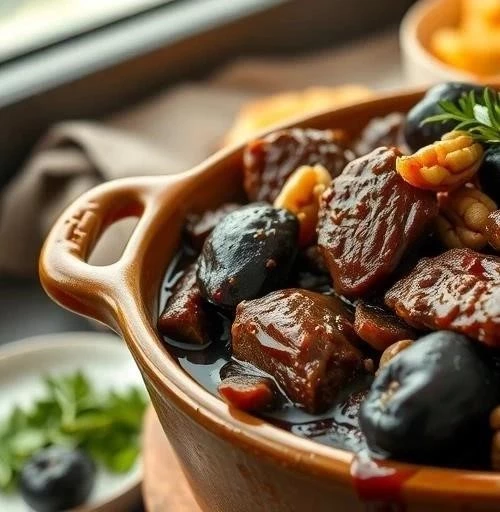
Oven heat keeps beef tender; prunes add sweetness for a festive feast.
Introduce beef with prunes as a Georgian-inspired baked beef dish: slow oven cooking makes the meat tender and juicy, while pitted prunes add sweetness and create an aromatic festive main course.
Georgian-inspired beef with prunes earns its place in the oven because slow, gentle heat gives the meat time to become tender and juicy without rushing the result. Pitted prunes soften as they bake, lending a mellow sweetness that complements the beef rather than overpowering it. Together, these qualities make an aromatic comforting centerpiece, the oven’s steady warmth is what makes this dish dependable.
Ingredients and Their Role in the Flavor
Spices, herbs, wine, and prunes balance richness with sweet depth together.
Explain how Georgian cuisine’s seasonings—khmeli suneli, cilantro, and garlic—build depth; red wine and tomato paste add richness, while onion and vegetables balance the sweetness of the prunes.
Khmeli suneli gives Georgian cuisine its warm, layered character, while cilantro adds a fresh lift and garlic a savory edge. Red wine contributes depth, and tomato paste brings rounded richness; together they make the flavor fuller. Onion and vegetables provide gentle savoriness and balance the prunes’ sweetness, so no single note dominates. This balance lets each one add depth without masking other notes.
Prepare the Beef and Marinade
Marinate beef evenly so flavor reaches each cut for a balanced result.
Describe how to choose beef, cut it evenly, and make a marinade for beef with red wine, Georgian spices, garlic, and onion; argue that marinating helps flavor the meat throughout.
Choose marbled beef with a little connective tissue, since it stays flavorful as it marinates. Cut it into evenly sized pieces so every portion meets the marinade equally. Combine red wine, Georgian spices, minced garlic, and finely chopped onion, then coat the beef thoroughly. Give it time to rest in the mixture: this allows seasoning to reach beyond the surface, making each bite more consistent and savory;
Bake or Braise for Tender, Aromatic Meat
Slow covered oven heat braises beef gently, keeping it tender and aromatic.
Set out the recipe for Georgian-style beef: layer the beef, pitted prunes, and vegetables in a pot, then cook it as oven-braised meat. Give the baking temperature and cooking time for beef, explaining that steady heat helps prevent dryness.
Layer beef, pitted prunes, and vegetables in a covered ovenproof pot, distributing them evenly. Add enough cooking liquid to keep the base moist, then braise at 160°C (325°F) for about 2½–3 hours, until fork-tender. This steady, moderate heat gives connective tissue time to soften; the lid traps moisture, so the beef cooks gently instead of drying out. Check tenderness near the end. Heat stops beef drying.
Serving the Dish and Choosing a Side
Rice lets the rich sauce shine.
Recommend resting the baked beef before serving so its juices settle, then pair it with a suitable side dish; conclude that this method delivers a richly flavored, dependable festive main course.
Let the baked beef rest for 10–15 minutes before serving; this pause allows its juices to settle, so each portion stays moist. Pair it with rice, mashed potatoes, or crusty bread, which can absorb the rich sauce without competing with the dish. Because the meat is rested and the side is simple, this Georgian-inspired combination makes a richly flavored, dependable festive main course for special feasts

4 Comments. Оставить новый
The article is appealing because it connects slow oven cooking with the goal of tender beef, rather than treating the method as a mere instruction. Its description of prunes as a complementary sweetness helps explain why they suit the dish.
The advice to cut the beef into evenly sized pieces is practical and well reasoned: consistent pieces are easier to coat evenly and should cook more uniformly. The article also makes a convincing case for marinating as a way to build flavor.
The ingredient explanations are informative, but the excerpt ends before giving the marinating time or the remaining cooking steps. Adding those details would make the guidance more complete and help readers follow the recipe confidently.
The article explains the dish’s flavor balance clearly, especially how prunes bring sweetness while wine, tomato paste, and seasonings add depth. The discussion of each ingredient makes the recipe’s Georgian inspiration easy to understand.