
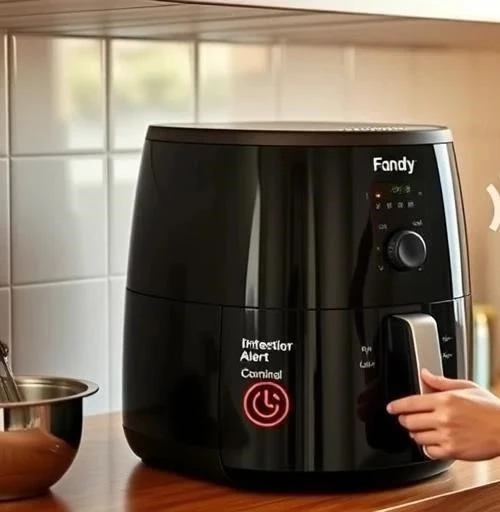
An air fryer’s beep is its tiny way of talking. Sometimes it means, “Dinner is ready.” Sometimes it means, “Please put the basket back.” And occasionally it’s a clue that something is wrong. The trick is to notice when the sound happens, whether it repeats, and whether the appliance still heats normally. Models differ, so your manual is the final authority—but these common clues can help you investigate safely.
The ordinary beep: a message, not a malfunction
A short chime at startup, when you press a button, or at the end of a cooking cycle is usually normal. Many fryers beep when the timer reaches zero, when preheating finishes, or when they want you to shake or turn the food. Some announce that a cooking stage has changed. If the display looks normal and the sound matches an action you just took, your appliance is probably simply doing its job.
There may be more than one signal: a single beep can confirm a button press, while a longer or repeated series may mark a finished cycle. Check the control panel for a flashing icon or message. If the food is done, switch the fryer off and remove the basket carefully; hot air and metal parts can burn.
The basket or drawer is not seated properly
Many models have a safety interlock: cooking pauses if the drawer is pulled out or not fully pushed in. A beep may accompany the pause, and the display may go dark or show a warning. Slide the basket out, check that it is assembled correctly, then push it firmly into place without forcing it. Crumbs or a crooked rack can keep it from seating all the way. Let the unit cool before cleaning around the drawer rails.
The timer, temperature, or preset has been changed
Repeated beeps may simply follow button presses, a temperature adjustment, or a switch between cooking modes. A sensitive touch panel can register a light brush from a sleeve, a damp finger, or a stray splash. Wipe the controls with a soft, dry cloth, keep the fryer on a stable surface, and make sure nothing is leaning against the panel. If the beeping starts while nobody is touching it, unplug the appliance and investigate further rather than assuming it is a harmless setting.
The fryer may be too hot
Some air fryers warn about excessive heat or pause operation to protect themselves. Possible contributors include a blocked air inlet or outlet, a crowded cooking area, a very hot kitchen, or repeated back-to-back cycles. Turn the appliance off, unplug it, and let it cool completely. Then check that the vents are clear and that the fryer has the clearance required by its manual. Do not cover it or push it against a wall while it is running. If a warning returns after cooling and ventilation, stop using it and contact the manufacturer or a qualified repair service.
A power interruption or control glitch
A brief outage, loose plug, or unstable connection can make some digital models beep, reset, or flash a code. Switch the fryer off and unplug it before checking that the outlet and plug are undamaged. After a few minutes, reconnect it directly to a suitable wall outlet, following the manual’s instructions. Avoid repeatedly resetting a unit that trips a breaker, smells burnt, sparks, or has a hot or damaged cord: unplug it if safe and arrange professional help.
Is it really a beep?
A high-pitched squeak, rattle, or whine can sound like an electronic alert. If it continues while the fan runs, changes with airflow, or comes from the basket rather than the control panel, it may be a mechanical noise. Switch the fryer off and let it cool. Check for loose accessories, foil touching the heating element, or food caught near the fan—but never reach inside while the appliance is plugged in. Do not dismantle the housing to find the sound.
A quick, safe troubleshooting routine
- Note when the sound starts: at startup, during cooking, after a button press, or at the end.
- Look for a flashing symbol, displayed code, paused timer, or basket warning. Consult the manual for that exact model.
- Turn the fryer off, unplug it, and allow it to cool before checking the basket, vents, and removable parts.
- Clean only as the manufacturer directs; Keep water away from the electrical base and control panel.
- Test it once under supervision. If the alarm persists, heating behaves oddly, or a burning smell appears, stop using it and seek authorized service.
Can you turn the sound off?
Some models offer a mute setting, often accessed through a button combination or menu; others cannot be silenced. Check the manual rather than experimenting, because the same buttons can change cooking settings. Never block a speaker or open the appliance to disconnect it. The alert may be the only prompt that tells you the cycle ended or the basket needs attention.
The useful rule: a beep tied to a normal action is usually information; an unexplained, persistent beep is a reason to pause and inspect. Track the timing, check the display, and give the fryer room to cool. If the sound returns after the simple checks—or comes with smoke, sparks, a burning odor, or erratic heating—unplug it and get professional advice. In a well-behaved kitchen, the beep is a helpful little narrator, not a reason to ignore a warning.

7 Comments. Оставить новый
This is practical without making every sound sound ominous. I appreciate the calm advice to check the display and the manual before assuming the fryer has developed a dramatic personality.
The safety reminders are woven in naturally, which is refreshing. “Hot air and metal parts can burn” is simple, memorable advice that deserves a place beside every kitchen timer.
I hadn’t considered that a damp finger or sleeve could trigger a touch panel. That small detail may save people from blaming the machine for a button press made by a stray cuff.
The reminder about the basket interlock is especially useful. A drawer that is a few millimeters askew can turn dinner into a surprisingly convincing alarm symphony.
A good case for treating appliances like instruments: listen for the pattern, notice when it changes, and don’t start taking things apart just because one note sounds strange.
I like the idea that a beep is a tiny conversation rather than a crisis. That framing makes troubleshooting feel less like detective work and more like learning the appliance’s odd little dialect.
The article turns a familiar kitchen noise into a useful clue. Its best message is not to silence the beep immediately, but to pause long enough to understand what the fryer is trying to say.