
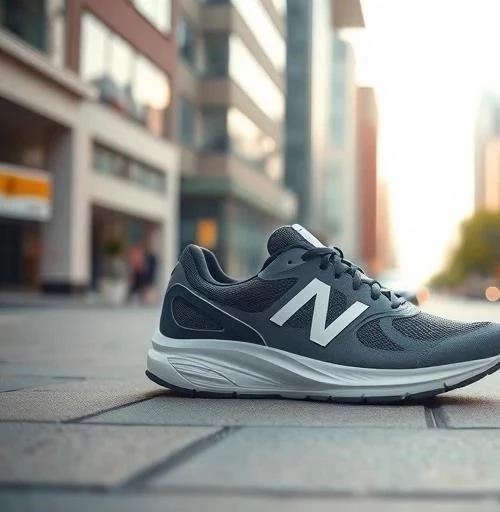
City marathon training brings repetitive mileage, routes and recovery windows. New Balance’s road technologies matter because thoughtful design may make consistent practice more manageable; still, shoes cannot replace gradual training, sensible pacing or recovery.
Fresh Foam X cushioning can reduce the harsh feel of repeated pavement impact, but comfort alone does not guarantee marathon readiness.
On city marathon routes, pavement delivers thousands of similar impacts, so cushioning can shape how training feels over time. New Balance’s Fresh Foam X is designed to provide a soft, cushioned ride; that may make ordinary road miles feel less jarring for some runners. The practical value is not a promise of injury prevention, but a potentially more comfortable platform for accumulating planned mileage. Comfort is personal: a plush sensation that feels reassuring on an easy run may feel too soft or unstable to another runner, and preferences can change as pace and fatigue change. Notice whether the cushioning remains pleasant late in a run, whether the legs feel acceptably fresh afterward, and whether the shoe encourages a natural stride. Marathon readiness comes from progressive mileage, recovery, strength, pacing, and practiced fueling; cushioning can support that work, but cannot create the endurance or resilience it requires. A well-cushioned shoe is thus one useful training choice, not evidence that a runner is prepared to cover 42.2 kilometres. Treat Fresh Foam X as a comfort feature to evaluate in context: useful when it helps you train consistently, insufficient when training demands exceed what comfort can address. Comfort matters: test the sensation over repeated runs, not one brief outing during marathon training.
FuelCell foam and, in select racing models, Energy Arc carbon-plate systems prioritize forward propulsion; runners should weigh that benefit against stability and race-day suitability.
FuelCell foam is intended to return energy and support a quick, forward-moving feel, while Energy Arc carbon-plate systems appear only in select New Balance racing models. That distinction matters: a fast sensation is not automatically the best marathon choice. A plate may suit runners seeking efficiency at race pace, yet its stiffness and leverage can feel unfamiliar, especially when fatigue alters form. Therefore, test the exact model in training, including longer efforts and turns, rather than relying on a product label or brief try-on. Assess whether you can maintain control and comfort at your intended pace. The case for propulsion is strongest when the shoe matches your mechanics, preparation and event; it is weaker when stability feels compromised or adaptation time is short. Choose on evidence from your own runs, not speed claims alone.
Engineered mesh uppers and secure heel construction support breathability and fit over long urban runs, making correct sizing essential to prevent friction as feet swell.
For marathon training in the city, the upper deserves the same careful trial as any other part of a shoe.
New Balance engineered mesh uppers are intended to promote airflow, which can help feet feel less enclosed during sustained effort.
That design is useful only when the material also accommodates the runner’s foot without creating pressure points.
A heel that feels held, not pinched, can limit unwanted movement; however, a secure fit must remain comfortable as distance accumulates.
Feet often swell during long efforts, so sizing based on a quick indoor try-on may invite rubbing later.
Try the model with the socks you expect to race in, and check toe room and heel comfort after a longer run.
These checks are more persuasive than assuming that one stated size fits every foot shape.
For urban marathon preparation, breathability and dependable fit matter because small irritations can distract across repeated training days.
Durable rubber outsoles and road-focused geometry suit hard city surfaces, but the best choice depends on balancing traction, wear resistance, weight, and the runner’s gait.
Rubber outsoles and road-focused geometry matter because city marathon routes place repeated demands on shoes. Durable rubber can help resist abrasion, while a road-oriented shape is intended to move smoothly across hard, even surfaces. Yet no outsole is universally best: traction must suit the runner’s routes and conditions, and added rubber may increase weight. Compare grip, wear and feel over familiar training miles, rather than choosing by claims alone. Geometry also interacts with individual gait, so observe whether the shoe feels natural through a full run. The sound choice balances reliable contact and lasting wear with a manageable weight and a stride that remains comfortable. New Balance models differ, so examine the specific shoe and use your own road experience to decide. This is a practical fit question, not a guarantee of faster times or trouble-free training.
3 Comments. Оставить новый
The article makes a useful distinction between cushioning and actual marathon readiness. Its emphasis on testing comfort over repeated runs is practical, since a shoe that feels good briefly may not remain suitable as fatigue builds.
I appreciate the measured discussion of Fresh Foam X: it may improve comfort, but it is not presented as injury protection or a substitute for training. That careful framing helps readers assess the feature without treating marketing claims as guarantees.
The point that cushioning preferences are personal is especially relevant for marathoners, who need to consider how shoes feel across varied paces and longer efforts. The article appropriately places shoe choice alongside pacing, recovery, strength, and fueling.