
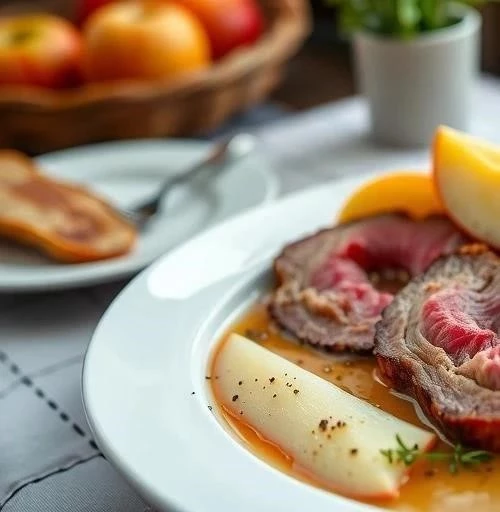
Explain why Italian-style roast beef with apples in cream sauce makes a compelling recipe: the contrast of savory meat, sweet fruit, and a rich sauce creates a more balanced dish than any one flavor could achieve alone.
Italian-style roast beef with apples in cream sauce fits because savory meat, sweet fruit, and rich sauce balance one another, making each bite more complete;
Choose beef tenderloin for tender, juicy beef, then season it with aromatic spices, garlic and rosemary, thyme, and olive oil; careful preparation is essential because quality ingredients make the flavor shine.
Choose beef tenderloin for this Italian-style preparation because its fine grain and modest connective tissue make it naturally tender; careful seasoning can therefore enhance, rather than mask, the meat. Pat the cut dry, trim only tough silver skin, and leave an even layer of fat where possible, since it helps protect the surface and carries flavor. Rub it with olive oil, then add aromatic spices, crushed garlic, chopped rosemary, thyme, salt, and black pepper. Press the herbs gently into every side so their fragrance is distributed evenly, but avoid an excessive coating that would overwhelm the beef. Let the seasoned tenderloin rest briefly at room temperature; this allows the salt and herbs to adhere and encourages more even cooking later. Good ingredients let simple seasoning reveal the beef’s true taste.
Prepare the cream sauce with white wine, cream for the sauce, and Parmesan; these ingredients complement beef with cream and turn the dish into satisfying meat in cream sauce.
For a balanced cream sauce, start with white wine and let it simmer briefly so its sharp, raw edge fades while its acidity remains. Stir in cream for the sauce over gentle heat; steady warmth helps it thicken smoothly without separating. Add finely grated Parmesan a little at a time, because gradual melting gives the sauce a silky texture and distributes its savory, salty character evenly. The wine keeps the richness lively, while cream softens its bite and cheese adds depth. Together, these ingredients complement beef with cream without hiding the meat’s flavor, creating satisfying meat in cream sauce. Keep the mixture just below a boil and stir often: overheating can make dairy split or cheese turn grainy. Finish matters because it coats each slice evenly and makes the sauce feel cohesive, not heavy.
Roast the beef and apples together: explain how beef in the oven and oven roasting produce flavorful baked meat, while apples in the oven become tender baked apples and make a delicious match for meat with apples.
Roast the beef and apples in the same oven so their flavors meet gradually, while each keeps its own character. Place the beef in a roasting dish and arrange firm apple wedges around it, leaving space for hot air to circulate; crowding traps steam and softens the surface instead of encouraging even browning. The oven’s steady heat turns the beef into flavorful baked meat and lets the apples become tender without collapsing. Check the beef with a thermometer rather than relying only on color, since thickness affects cooking time. Remove the apples when a knife enters easily, and let the beef finish roasting as needed. This shared oven method makes beef in the oven practical and gives apples in the oven a savory partner: the fruit’s gentle sweetness offsets the meat’s deep taste. Rest briefly; then slice meat.
Give serving and timing advice: pair the roast with a suitable garnish for meat, and show why this festive dish can also make a memorable home dinner; finish with a clear recipe for meat in the oven.
For an elegant plate, slice the rested roast across the grain and spoon sauce sparingly over each portion; keep extra sauce warm for guests. Serve with crisp green beans or buttery polenta, a fitting garnish because mild sides let the rich main course remain central. This festive dish also suits a home dinner: the components can be organized ahead, while the final presentation feels celebratory. Simple oven method: heat oven to 220°C (425°F). Set a 1.2 kg beef roast in a pan, roast 15 minutes, then lower heat to 180°C (350°F) and cook 20–25 minutes per 500 g, checking with a thermometer for 55°C (131°F) for medium-rare. Transfer to a board, tent loosely with foil, rest 15 minutes, then slice and serve with apples and cream sauce. Adjust time for thickness; temperature is the safer guide. Serve warm.



4 Comments. Оставить новый
The flavor pairing is persuasive: apples can bring sweetness and acidity to savory beef, while a creamy sauce softens the contrast. The article clearly explains why these elements work together rather than treating them as unrelated additions.
The article is appealing because it combines culinary reasoning with specific preparation advice. Its discussion of balancing the beef, apples, wine, cream, and cheese is helpful, but the supplied text ends abruptly, so readers cannot yet see the full method or final cooking instructions.
The sauce section makes a sound case for adding Parmesan gradually and keeping the heat gentle. Those details help explain how to achieve a smooth texture, though the article would be more complete if it also gave ingredient quantities and cooking times.
The guidance on tenderloin is useful because it connects the cut’s natural tenderness with a restrained approach to seasoning. The advice to dry the meat and avoid overloading it with herbs also gives readers practical reasons behind the preparation steps.