
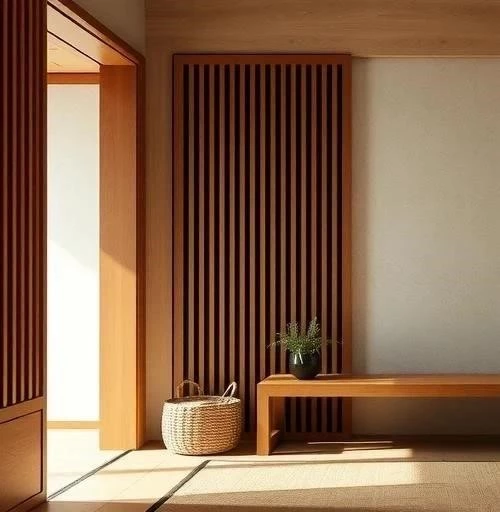
A hallway is the first room you enter and the place where sound can feel surprisingly sharp․ Hard floors, bare walls and a high ceiling reflect footsteps and voices, making a small entrance feel busy․ Thoughtful wood detailing can soften that impression․ In a japandi interior, the meeting of Japanese and Scandinavian style brings together natural materials, minimalism and functionality, and a calm color palette․ The result can be a cozy hallway that feels composed as well as practical․
Choose wood for warmth and balance
Natural wood in the interior adds warmth without requiring ornate decoration․ Light wood, oak in the interior and ash in the interior all work well with white, sand, warm gray and muted earth tones․ Pair wood and neutral shades to keep the space airy, then introduce natural textures through woven baskets, a linen bench cushion or a matte ceramic bowl․ A restrained design lets the grain remain visible and gives even a compact entrance a welcoming character;
For a wooden hallway finish, consider a single feature surface rather than covering every wall․ Wood wall finishing behind a bench or coat hooks gives the entry a clear focal point․ Veneered panels offer a consistent grain and a clean, refined appearance; solid boards create a more pronounced natural effect․ A wooden ceiling can also add warmth, but in a low or narrow space, use it sparingly so the room does not feel enclosed․
Use panels to improve hallway acoustics
Wood is not automatically soundproof․ Its acoustic properties depend on the panel, backing and installation․ Flat, hard wood can reflect sound, while acoustic wooden panels are designed to help absorb it․ Wood slat panels, including wooden slats on a wall, usually combine a decorative veneer or timber face with a sound-absorbing layer behind it․ This construction can reduce echo and make everyday sounds feel less harsh․
For improving acoustics, place acoustic wall panels where sound reflections are strongest: on a long bare wall, opposite a hard surface, or near the entrance to an open living area․ A limited panel section is often enough to soften the room while preserving the Japandi look․ Choose a finish that matches the door, bench or storage, and use consistent spacing for a calm, orderly rhythm․ Check the product’s acoustic rating and follow the maker’s installation guidance; decorative slats alone may not provide meaningful absorption․
Plan for comfort and daily use
Hallway soundproofing is different from echo reduction․ Panels and other sound-absorbing materials can improve acoustic comfort inside the hallway, but they will not block substantial noise coming through a door or thin partition․ For that, seal gaps around the entry door and consider suitable construction solutions․ A runner, upholstered seat and fabric-lined storage can add further absorption without cluttering the room․
In narrow hallway design, keep the floor visually open and put wood on one wall or in a shallow built-in․ Combine closed storage with a small bench, and leave enough clearance for doors and coats․ The best Japandi-style hallway balances texture with restraint: natural wood, soft light, useful details and clear surfaces․ With a measured choice of panels and finishes, the entrance becomes quieter, more welcoming and beautifully connected to the rest of the home․




3 Comments. Оставить новый
This is a helpful guide to creating a calm Japandi entrance. The suggestions for pairing light wood with neutral colors and natural textures are simple to apply, even in a small space.
I like the practical reminder that wood adds warmth but does not automatically soundproof a hallway. The advice to use acoustic panels selectively makes the design feel both attractive and realistic.
The explanation of how slat panels and their backing can affect echo is especially useful. I also appreciate the suggestion to focus on one feature surface rather than covering every wall.