
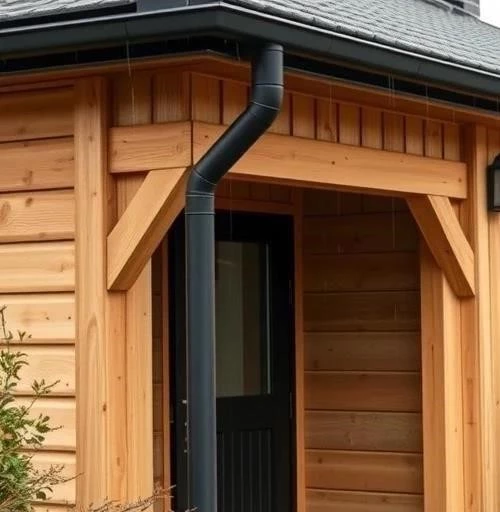
A gutter system for a seasonal home has to handle rain, fallen leaves, frost and long periods without maintenance. Current designs focus on reliable drainage, simple upkeep and a visual fit with the building. A modern gutter is not only a finishing detail: it directs rainwater away from walls and foundations, and can also support rainwater collection.
Choosing materials for changing weather
Plastic gutters, including PVC systems, are lightweight, quiet during rainfall and available in many colours. Their resistance to frost depends on material quality, installation and exposure to impact, so product specifications matter. UV resistance is also important where roof edges receive strong sunlight. Metal gutter systems, including galvanized gutters, are often selected for strength and a traditional appearance. Coatings help protect metal from corrosion, while correct fixing allows for thermal movement. The best choice depends on the roof, local climate, budget and expected service life; no material is maintenance-free.
Capacity, layout and water management
Gutters and downpipes should be sized to suit the roof area, slope and local rainfall. Gutter capacity is affected by its profile, outlet placement and the number of downpipes. A drainage calculation helps prevent overflow during heavy showers. An external gutter system should carry water to a safe discharge point, a stormwater drain or a rainwater tank. Collecting rainwater can be useful for garden irrigation, provided the tank and connections are suitable. In every case, directing runoff away from the building helps protect the foundation from moisture.
Installation and protection from ice
Professional installation includes setting a consistent fall, securing brackets, sealing joints and positioning outlets so water flows freely. Correct assembly is central to a leak-free gutter system. In colder regions, snow load should be considered when selecting brackets and planning roof-edge protection. Ice protection may include suitable insulation, snow guards or a gutter heating system with controlled heating cables. Heating is not a substitute for good drainage or safe roof design; it should be specified for the site and installed according to electrical and fire-safety requirements.
Maintenance through the season
Seasonal gutter maintenance is especially important at homes that stand empty for part of the year. Before winter and after nearby trees shed leaves, inspect joints, outlets and downpipes. Cleaning leaves from gutters prevents blockages and reduces the risk of overflow. A gutter guard mesh can limit debris, but it still needs periodic checking. After storms or thawing, look for loose brackets, cracks, corrosion and signs of leakage. Simple, scheduled checks can extend the service life of the drainage system and help avoid repairs to roofs, walls and foundations.
Design, cost and sustainability
Gutter-system design trends favour colours that coordinate with roofing, trim and façades, along with discreet profiles that preserve the building’s character. Cost depends on material, roof geometry, components, installation and any heating or rainwater-storage features. Comparing the full system, rather than the price per metre, gives a clearer estimate. Recyclable metals and durable plastics can both be considered among environmentally responsible materials; lifespan, maintenance and end-of-life recycling are relevant factors. For a seasonal home, a well-sized, weather-appropriate system with accessible components is often the most practical investment.

2 Comments. Оставить новый
The guidance emphasizes that gutter performance depends on more than material alone, including sizing, installation and local weather conditions. The article is informative, though the final section appears incomplete.
The article provides a clear overview of the factors involved in choosing and maintaining gutters for seasonal homes. Its discussion of material selection, drainage capacity and installation is practical and balanced.