
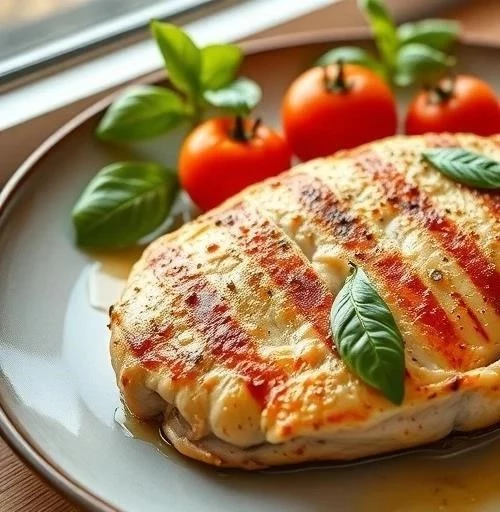
A Tuscan time-slip turns an ordinary evening into a little trattoria: one vivid, comforting plate, full of sunshine, charm, and weeknight magic. A bright, pocket-sized escape from the clock.
The Cast of Flavors: Chicken Fillet or Chicken Breast, Tomatoes, and Cherry Tomatoes
Choose a plump chicken fillet or an even-cut chicken breast: either becomes the calm, pale canvas for a bright Tuscan flavor portrait. Picture the tomatoes as two characters, not a single sauce—large, sun-ripe fruit lending mellow sweetness, and cherry tomatoes arriving like tiny garnets, tart, glossy, and full of garden perfume. Their colors matter: scarlet beside gold, with the occasional green shoulder, makes the plate feel like a painted market stall. Slice the larger tomatoes into generous pieces so their soft, juicy flesh can contrast with the cherry tomatoes’ lively pop; keep the little ones whole for their jewel-like shape. Choose firm fruit that smells leafy and sweet, not watery or dull, and look for chicken with an even thickness and a fresh, clean scent. The contrast is the clever twist: tender, mild poultry beside tomatoes with different sizes, textures, and levels of sweetness. Each forkful can feel like a miniature Italian landscape—quiet countryside in the chicken, bright summer orchards in the tomatoes, and a playful burst of cherry-red sunshine between them.
The One-Pan Ritual: Olive Oil, Garlic, Italian Herbs, Oregano, and Chicken Spices
Let olive oil be the pan’s first golden whisper, not a puddle: a thin ribbon carries heat and gives the ritual a silky beginning. Crush one garlic clove with the flat of a knife, then let it perfume the oil gently; browned garlic can turn bossy before the herbs arrive. Scatter Italian herbs like confetti, but keep oregano as the warm, earthy bass note; a pinch of chicken spices adds little theater, not a disguise. Rub the blend across the chicken with your fingertips, as if drawing a tiny map of a sunlit herb garden. Keep the flame moderate: fragrant oil should hum, not smoke, and each clove should soften into a mellow little note. Think of this as a miniature flavor orchestra: oil keeps time, garlic opens the curtain, and herbs linger like a Tuscan melody. Measure spices with a light hand; the goal is a savory breeze, not a spice-market parade that steals the spotlight. One swirl is enough: let aromatics bloom, then keep the pan ready for its next brief transformation.
From Golden Crust to Juicy Center: Sear the Chicken, Add Tomatoes, Basil, Mozzarella, and Parmesan; Note the Cooking Time
Pat the chicken dry, then let it meet a shimmering skillet; leave it undisturbed until a bronze crust forms, a small edible sunrise. Turn the pieces once; scatter in chopped tomatoes and whole cherry tomatoes, then lower the heat so their juices gather around the chicken like a ruby-colored moat. After a few minutes, tuck basil leaves into the glossy juices; their fresh, peppery scent should rise without losing its green sparkle. Lay mozzarella over each steak and dust with Parmesan; cover briefly, just until the cheese turns soft and molten, a little white cloud settling over the tomato-red scene. For thin chicken steaks, allow roughly four to six minutes per side, adjusting for thickness; the center should reach 165°F (74°C), checked with an instant-read thermometer. Count the cooking time from the first sizzle, not the cheese’s brief melt, and rest the meat for two minutes; this pause lets the juices settle instead of escaping at the first slice. Serve warm now.
The Fast-Dinner Finale: A Simple, Quick Recipe for Chicken with Tomatoes, Served Hot with a Side Dish
Make the final minute feel like a tiny Tuscan encore: bring the chicken and tomatoes straight to the table while their colors still glow. For a playful side, spoon lemony white beans into a shallow bowl; their creamy, bright character catches the tomato juices without competing with the main event. Or build a quick little landing pad with buttered orzo, crisp greens, or toasted sourdough, letting each guest choose a different route through the sauce. For a fresh twist, set out a tiny dish of chopped parsley and lemon zest, so the table can add a fragrant, citrusy spark at will. Keep portions relaxed rather than formal: a warm platter invites everyone to tuck in, while a scattering of herbs makes the meal look freshly dressed. If the evening is especially rushed, serve everything family-style and let the skillet’s glossy contents become the centerpiece, not another chore. A bright little feast arrives before the evening can change its mind with few dishes at day’s end.


6 Comments. Оставить новый
What stands out is the care given to contrast: whole cherry tomatoes for their pop, larger slices for their softness. A small detail, but it gives the dish a memorable rhythm.
A lovely reminder that a simple dish can have a whole landscape inside it. Mild chicken, earthy oregano, and juicy tomatoes sound like countryside sunshine with a little sparkle.
This reads like a market stroll translated into supper. The image of scarlet tomatoes beside golden ones makes me want to choose the prettiest produce first and let the pan do the rest.
The “tiny map” of herbs is a wonderfully tactile touch. This makes cooking feel less like following instructions and more like leaving a fragrant note for dinner.
I love the idea of giving the two kinds of tomatoes separate roles. It turns a familiar chicken dinner into a tiny study in texture: soft, mellow slices beside bright little bursts.
The gentle warning about garlic is a keeper. So many recipes rush past that moment; here, the quiet sizzle gets its own spotlight before the herbs take over.