
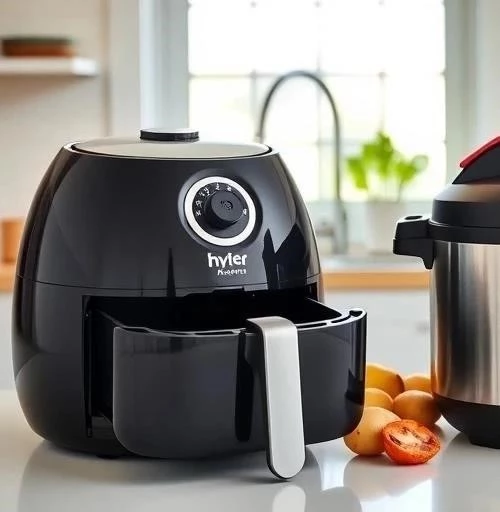
An air fryer and a multicooker can both simplify everyday cooking, but they work in different ways and suit different routines. The right choice depends less on which appliance is generally “better” and more on the meals you make, the textures you prefer, and the space available in your kitchen.
How the appliances work
An air fryer circulates hot air around food in a compact cooking chamber. This dry heat is useful for browning and crisping the outside of ingredients. Many models also bake, roast, or reheat, although capacity and available settings vary.
A multicooker combines several cooking methods in one appliance. Depending on the model, it may steam, simmer, sauté, cook rice, or pressure-cook. Some units also have an air-frying lid or function, but this is not standard. Check the specifications rather than relying on the product name.
Cooking results and typical uses
Choose an air fryer if crisp texture is a priority. It can be convenient for vegetables, fish, small portions of meat, and frozen foods. It usually needs little or no added oil, though the result depends on the ingredients and recipe. Food may need to be shaken or turned, and overcrowding can prevent even browning. Its basket may also limit the size or shape of dishes you can prepare.
A multicooker is often more versatile for meals that involve liquid or longer cooking. It can prepare soups, stews, grains, beans, and steamed dishes, and a pressure-cooking function can reduce cooking time for some recipes. It is less suited to producing a crisp coating unless it includes a suitable air-frying feature. Browning may require a separate step or a different pan.
Time, capacity, and cleanup
An air fryer commonly heats quickly and works well for relatively small batches. For a larger household, you may need to cook in several rounds, depending on basket size. A multicooker can handle one-pot meals, but pressure cooking may involve time for the appliance to build and release pressure. Compare usable capacity, not just the advertised volume: the cooking pot and air-fryer basket have different practical limits.
Both appliances need cleaning after use. Air-fryer baskets can have corners or coatings that require gentle washing. Multicooker pots are generally removable, while lids, seals, valves, and accessories may need additional attention. Follow the manufacturer’s instructions, especially for pressure-cooking parts, and check whether components are dishwasher-safe.
Cost, counter space, and safety
Prices vary with capacity, construction, and features. A basic appliance may be more economical than a model with multiple functions. Consider the cost of accessories and replacement parts as well as the purchase price. Measure your counter and storage space, and allow room for ventilation; neither appliance should be operated where its vents are blocked.
Use each device according to its manual. Keep an air fryer away from items that could be affected by hot exhaust. For a pressure multicooker, release pressure as directed and do not force the lid open while pressure remains inside.
A practical decision
Select an air fryer if you often cook modest portions and value browned, crisp results with a straightforward routine. Select a multicooker if you regularly make soups, grains, steamed food, or one-pot meals and want several cooking modes. If your menu includes both, compare combination models carefully: a shared appliance may save space, but its capacity or performance in one mode may be less convenient than a dedicated unit.
Before buying, list several meals you prepare in a typical week, then check whether the appliance can cook them in suitable quantities. That simple comparison is often more useful than choosing by the number of advertised programs.
1 Comment. Оставить новый
This comparison clearly explains how the two appliances differ and connects their features to practical cooking needs. The reminders to check model specifications and consider capacity and cleanup make the guidance useful without presenting either option as universally better.