
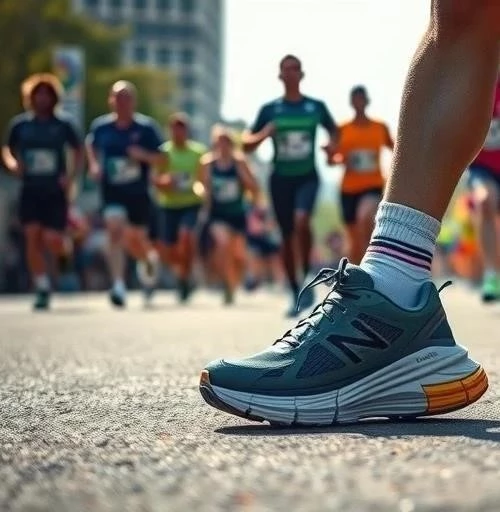
First, a small but important court-side correction: Hoka is best known for road-running shoes, not tennis shoes built for quick cuts on a court. If by “tennis shoes” you mean sneakers, Hoka may be a marathon option; if you mean actual tennis footwear, don’t take road shoes onto the court. Their tall, cushioned platforms are made for forward motion, not sudden lateral lunges.
The upside: comfort over the long haul
Soft landings. Many Hoka road models use generous cushioning, which can feel welcome as the miles stack up. On tired legs, a forgiving ride may make repetitive pavement feel less punishing. It won’t erase marathon fatigue, but the sensation can be a pleasant buffer between you and the road.
A smooth, rolling stride. Some models have a curved sole shape that encourages a forward roll from landing to toe-off. Runners who like that sensation may find it helps them settle into an even rhythm—less “stomp, stomp,” more “keep the wheels turning.” The effect varies with your stride and the particular shoe.
Options for different runners. Hoka’s range includes shoes with different levels of cushioning, support, weight and responsiveness. That variety matters: a marathon shoe should suit your body and pace, not simply win a softness contest. Some runners prefer a plush daily trainer for most miles; others want a lighter, livelier shoe for race day.
Confidence through consistency. A familiar, comfortable pair can make long training runs feel more manageable. If a Hoka model already works for you, using it in a marathon may be a more sensible bet than switching to an unfamiliar shoe because it looks fast in a photo.
The catch: cushioned isn’t automatically better
Bulk and feel. Extra foam can mean a higher, roomier sensation underfoot. Runners who want direct ground feedback or a nimble, close-to-the-road feel may find some models too soft, tall or cumbersome. Cushioning is a preference, not a universal upgrade.
Fit is personal—and consequential. A shoe that feels dreamy at mile three can become an irritating negotiation at mile twenty. Check heel hold, toe-room and width, and try it with your usual running socks. Feet often swell during long efforts, so cramped toes or rubbing deserve attention before race day.
Stability needs a test run. A high, soft platform can feel less secure to some runners, particularly on uneven pavement or when fatigue affects their form. That does not mean every Hoka is unstable; it means your own balance and comfort matter more than a label or a review.
Price and durability vary. Premium running shoes can be a significant purchase, and lifespan depends on the model, runner, surfaces and mileage. Don’t assume that a thick midsole lasts forever—or that a costly shoe will solve pain caused by training load, fit or another issue.
How to choose without gambling your race
- Decide what you need: softer protection, a lighter feel, or more support. “The most cushioning” is not a complete shopping brief.
- Try shoes later in the day, when your feet may be larger. Walk, jog and turn; check for pressure, heel slip and toe contact.
- Test the exact pair on several ordinary runs, then on a longer training run. Notice comfort, stability and how your legs feel afterward.
- Keep your proven marathon shoes in rotation. Avoid debuting a new model on race morning, however persuasive the foam’s sales pitch.
If discomfort persists, stop treating footwear as a magic fix and seek advice from a qualified running specialist or clinician. A shoe can influence comfort; it cannot replace sensible training, recovery or individual assessment;
Verdict: a good match, not a guaranteed miracle
Hoka road-running shoes can suit marathoners who enjoy cushioning and a rolling ride, but they may disappoint runners who want a low, nimble feel or who don’t get along with the fit. For court tennis, choose shoes designed for tennis instead. For the marathon, let your feet—not the hype—cast the deciding vote. The best shoe is the one that stays quietly comfortable while the miles make all the noise.
6 Comments. Оставить новый
I appreciate the quiet rebellion against choosing a marathon shoe by its softness alone. Comfort is not a foam-volume contest; the right pair is the one your legs recognize after mile twenty.
“Less stomp, stomp, more keep the wheels turning” gives the rolling-sole idea a memorable little soundtrack. It also wisely leaves room for individual stride—shoes are partners, not conductors.
The court-side correction is the article’s strongest service. A tall, cushioned road shoe may feel like a cloud on a straight path, but clouds are famously poor at defending a backhand.
The opening distinction is a useful shoe-shaped reality check: “tennis shoes” can mean sneakers, but a court is not a road with a net. I like that the article puts movement before marketing.
The image of a cushioned shoe as a buffer between runner and pavement is vivid without promising miracles. Foam can soften the conversation with the road; it cannot negotiate away marathon fatigue.
This reads like sensible advice from someone who has met both pavement and hype. Its best reminder is beautifully plain: try the shoe in training, before race day turns every small surprise into a headline.