
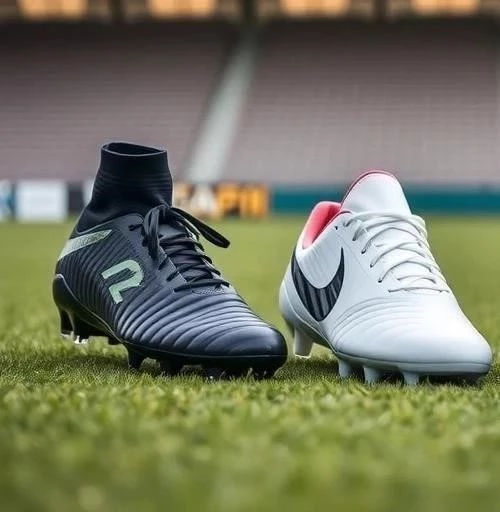
Choosing football boots below €100 involves balancing fit, surface compatibility, comfort and durability. At this price, many options are entry-level versions of professional models: they may share a name or broad design with more expensive boots, but typically use simpler materials and construction. Prices vary by country, retailer and season, so the models below should be treated as a shortlist rather than a fixed ranking. Check the final price and the exact outsole before buying.
What to compare
Playing surface: Firm-ground (FG) studs are designed mainly for natural grass that is neither very soft nor waterlogged. Artificial-grass (AG) outsoles usually have more, shorter studs to spread pressure across synthetic turf. Multi-ground (MG) designs are intended for more than one surface, although performance and suitability vary. Indoor shoes have flat, non-marking soles. Using an unsuitable stud pattern can reduce grip and may increase discomfort, so follow the maker’s guidance and local rules.
Fit and touch: A secure heel and enough room for the toes matter more than a particular upper material. Synthetic uppers are common in this price range and tend to be easy to clean; some feel stiff initially. A softer or textured surface may help with ball contact, but does not guarantee better control. Try boots on with match socks, ideally later in the day, and test for pressure across the forefoot.
Models to consider
- Nike Tiempo Legend 10 Academy: A sensible option for players who prefer a relatively traditional, comfortable fit and a less aggressive feel. The Academy version is more affordable than premium Tiempo models and uses a simpler synthetic upper. It can suit defenders and midfielders who value a stable, familiar boot, but its fit should be checked carefully: foot shape varies, and the Academy construction is not identical to higher tiers.
- Nike Phantom GX 2 Academy: A candidate for players who want a close-fitting boot with a textured contact area. Its design places emphasis on touch and quick changes of direction. The lower-tier upper will not feel as refined as the top model, and a snug shape may not suit wider feet. Compare the AG and FG versions rather than assuming one outsole works well on every pitch.
- adidas Predator League: The Predator range is associated with a striking, control-oriented design. League versions can offer useful grip details at a price below €100, particularly when discounted. They may appeal to players who like a structured feel when passing and shooting. Check the fit and upper flexibility: added texture is a design feature, not a substitute for technique, and the boot may feel different from the elite version.
- adidas Copa Pure League: This model is worth considering for players seeking a more understated, comfort-focused option. Its synthetic construction is easier to maintain than natural leather and may need less care in wet conditions. Comfort still depends on individual foot shape, and the feel will not replicate premium leather boots. It is a practical choice for regular training if the fit is secure.
- Puma Future Match: Future models typically emphasize a flexible fit and a supportive lacing arrangement. The Match tier can provide a useful middle ground when discounted below €100. It may suit players who prefer a boot that feels adaptable across the midfoot. Check that the heel stays in place and that any upper straps or overlays do not create pressure.
- Puma Ultra Match: A lighter, speed-oriented design may appeal to players who prioritize a streamlined feel. At this price, materials and detailing are more basic than on the highest-tier Ultra models. Lightweight construction alone does not make a player faster, and a narrow or low-volume fit can be uncomfortable. Choose it only if the shape suits your foot and the sole matches your pitch.
Quick comparison
Comfort-led: Copa Pure League or Tiempo Legend 10 Academy, subject to fit. Touch and control: Phantom GX 2 Academy or Predator League. Flexible fit: Future Match. Lightweight feel: Ultra Match. These are broad design tendencies, not guarantees; versions, materials and sizing can differ between seasons.
How to choose
- Identify the surface you play on most often, then select the corresponding soleplate. If you regularly use both grass and artificial turf, compare a suitable MG or AG option rather than relying on FG studs.
- Try the boot on both feet. The heel should feel secure, with no painful pressure or excessive movement. Leave a small amount of toe room, but avoid a fit that lets the foot slide.
- Compare the same model across retailers and tiers. A discounted higher-tier boot can be attractive, but only if it is new, correctly sized and intended for your surface.
- Check the return policy, since indoor fitting does not fully predict comfort during play. Break boots in gradually and stop using them if they cause persistent pain.
Under €100, there is no universally best football boot. The Tiempo Legend 10 Academy and Copa Pure League are reasonable starting points for comfort-oriented buyers; the Phantom GX 2 Academy and Predator League emphasize a more textured touch; Puma Future Match and Ultra Match offer different priorities in fit and weight. Compare the precise version, outsole and fit before choosing. A correctly fitted boot for the pitch you play on is generally a better purchase than a more expensive model with the wrong shape or studs.
5 Comments. Оставить новый
A balanced overview of what to consider when shopping on a budget. I appreciate the distinction between entry-level and premium versions of familiar boot models.
This is a measured starting point for comparing affordable football boots. The reminder that prices and fit vary is sensible, though checking current availability will still be important.
The guide clearly explains why fit and playing surface should come before brand or price. The reminder to check the exact outsole is especially useful.
Helpful guidance on trying boots with match socks and checking for forefoot pressure. Those details make the recommendations more useful than a simple product list.
The notes on FG, AG, and MG outsoles make the advice practical for players choosing boots for different pitches. It also avoids overstating what upper materials can do.