
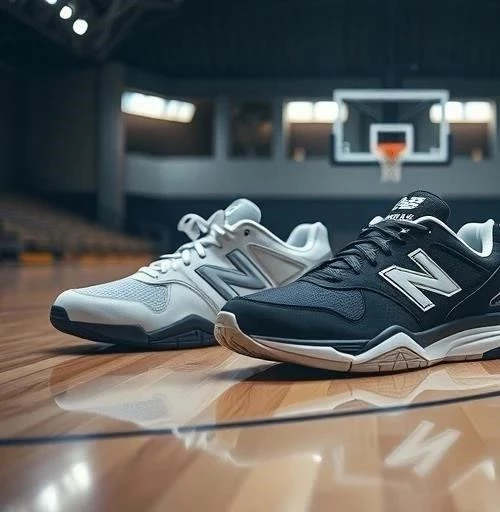
New Balance has built a serious place in basketball with shoes designed for quick guards, versatile wings and bigger players who need dependable cushioning. The range is not enormous, but its strongest models approach the game in different ways: some prioritize all-around responsiveness, others emphasize comfort, court feel or support. That makes choosing the right pair less about finding one universally “best” shoe and more about matching its characteristics to your position, movement and preferred fit.
This guide compares leading New Balance basketball models for professional and high-level players. Model names, colorways and specifications can vary by release and market, so check the details of the exact version available to you. The ranking below is a practical shortlist, not a claim that one shoe will suit every player.
New Balance TWO WXY v5 — best all-around option
The TWO WXY line is New Balance’s most versatile basketball family, and the v5 is the natural first place to look for a shoe that can handle a demanding, varied role. Its design is aimed at players who change pace, defend different matchups and move between the perimeter and the paint. Rather than focusing on a single specialty, it seeks a useful balance of cushioning, traction, stability and responsiveness.
That balance can suit professional guards and wings who make repeated hard cuts, close out on shooters and need to get back into transition quickly. A supportive platform matters when a player plants forcefully or changes direction under pressure; a secure upper and well-fitting heel can help the foot feel connected to the shoe. The TWO WXY is also a sensible choice for athletes who do not want an extremely low, minimal ride or a particularly plush, high-stack feel.
Best for: all-around players, wings, two-way guards and athletes who want one pair for a broad range of tasks.
Consider: fit is personal. Try the shoe with basketball socks and check for heel movement, pressure across the forefoot and enough room for the toes to spread. Players who prefer a very soft or unusually low ride should compare alternatives before committing.
New Balance Fresh Foam BB v2 — best for cushioning and comfort
The Fresh Foam BB v2 is the comfort-oriented option in this selection. It is designed for players who value a more substantial cushioning experience, especially during long sessions, repeated landings and high-volume training. Bigger athletes and players who spend time absorbing contact may appreciate the emphasis on underfoot comfort, although cushioning preference is individual: some professionals want a softer sensation, while others prefer a direct connection to the floor.
A more cushioned ride can be appealing to forwards and centers, but it is not limited to larger players. A guard who plays long minutes or has a strong preference for impact protection may also want to test it. The key question is whether the shoe feels controlled during lateral movement. Stand, jog, shuffle and perform several hard stops in the pair; a comfortable first impression is not enough if the platform feels unstable when you move at game speed.
Best for: players who put comfort and cushioning high on their list, including many frontcourt athletes.
Consider: compare its ride with a more court-connected model. If you value a low, nimble feel above softness, the Fresh Foam BB v2 may not be your first choice.
New Balance Hesi Low v2 — best for quick guards
The Hesi Low v2 is the low-cut, speed-minded choice. Its profile is suited to players who like to feel mobile and unencumbered, and who rely on quick footwork, changes of direction and sharp acceleration. For a guard operating in space, a lighter, less bulky-feeling shoe can make repeated transitions feel natural. The low-cut design also gives the ankle area a less restrictive sensation than a high collar.
Low-cut shoes do not automatically provide less protection, and a high collar does not guarantee that an ankle injury can be prevented. What matters is the whole shoe: fit, lockdown, base stability, traction and the player’s own conditioning and movement. A Hesi Low should feel secure around the heel and midfoot without pinching. Players who have a history of ankle issues should make their footwear choice with a qualified clinician or athletic trainer, rather than relying on collar height alone.
Best for: agile guards and players who prefer a lightweight, low-cut feel.
Consider: check lockdown carefully. If your foot shifts inside the shoe during a hard cut, try a different size or model; do not assume that tighter lacing can correct a poor fit.
New Balance Kawhi 4 — best for strong, controlled play
The Kawhi signature line reflects a measured, powerful style of basketball: controlled footwork, strong stops and the ability to create space without relying only on speed. The Kawhi 4 is worth considering for wings and forwards who want a stable-feeling shoe for physical play; Its appeal is less about being the lightest option and more about finding a supportive, composed feel that can suit a player who often meets contact or needs to hold position.
Signature models can differ from one generation to the next, so do not assume that an older Kawhi shoe fits or rides exactly like the Kawhi 4. Try the current model in the movements that matter to you: a hard defensive slide, a one-two stop, a jump and landing, and a sharp drive off either foot. A shoe can feel secure in a straight line yet behave differently when the player loads its edge.
Best for: physical wings and forwards who favor stability and a composed ride.
Consider: compare weight and flexibility with the TWO WXY. Players who want a notably light, nimble shoe may prefer the more guard-oriented options.
New Balance TWO WXY v4 — a value alternative
When a newer generation is available, the previous version can become an attractive option if it is discounted and still fits well. The TWO WXY v4 remains relevant for players looking for a versatile shoe without paying the launch price of the newest release. Its all-around purpose makes it a reasonable candidate for practice, league play or a second pair, provided the shoe is in good condition and the sizing works for the player.
Older stock deserves extra attention. Check the outsole for wear, inspect the upper and seams, and make sure the cushioning has not been damaged by poor storage or extensive use. A bargain is not a bargain if the traction is worn smooth or the shoe no longer holds the foot securely. Players buying online should review the retailer’s return policy and compare sizing feedback for that specific generation.
Best for: players seeking a versatile option at a lower price.
Consider: availability and condition. Compare the actual fit and price with the current TWO WXY before choosing.
How to choose the right model for your role
- For a guard who values speed: start with the Hesi Low v2, then compare it with the TWO WXY v5 if you want a more all-around feel.
- For a two-way wing: the TWO WXY v5 is a strong starting point because it is designed around versatility rather than one narrow specialty.
- For a forward who wants comfort: try the Fresh Foam BB v2, while paying close attention to control during lateral movement.
- For physical, controlled play: include the Kawhi 4 in your fitting session and assess its stability under realistic movement.
- For a limited budget: consider the TWO WXY v4 only if the pair is in good condition and suits your foot.
What professional players should test before buying
Fit and lockdown
Fit comes first. The heel should not lift excessively, the midfoot should feel held without numbness, and the toes should have enough space to move. Feet can swell during a game, so test shoes later in the day if possible. Try both feet: many players have a small difference in foot length or width. Do not choose a size solely because it matches a casual shoe from another brand.
Traction and court feel
Traction depends on the outsole, the condition of the court and how the player moves. Test short stops and lateral cuts on a clean surface, and follow the facility’s rules about footwear. Dusty courts can reduce grip for almost any shoe, so outsole design alone cannot guarantee traction. Players who rely on a low, precise feel should also assess how easily they can sense the floor while accelerating and braking.
Support, cushioning and durability
Look for a platform that feels secure when you load it from side to side. Cushioning should feel comfortable without making you feel disconnected or unstable. There is no single ideal softness: body size, playing style, injury history and personal preference all matter. Finally, inspect high-wear areas regularly. Replace shoes when the outsole loses dependable grip, the upper stops holding the foot or the cushioning feels noticeably degraded—not simply because a particular number of months has passed.
Final verdict
For most professionals seeking one adaptable New Balance basketball shoe, the TWO WXY v5 is the strongest place to start. Choose the Fresh Foam BB v2 if cushioning and comfort are your priorities, the Hesi Low v2 if you want a quick, low-cut option, and the Kawhi 4 if you prefer a more controlled feel for physical play. The TWO WXY v4 may be a smart value pick when fit, condition and price all check out.
No list can replace an on-court fitting. Test the exact pair you intend to use, confirm that it feels secure during basketball movements, and prioritize fit over marketing claims or a professional player’s endorsement. The best New Balance shoe is the one that supports your game, works with your foot and remains dependable through the demands of your season.
9 Comments. Оставить новый
I like that the article presents the shoe as a balanced option rather than claiming it is perfect for everyone. That makes the guidance feel realistic.
Good overview of the TWO WXY v5’s intended role. I’d use this as a starting point and then check the fit in person, especially around the heel and midfoot.
This guide does a good job explaining why an all-around shoe can suit guards and wings with varied responsibilities. The fit caveat is important and easy to overlook.
The discussion of quick cuts, defensive movement and transition play gives a clear picture of who might benefit from this model. Trying it on with basketball socks is practical advice.
The description helps readers think about how they move on court, not just which shoe has the highest ranking. A practical and approachable guide.
I appreciate the balanced tone and the reminder that specifications can vary by release and market. That makes the article more useful for real-world shopping.
A concise, informative introduction to the TWO WXY v5. The notes about support and heel security are particularly relevant for players who change direction often.
This is a helpful overview of what makes the TWO WXY line versatile. I especially appreciate the reminder that fit and playing style matter more than a universal ranking.
The position-based suggestions are useful for players comparing basketball shoes. It would also be interesting to see a direct comparison of cushioning and traction across the models.