
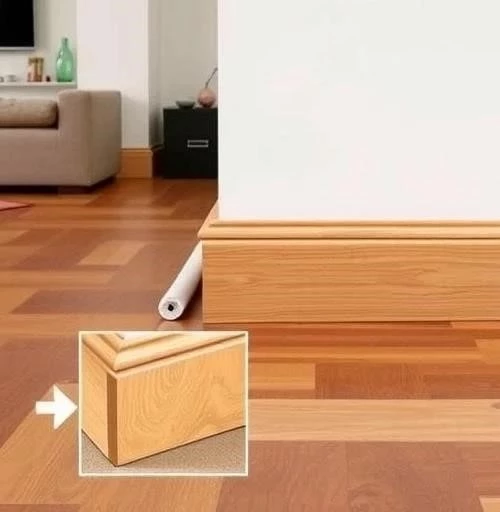
A wooden skirting board gives a living room a finished, welcoming look, but underfloor heating makes material choice and installation especially important․ The right board should complement the floor without trapping heat or warping as temperatures change․ A wood skirting board can work well when the heating system, timber and fitting method are considered together․
Material, profile and finish
Solid wood offers natural grain and can be refinished, while veneered wood is often more stable and economical․ Choose the timber species with care: oak is durable and a beech board can provide a lighter tone, but all wood responds to changes in humidity․ Ask the supplier about the timber’s moisture content and allow the boards to acclimatise in the room before installation․ This helps limit wood expansion and improves resistance to temperature fluctuations․
Match the board’s profile and height to the room’s proportions and the flooring․ A taller design can frame a spacious living room; a slim profile may suit a compact one․ Consider colour alongside the floor covering: a close match creates a quiet, continuous effect, while contrast makes the edge a feature․ Oil highlights the grain and is easy to refresh; wood varnish forms a more protective surface․ Either way, follow the finish maker’s advice for heated floors․
Heating compatibility and installation
Compatibility with underfloor heating depends on the system, the product and the installation—not simply on whether the board is wood․ Water underfloor heating and electric underfloor heating can both be used, provided the flooring and trim manufacturers approve the combination․ Keep to their recommended temperature range and raise the floor temperature gradually․ Stable operation supports heat output and reduces stress on the timber․
Do not assume that a gap between the floor and wall should be sealed by pressing the board tightly against the floor․ Preserve the flooring manufacturer’s expansion allowance, and avoid blocking designed routes for warm-air circulation․ A skirting board normally covers the perimeter gap; it should not obstruct vents or heating components․
Plan the fitting method before work begins․ Clip-on fastening and concealed installation give a neat finish and can make removal easier for maintenance․ If the board has a cable channel, check that cables are suitable for the location and do not cross or touch heated elements․ Never drill without checking where pipes or electric heating cables run․
Practical checklist
- Confirm the trim and floor are approved for the heating system․
- Check timber moisture, finish, profile, height and colour in the actual room․
- Fit according to the flooring instructions; do not restrict expansion or airflow․
- Clean with a soft, slightly damp cloth and use products recommended for the finish․
Regular care of a wooden skirting board is simple: remove dust, wipe spills promptly and renew oil or varnish as directed․ With sensible material selection and careful installation, a wooden trim can complement a heated living room for years․
Keyword reference: деревянный плинтус, плинтус из массива, плинтус из шпона, плинтус для гостиной, теплый пол, совместимость с теплым полом, водяной теплый пол, электрический теплый пол, температурный режим, теплоотдача, циркуляция теплого воздуха, зазор между полом и стеной, монтаж плинтуса, крепление на клипсы, скрытый монтаж, кабель-канал, высота плинтуса, профиль плинтуса, порода древесины, дубовый плинтус, плинтус из бука, влажность древесины, расширение древесины, устойчивость к перепадам температуры, покрытие маслом, лак для дерева, цвет плинтуса, сочетание с напольным покрытием, интерьер гостиной, уход за деревянным плинтусом․


7 Comments. Оставить новый
The comparison between solid and veneered wood is helpful, especially the reminder that timber can respond to humidity and temperature changes. It would be even more useful if readers were encouraged to check product-specific suitability, since performance can vary between boards.
The warning to preserve the flooring expansion allowance is important. A reader might otherwise think that fitting the trim tightly to the floor is the neatest solution, even though the flooring manufacturer’s installation instructions should take priority.
This is a thoughtful guide for anyone weighing up wood trim with heated floors. Its strongest point is encouraging readers to confirm the specific product combination with manufacturers instead of relying on a general rule about timber.
I appreciate that the article does not claim wood is automatically unsuitable for underfloor heating. Its emphasis on the heating system, materials and fitting method together is a balanced way to explain why compatibility should be confirmed rather than assumed.
The article makes the technical advice accessible without losing sight of appearance. Mentioning both water and electric systems is helpful, and the recommendation to raise floor temperature gradually gives readers a clear example of careful operation.
This is a useful overview because it treats the skirting board as part of the heating and flooring system, rather than as a purely decorative choice. The advice to check manufacturer guidance and acclimatise the timber gives readers practical steps they can take before buying.
The design guidance is practical as well as technical. Considering room proportions, flooring colour and profile before choosing a board can help avoid a mismatch, while the notes on oil and varnish give readers a useful starting point for thinking about maintenance.