
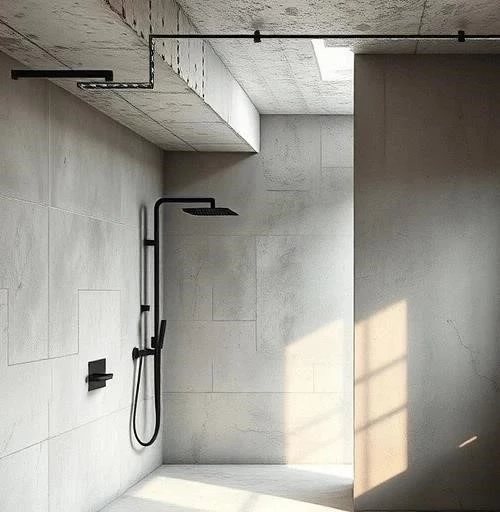
Microcement in a bathroom can create a calm, continuous surface that suits an industrial design bathroom. Its concrete texture, paired with metal fittings, supports a loft-style bathroom finish without making the room feel unfinished. A premium bathroom interior depends not only on appearance but also on careful installation, moisture protection and appropriate maintenance.
Prepare the substrate properly
One of the main mistakes when applying microcement is covering a weak, dirty or uneven base. Substrate preparation should include removing loose material, dust and grease, then checking walls and floors for movement and defects. Wall and floor levelling must be completed before the decorative layers begin. A suitable primer for microcement helps the coating bond evenly; the product should be selected for the substrate and system specified by the manufacturer.
Applying a thicker layer to hide poor preparation is not a reliable shortcut. Layer thickness should follow the system instructions, since excessive or inconsistent application may contribute to cracks and delamination. Allow each layer to dry as directed, and do not proceed over a damp or unstable surface.
Treat waterproofing and details as essential
Waterproofing the bathroom is separate from the microcement finish. Wet areas, including showers and floors around baths, need a compatible waterproofing system beneath the coating. Protecting against moisture also means planning junctions carefully: corners, changes of plane and penetrations require suitable detailing.
Sealing joints and the connections around sanitary fixtures is critical. Microcement should not be relied on to bridge moving joints or replace flexible sealant. Follow the system detail at taps, drains and basins, and check that the final protective coating is continuous. A finish coat or protective coating for microcement can improve resistance to water and stains, but it cannot correct a failure in the waterproofing below.
Choose the finish for the room
A polished appearance alone does not guarantee a practical result. For a non-slip floor finish, choose a texture and topcoat designed for wet use; a very smooth surface may become slippery. Ask about resistance to household chemicals and follow the product guidance, as harsh cleaners can dull or damage the finish. Test colour and texture samples in the actual lighting: concrete-effect surfaces may look different under warm lamps than in daylight.
Expensive bathroom finishes can look restrained rather than ornate. Combining concrete and metal, for example with black, brushed or aged fittings, can reinforce the loft character. A successful renovation of a bathroom in loft style balances the industrial look with comfortable lighting, storage and details that are easy to clean.
Control curing and maintenance
Room climate matters during installation and curing. Keep temperature and humidity within the manufacturer’s limits, avoid drafts and direct heat, and ensure bathroom ventilation works effectively. Using the room too soon can affect the coating, even when the surface appears dry. Respect curing times before exposing it to water or placing heavy objects on the floor.
Care for microcement with a soft cloth and a cleaner approved for the finish. Remove spills promptly to reduce the risk of surface stains, and avoid abrasive pads. Periodically inspect sealant and the protective layer, especially near fixtures and in the shower. Prompt attention to small defects helps preserve coating durability.
Select an experienced installer
Choosing a microcement contractor is part of the design decision. Review completed bathroom projects, ask which complete system will be used, and request written details on preparation, waterproofing, layer thickness, curing and warranty. Confirm that the installer understands wet-area junctions and can explain how the finish will be maintained. Careful planning and skilled application are more dependable than relying on appearance alone to achieve a premium loft bathroom.

2 Comments. Оставить новый
This is a useful overview of common installation considerations, particularly around joints, corners and fixtures. The guidance is measured and reinforces that a surface coating cannot compensate for inadequate preparation or waterproofing.
The article clearly explains why substrate preparation and waterproofing are essential when using microcement in a bathroom. Its practical emphasis on following the specified system helps distinguish the decorative finish from the protective layers beneath it.