
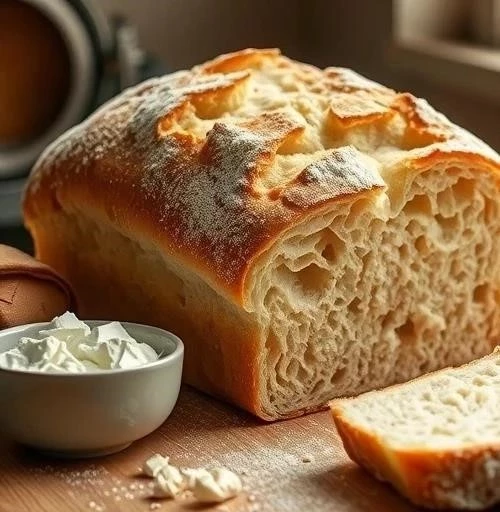
This ciabatta combines the rustic character of Italian baking with the mild taste of cottage cheese. The curds add moisture and tenderness‚ while careful fermentation helps create an open crumb and crisp crust. This home-baked bread is best served fresh‚ but it can also be toasted the next day.
Ingredients
- 500 g wheat flour‚ plus a little extra for shaping
- 200 g cottage cheese‚ preferably smooth
- 7 g dry yeast
- 300 ml warm water
- 2 tablespoons olive oil
- 1½ teaspoons salt
- 1 teaspoon sugar
Step-by-step recipe
- Prepare the starter. Stir the yeast and sugar into about 100 ml of the warm water. Leave for 10 minutes‚ until a light foam appears. If no foam forms‚ check that the yeast is active and the water is not hot.
- Mix the dough. Mash or blend the cottage cheese until mostly smooth. In a large bowl‚ combine the flour and salt. Add the yeast mixture‚ remaining water‚ cottage cheese and olive oil. Stir until no dry flour remains. The dough should be soft and sticky; avoid adding too much extra flour.
- Knead and let it rise. Knead gently in the bowl or on a lightly oiled surface for 6–8 minutes. The mixture will remain more moist than standard bread dough. Cover and leave in a warm place for 1½–2 hours‚ until visibly risen. During the first hour‚ fold the dough over itself twice at 30-minute intervals. This develops strength without making the crumb dense.
- Shape the loaf. Dust the work surface generously with flour and turn out the dough carefully‚ preserving as many air bubbles as possible. Divide it into two portions‚ if desired. Fold each portion into a loose rectangle and gently stretch it into a short loaf. Transfer to baking paper‚ cover‚ and proof for 30–40 minutes.
- Bake. Heat the oven to 230°C. Put an empty heatproof tray on the lower rack while it warms. Slide the loaves‚ still on the paper‚ onto a hot baking tray. Pour a little hot water into the lower tray to create steam‚ taking care to avoid splashes. Bake for 20–25 minutes‚ until deeply golden. Cool on a rack before slicing.
Texture and serving
The cottage cheese makes the crumb tender‚ while steam and high heat encourage a crisp crust. The exact baking time depends on loaf size and the oven; the bread is ready when the crust is browned and the base sounds hollow when tapped. For a more open crumb‚ handle the dough gently during shaping and do not rush the final proof.
This is a practical ciabatta recipe for home baking: the dough is wetter than many everyday loaves‚ so a scraper can make handling easier. Serve the bread with soup‚ vegetables‚ or olive oil. Store leftovers in a paper bag at room temperature and refresh slices briefly in a warm oven. The total preparation time is about three hours‚ most of it spent waiting for the dough to rise.


5 Comments. Оставить новый
The instructions explain how to handle the moist dough and preserve air bubbles during shaping. The fermentation and proofing times provide a useful guide.
This recipe includes helpful cues for judging the dough at different stages, including visible rising and crust color. The serving and storage note is concise.
The ingredient quantities and baking temperature are clearly stated. The guidance to avoid adding too much flour helps clarify the expected dough texture.
The recipe gives a clear sequence from activating the yeast to baking with steam. The note about checking the yeast is a practical detail.
The folding steps offer a straightforward way to develop the dough without extensive kneading. The option to divide it into two loaves is also useful.