
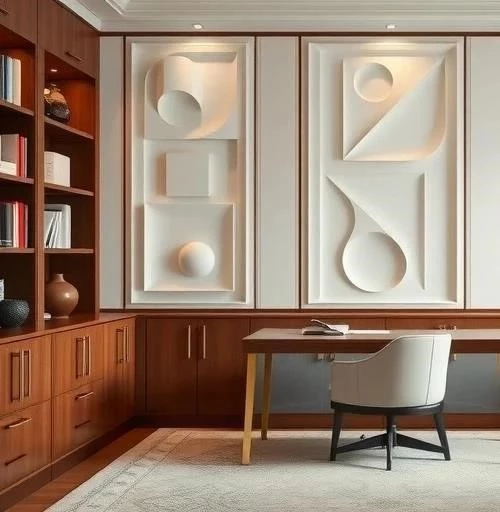
A study should feel composed and welcoming, while supporting concentration. Gypsum wall panels can bring architectural character to the room and help refine its sound. With thoughtful planning, decorative gypsum panels become more than ornament: they contribute to acoustic comfort and a comfortable working atmosphere.
Choose a balanced wall composition
Modern classic interior design combines elegant detailing with restrained forms. In a classic study or executive office, use wall panels, relief panels, gypsum ornament and stucco decoration to frame the desk or a bookcase. Moldings and panels can create a symmetrical composition, while a neutral color palette keeps the result calm. Subtle wall texture adds depth without competing with artwork or furnishings. This decorative wall finish makes study wall design feel intentional rather than overly formal.
Consider a combination of gypsum and wood: painted panels can define the main wall, while timber shelves or a desk add warmth. Repeating the same trim around a work area ties the room together. In a home office, a carefully placed feature wall can distinguish the workspace without making a small room feel crowded.
Plan for sound, not just appearance
Gypsum is dense and reflective, so decorative panels alone are not a substitute for acoustic panels or full office sound insulation. Their shape can scatter sound, but reliable sound absorption usually comes from porous backing or purpose-made absorptive materials. For home office acoustics, combine decorative gypsum panels with discreet fabric panels, a rug, curtains and upholstered furniture. This acoustic design approach supports echo reduction and reverberation control while preserving a polished interior.
For stronger results, ask an acoustics professional to assess the room’s size, surfaces and intended use. A sound-absorbing finish may be integrated behind selected relief panels, or acoustic panels can be placed at reflection points. The goal is not to make the study silent, but to reduce distracting reflections and improve speech clarity. Remember that treating room echo is different from blocking noise through walls; sound insulation may require construction changes.
Make the finish work for the room
Use space zoning to separate calls, reading and focused work. Place the desk where daylight is comfortable, then use the panel layout to visually anchor the work area. In office decoration, scale matters: broad profiles suit generous rooms, while slim moldings keep compact spaces light. A restrained palette, layered lighting and tactile materials complete the office interior.
When planning office finishing, check panel weight, fixing method and access to wiring before installation. Properly selected wall panels can unite decorative character with practical acoustic comfort. The result is a refined study that feels quieter, looks coherent and supports concentration every day.


3 Comments. Оставить новый
I like the practical suggestions for combining gypsum and wood. The advice to consider room size, furnishings, and reflection points makes the acoustic recommendations feel realistic.
A thoughtful guide to balancing decorative detail with a calm, functional workspace. The distinction between gypsum panels and materials designed for sound absorption is especially useful.
This article shows how a feature wall can add character without overwhelming a study. Its reminder that decorative panels alone will not solve noise problems is clear and helpful.