
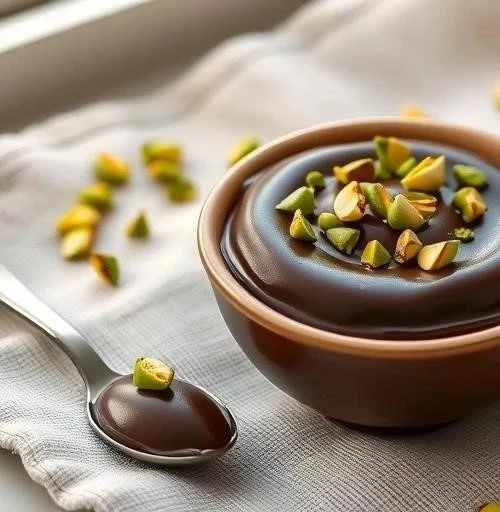
A good ganache is more than melted chocolate: its texture depends on the chocolate-to-cream ratio and gentle heating․ This simple recipe makes a quick dessert with a rich chocolate base and a fragrant pistachio finish․ Use it as cake cream, candy filling, or dessert glaze․
Ingredients
- 200 g chocolate: dark, milk, or white
- 120 ml heavy cream
- 2 tablespoons pistachio paste
- 20 g butter, softened
- 2 tablespoons chopped pistachios
Method
- Chop the chocolate finely and place it in a heatproof bowl․ Warm the cream in a saucepan until steaming, but do not let it boil․
- Pour the cream over the chocolate and leave it for two minutes․ Stir slowly from the centre until the mixture has a smooth consistency․ If pieces remain, set the bowl over a water bath and stir gently to melt the chocolate; avoid overheating, which can make the ganache grainy․
- Mix in the pistachio paste and butter until glossy; Fold in some chopped pistachios, saving the rest for decoration․
- For a pourable glaze, use the ganache while warm․ For a thicker cake cream or candy filling, cover it and allow the ganache to cool in the refrigerator, stirring once or twice․
Choose your chocolate
Dark chocolate gives a bold, less sweet result, while milk chocolate makes a softer, sweeter cream․ White chocolate is delicate and needs less cream: start with about 250 g white chocolate to 100 ml cream․ For dark or milk chocolate, 200 g to 120 ml is a useful starting ratio․ Brands differ, so adjust gradually rather than adding extra cream all at once;
Serving and storage
This pistachio ganache is a practical homemade dessert component: one batch can fill cupcakes, coat a cake, or top biscuits․ Sprinkle on the reserved chopped pistachios for a crisp contrast and attractive cake decoration․ Refrigerate leftovers in a sealed container for up to four days; warm gently before using as a glaze․ A short ingredient list and careful heating make this a simple recipe, but patience during cooling is what gives it a silky finish․


9 Comments. Оставить новый
The pistachio paste gives the ganache a distinctive flavor, while the chopped nuts provide a crisp finish. The recipe also explains how to reserve some for decoration, which is a thoughtful touch.
The different uses make this recipe versatile, from cake filling to a warm glaze. The guidance on cooling helps explain how to adapt one batch for different purposes.
The recipe keeps the ingredient list simple while still offering useful options for dark, milk, and white chocolate. That flexibility makes it easier to tailor the sweetness.
The storage advice is practical, and mentioning that leftovers can be warmed gently makes the recipe more convenient. A sealed container is a helpful detail for keeping the ganache fresh.
I appreciate the emphasis on gentle heating. Chocolate can become grainy if overheated, so the water-bath tip is a sensible backup when a few pieces do not melt.
The article balances basic instructions with useful troubleshooting. Advising readers not to boil the cream is a simple precaution that can make the process more reliable.
The explanation of how chocolate type affects the ganache is especially useful. The suggested white-chocolate ratio gives readers a practical starting point while acknowledging that brands can vary.
This is a clear, approachable method, and the instruction to stir from the centre should help produce a smooth mixture. The pistachios also add a welcome contrast in texture.
I like that the instructions distinguish between a pourable glaze and a thicker filling. Cooling time can change the texture substantially, so this clarification is valuable.