
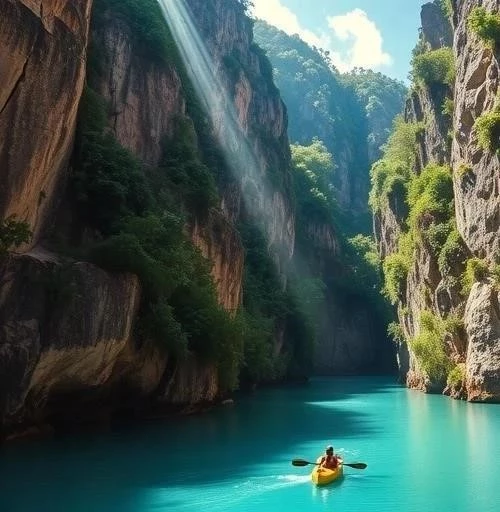
Sian Ka’an, a Mexican biosphere reserve on the Yucatán Peninsula, rewards travelers who look beyond the familiar beaches of the Riviera Maya. Its appeal lies not in a single dramatic landmark but in the meeting of wetlands, forest, limestone, and sea. The result is an argument for traveling slowly: changing light and perspective reveal more than a rushed checklist ever could.
Reading the Landscape
Visitors drawn by the canyons of Mexico should know that Sian Ka’an is not a classic canyon destination. Its strongest visual drama comes from narrow water channels, low limestone formations, and secluded inlets rather than towering cliffs. Still, the reserve’s rocky passages and gorge-like stretches can create the feeling of moving through a hidden corridor. These natural landscapes offer panoramic views in a quieter, more intimate form: a horizon opening across a lagoon, then closing beneath a canopy of mangroves.
This distinction matters. Expecting monumental rock walls may lead to disappointment; appreciating scale, texture, and changing color makes the journey richer. Turquoise lagoons contrast with dark mangrove roots, while tropical forests meet the Caribbean Sea and offshore coral reefs. The visual impressions are powerful precisely because they unfold gradually.
Routes and Responsible Exploration
Routes through the reserve vary by access point and conditions, so arrange a licensed guide and confirm what is open before setting out. A boat excursion is often the most effective way to understand the watery landscape. From the channel, travelers can see how mangroves shelter lagoons and connect inland habitats with the coast. On land, short guided walks reveal forest plants and the reserve’s karst terrain. Karst cenotes, formed as water shaped the limestone, add another layer to the peninsula’s distinctive scenery, although not every route includes one.
Choose ecotourism operators who keep groups small, follow marked routes, and respect wildlife-viewing distances. This is not merely good manners: fragile habitats are part of what makes the scenery exceptional. Noise, litter, and careless boat traffic can damage the very places visitors come to experience.
Wildlife and Photography
Wildlife is a compelling reason to travel slowly. Birdwatching may bring herons, egrets, and other wetland species into view; crocodiles can sometimes be spotted from a safe distance. Sea turtles use parts of the coast, but sightings are never guaranteed, and nesting areas must be left undisturbed. The reserve is a living ecosystem, not a wildlife show.
For nature photography, the most photogenic places are often moments rather than fixed viewpoints: a bird crossing a lagoon, sunlight on a mangrove channel, or a distant reef beneath clear water. Use a lens that lets you keep back from animals, protect equipment from salt and spray, and avoid flash near wildlife. Early or late light can bring out the colors of Yucatán’s landscapes without turning the visit into a race for a perfect image.
A More Meaningful Journey
Sian Ka’an will not satisfy every traveler seeking steep cliffs or conventional canyon scenery. Yet its winding passages, open water, and layered habitats offer a persuasive alternative: a journey shaped by subtle contrasts and close attention. Go with realistic expectations, choose responsible routes, and allow time for the landscape to change around you. The reward is not just a photograph, but a deeper sense of how the Yucatán Peninsula’s lagoons, forests, and Caribbean coast belong to one connected world.
9 Comments. Оставить новый
A thoughtful overview that balances travel inspiration with useful cautions. Its advice to choose an appropriate route and qualified operator encourages a more informed visit to a place where access and conservation both matter.
This is a helpful introduction for travelers deciding whether Sian Ka’an suits their interests. The clarification that cenotes are not included on every route is especially useful for setting realistic expectations.
The responsible-tourism guidance is a strong part of this piece. Small groups, marked routes, and respectful wildlife distances are practical considerations that can help visitors enjoy the reserve while limiting their impact.
I found the contrast between turquoise water and dark mangrove roots particularly effective. The article conveys the reserve’s atmosphere while remaining clear that its appeal is more intimate than monumental.
The article connects the scenery to the ecology, particularly by explaining how mangroves shelter lagoons and link inland habitats with the coast. That context makes the suggested boat excursion feel informative, not merely scenic.
The practical advice to confirm routes and conditions before setting out is important. Access can vary, and recommending a licensed guide gives travelers a more responsible way to explore this sensitive environment.
The article makes a useful distinction between Sian Ka’an and destinations known for towering canyon walls. That expectation-setting helps readers appreciate the reserve’s quieter beauty rather than arrive looking for scenery it does not offer.
The description of the lagoon and mangrove scenery is vivid without overstating the reserve’s scale. I also appreciate that the article explains why its visual appeal comes from changing textures and perspectives rather than dramatic cliffs.
I like the emphasis on how the landscape changes gradually, from lagoons to mangroves and forest. It makes a strong case for slowing down and observing the connections between habitats instead of treating the reserve as a checklist of sights.