
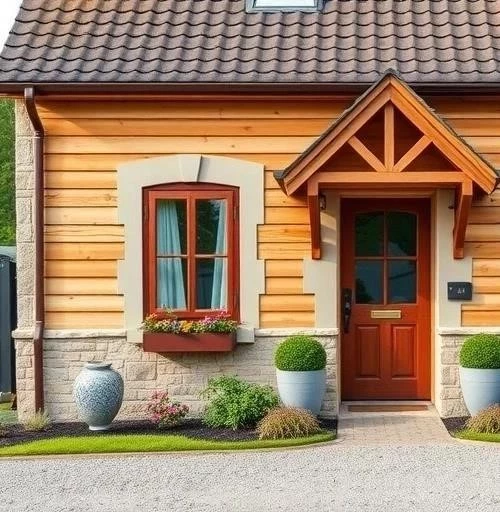
Facade finishing can refresh a cottage, protect its structure and improve comfort. Before choosing materials, inspect the walls, roof edges, drainage and foundation. Cracks, loose coatings and damp areas may indicate a need for facade repair rather than a cosmetic makeover. Updating the exterior of a country house should begin with fixing these defects and identifying their causes.
Start with insulation and wall protection
Facade insulation can reduce heat loss and help stabilize indoor temperatures. External thermal insulation is selected according to the wall structure, local climate and applicable fire-safety requirements. The full assembly matters: insulation, fixings, membranes and finish must work together. Vapor-permeable materials can help moisture escape from the wall, while suitable detailing around windows and rooflines improves wall moisture protection.
Two common systems are the wet facade and the ventilated facade. A wet facade combines insulation, reinforcing layers and a finish applied on site. A ventilated facade uses a cavity behind the outer cladding, allowing air to circulate. Professional installation of facade systems is important in either case; incorrect joints or moisture barriers can reduce durability and energy efficiency at home.
Choose a finish for the building and its setting
Facade panels and siding offer a wide range of colors and textures and can be practical for renovation. Decorative plaster creates a continuous surface, while facade paint can refresh an existing compatible finish. Facing brick and clinker tiles provide a masonry appearance; natural stone and artificial stone are often used for accents or a more substantial look.
Wood cladding, including planken boards and block-house profiles, gives the exterior a natural character. It requires suitable fixing, ventilation and periodic maintenance. Thermal panels combine insulation with an outer decorative layer, but their performance depends on the product and the quality of installation. No single material suits every building, so compare weight, maintenance needs, climate resistance and compatibility with existing walls.
Coordinate color, details and budget
Plinth finishing should withstand splashes, snow and mechanical impact; durable tile or stone products are often considered for this area. Facade decor and architectural elements, such as trim or window surrounds, can add definition, but should not obstruct drainage or ventilation. A coordinated facade color and exterior design help the cottage relate to its landscape and roof.
Modern facade solutions work best when appearance and performance are planned together. Obtain a condition assessment, compare material specifications and request a detailed estimate. The cost of facade finishing depends on surface preparation, insulation, chosen cladding, access equipment and labor. A clear scope helps prevent omissions and supports a durable result that protects the building for years.
7 Comments. Оставить новый
The article is well organized, moving from inspection and protection to the choice of finish. Its focus on compatible materials and careful detailing is helpful.
The discussion of insulation and moisture protection highlights important considerations for exterior renovations. It would help readers compare options before speaking with a professional.
The range of finishes covered gives readers a useful starting point for planning a renovation. The maintenance needs of wood cladding are also worth noting.
This is a practical introduction to facade materials, from plaster and siding to stone and wood cladding. The article also notes that material choice should suit the building and its setting.
A concise guide to the factors involved in updating a house facade. The article appropriately presents system performance as dependent on the full assembly and quality of installation.
The article gives a clear overview of the checks to make before choosing a facade finish. Its emphasis on addressing cracks and dampness before cosmetic work is useful.
The comparison of wet and ventilated facade systems makes the main differences easy to understand. The reminder that installation details affect durability is particularly relevant.