
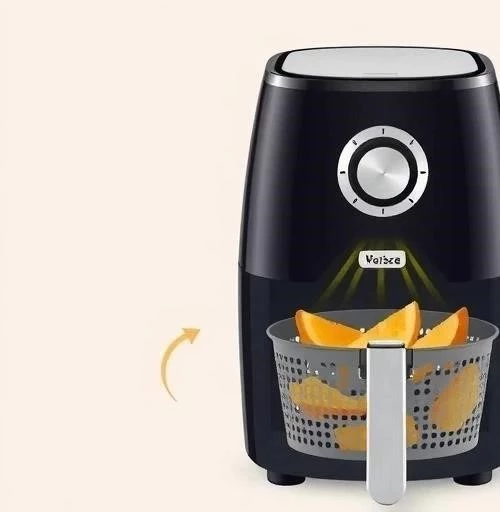
An air fryer sounds like a machine that dips food into invisible oil. The truth is more interesting: it is a compact convection oven that turns hot air into a fast-moving cooking team. Its secret is not magic, but heat, airflow and a carefully shaped basket.
What happens inside?
At the top of most models sits an electric heating element. Nearby, a powerful fan pulls air across it and drives the heated air down and around the food. The air then circulates through the cooking chamber, passing through the basket’s holes and returning toward the heater. Think of a miniature weather system whose only forecast is “crisp.”
A thermostat monitors temperature and switches the heater on and off to keep the chosen setting. The fan usually continues to move air, helping distribute heat. Exact designs vary: some appliances use different fan speeds, heating layouts or cooking modes, but the basic principle remains circulating hot air.
How does air make a crust?
Moving air transfers heat to the food’s surface. As moisture evaporates, the outside dries and warms; browning reactions then create toasted aromas and color. The open basket lets air reach more sides than a solid tray would. That is why fries in a crowded pile may turn out soft: their neighbors block the breeze.
Air frying does not literally deep-fry food. A bath of hot oil surrounds food and transfers heat very efficiently; an air fryer relies mainly on hot air. A light coating of oil can help browning and flavor, but a few drops are not the same as submerging ingredients in a fryer.
Why the basket matters
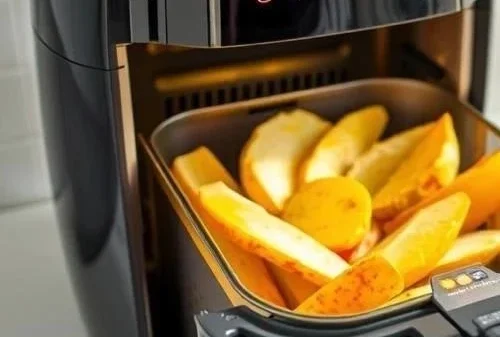
The perforated basket is an airflow map. Its gaps let hot air sweep under and around food, while the drawer catches crumbs and drips. Leave a little room between pieces when possible. For larger portions, cook in batches rather than building a food skyscraper—and shake or turn items partway through so their sheltered sides get a turn in the breeze.
Different foods behave differently. Thin pieces cook quickly; thick or frozen ones need more time. A recipe’s temperature and timing are starting points, not laws of physics: appliance size, food thickness and how full the basket is all matter. Check doneness, and use a food thermometer for meat or poultry.
Small tricks, better results
- Preheat when your recipe calls for it; a hot start can help the surface brown.
- Pat wet ingredients dry and use only a modest amount of oil.
- Keep loose, lightweight foods from lifting toward the heating element.
- Clean the basket and drawer after they cool, so old grease does not smoke.
So, what is the real trick?
An air fryer cooks by combining a nearby heat source with rapid, circulating air and a basket designed to let that air travel. It can make convenient, crisp-edged food with less oil than deep-frying, though it cannot make every dish identical to its deep-fried cousin. Picture a countertop oven with a turbocharged fan: the fan is the invisible chef, and good spacing is its room to work.

1 Comment. Оставить новый
The miniature-weather-system image makes the air fryer suddenly feel less like a gadget and more like a tiny kitchen climate. I especially like the reminder that crowding is really a traffic jam for heat: give the breeze room, and crispness gets its chance.