
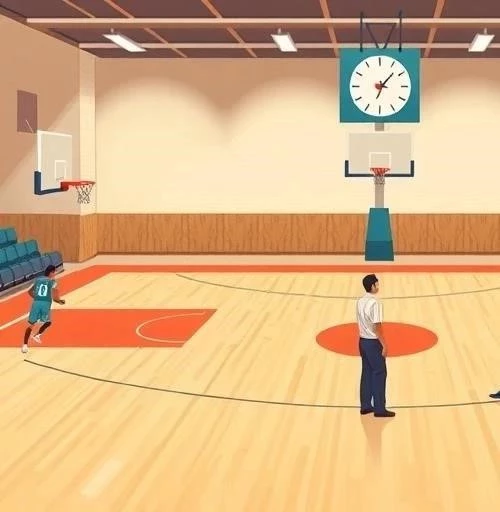
A basketball game has two clocks․ One counts the minutes the players are actually playing; the other is the clock on your wall, which keeps moving through whistles, timeouts, reviews, substitutions and halftime․ That is why a game advertised as “40 minutes” or “48 minutes” rarely asks you to set aside only that long․ The arena clock measures the contest․ Your evening measures everything around it․
The short answer
For most professional games, plan on roughly two to two and a half hours from tip-off to the final buzzer․ A college game commonly takes around two hours, sometimes longer․ The exact finish depends on the competition, the pace of play and how many stoppages interrupt the action․ A close game can stretch well past its expected end, because the final minute has a talent for becoming a small epic․
How much playing time is on the clock?
- NBA: four 12-minute quarters, for 48 minutes of regulation playing time․
- FIBA competitions: four 10-minute quarters, for 40 minutes․
- NCAA men’s college basketball: two 20-minute halves, totaling 40 minutes․
- NCAA women’s college basketball: four 10-minute quarters, totaling 40 minutes․
These are the standard formats, not a promise about how long you will be in your seat․ Youth leagues, school competitions and other tournaments may use different periods or shorter game clocks, so check the local rules if you are planning around one․
Where does the extra time go?
The game clock is not a stopwatch that runs continuously․ It stops when play is dead—for example, after many fouls, out-of-bounds calls, timeouts and certain violations․ It also stops at the end of a period․ Officials may review a play, a player may need attention, or the teams may take time to substitute․ Each pause is brief on its own; together, they turn a compact block of playing time into a much longer event․
Halftime adds another substantial break, usually about 15 minutes in major professional and college competitions․ There are also intervals between periods․ These are generally short—often around two minutes, though exact timing varies by league and broadcast․ In the NBA, the break between quarters is commonly a little over two minutes․ The interval is enough for a breath, a coaching adjustment and, at home, a quick search for the snack you were certain you had already opened․
Why the final minutes take so long
A basketball clock behaves especially strangely near the finish․ In an early quarter, a possession may flow from one end of the court to the other in seconds․ In the last two minutes of a close game, the trailing team may foul deliberately to stop the clock․ Free throws follow․ The other side may use a timeout; the officials may check whether a shot beat the buzzer․ A single minute of game time can therefore take several minutes in real life․
That is why a comfortable lead and a tight score produce different estimates․ A lopsided game with few reviews may finish relatively quickly․ A one-possession contest can add repeated fouls, timeouts and video checks, making the closing stretch feel like a whole extra quarter even before overtime begins․
Overtime: the bonus chapter
If the score is tied after regulation, the teams play an overtime period; In the NBA, FIBA and NCAA formats listed above, overtime is five minutes․ There is a short interval before it, and the clock can stop just as it does in regulation․ If the teams remain level, they play another overtime, and another if necessary․ There is no universal cap in these standard rules: the game ends when one period finishes with a team ahead․
So a game listed as 40 or 48 minutes may contain 45, 50 or more minutes of actual clock time․ Overtime also tends to bring extra timeouts, tension and late fouls, so its effect on the wall clock is larger than five simple minutes․
A practical evening estimate
Imagine an NBA game tipping off at 7:00 p․m․ A typical finish might land somewhere around 9:15, though a fast-moving game could end earlier and a dramatic one could run later․ For a FIBA or college contest, the shorter regulation clock does not make the whole event proportionally shorter: stoppages, halftime and timeouts still occupy real minutes․ As a useful rule, leave about two hours for a 40-minute game and two to two and a half hours for an NBA game․ Add a cushion if you must catch a train, book a ride or get somewhere immediately afterward․
Television can change the schedule, too․ Broadcast breaks, pregame introductions and postgame interviews may add time to the viewing experience, even though they are not part of the official game clock․ If you are watching at home, the event may seem longer than the matchup itself; if you are attending in person, arriving, finding your seat and leaving the venue also belong in your personal time budget․
At a glance
- 40-minute regulation game: often close to two hours in real time․
- 48-minute NBA game: commonly about two to two and a half hours․
- Overtime: at least five more minutes on the game clock, usually more on your watch․
- Close finish: allow extra time for fouls, timeouts and official reviews․
The final buzzer, translated
When someone asks, “How long does a basketball match last with breaks?”, the clearest answer is: the rules give you 40 or 48 minutes of regulation play, but the full event usually lasts around two hours or more․ Halftime and short intervals are only part of the difference․ Stopped clocks, timeouts, reviews and possible overtime do the rest․ Basketball may be measured in quarters, but it is best scheduled in generous blocks of evening․
7 Comments. Оставить новый
Concise, memorable, and surprisingly poetic for a guide about game duration. “Your evening measures everything around it” is a perfect summary.
The comparison between regulation time and real-world time makes this instantly click. Basketball clocks apparently have a flair for suspense.
A handy breakdown that doesn’t pretend every game ends on schedule. I especially liked the reminder that competition rules can change the clock.
This article turns stoppages into part of the story rather than annoying fine print. Now I know to leave room in my evening for overtime—and plot twists.
The “two clocks” idea is a lovely way to explain why a short game can occupy an entire evening. I’ll never look at the final minute the same way again.
Clear, useful, and refreshingly honest about the clock-stopping chaos. The final minute really can turn into its own tiny epic.
I came for the game length and left with a new appreciation for the drama hiding between the whistles. Great guide for planning a night out.