
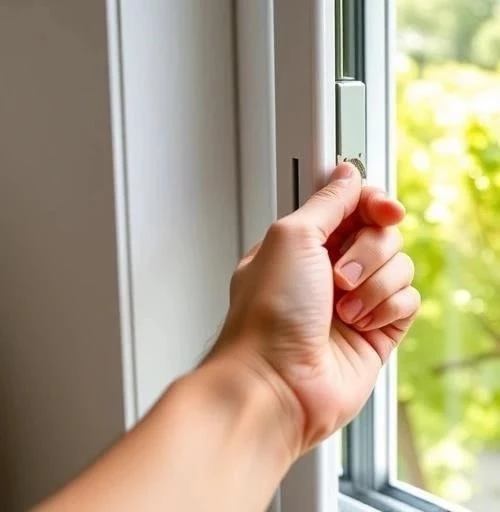
Summer brings warmer weather, but it does not mean that windows need no attention. Correct adjustment helps a sash close smoothly, supports ventilation and protects the room from dust, noise and unwanted drafts. A few careful checks can improve comfort without putting unnecessary strain on the hardware.
Check the window before adjusting it
Look for signs of incorrect adjustment: a handle that is difficult to turn, a sash that rubs against the frame, uneven gaps, or air movement around a closed window. First clean the frame and inspect the seals. A worn or cracked window seal may need replacement; changing the pressure will not repair damaged rubber. If the sash is badly misaligned, or the handle feels loose or jammed, contact a window specialist.
Use summer pressure carefully
Many PVC windows have adjustable locking pins, also called cams or eccentrics. These parts determine how firmly the sash presses against the frame. On some models, a marked pin can be turned with a suitable tool; others require different handling. Check the manufacturer’s instructions before making changes.
Summer mode usually means a lighter sash pressure, not a completely loose closure. If the window has this option, adjust each pin by the same small amount, then close the sash and test it. A strip of paper placed between the sash and frame can help: it should pull out with some resistance. Do not force the pins or set the pressure so low that the window no longer closes securely.
Adjust alignment and ventilation
If the sash rubs or sits unevenly, the hinges may need adjustment. The upper and lower hinge affect sash position, but their adjustment points differ by window system. Make tiny changes, testing the movement after each one. Avoid turning several screws at once, and stop if the sash becomes less stable.
Use the handle gently; it should turn only when the sash is properly positioned. For everyday fresh air, use the tilt function or micro-ventilation if available. Regular airing helps ventilate a room, while a secure closed position helps prevent drafts when ventilation is not needed.
Care for lasting efficiency
Clean the hardware and apply a small amount of suitable lubricant to moving parts at the intervals recommended by the manufacturer. Keep drainage openings clear and check the seals periodically. Seasonal adjustment is not mandatory for every window: some fittings have no summer or winter setting, and forcing a change can cause damage. Proper maintenance, sound seals and moderate pressure all contribute to window airtightness, comfort and energy efficiency.
Key terms
These Russian search terms correspond to the advice above: регулировка оконной фурнитуры (window hardware adjustment); летний режим окон (summer window mode); настройка пластиковых окон (PVC window adjustment); прижим створки (sash pressure); регулировка прижима окна (window pressure adjustment); оконные цапфы (locking pins); эксцентрики на окнах (window cams); ответные планки (keep plates); регулировка петель (hinge adjustment); верхняя и нижняя петля (upper and lower hinge); оконная ручка (window handle); микропроветривание (micro-ventilation); герметичность окна (window airtightness); уплотнитель для окон (window seal); проветривание помещения (room ventilation); защита от сквозняков (draft protection); энергоэффективность окон (window energy efficiency); обслуживание пластиковых окон (PVC window maintenance); смазка оконной фурнитуры (hardware lubrication); самостоятельная регулировка окна (DIY window adjustment); признаки неправильной настройки окна (signs of incorrect adjustment); сезонная регулировка окон (seasonal window adjustment); режимы пластиковых окон (PVC window modes); уход за оконной фурнитурой (hardware care).
3 Comments. Оставить новый
Helpful advice, especially the reminder to check the seals before changing the pressure. Small, careful adjustments sound much safer than forcing the hardware.
A useful guide for basic seasonal maintenance. The emphasis on making tiny adjustments and testing the window each time is particularly important.
The paper test is a simple, practical way to check how firmly the sash closes. I also appreciate the clear warning to consult a specialist if the window is badly misaligned.