
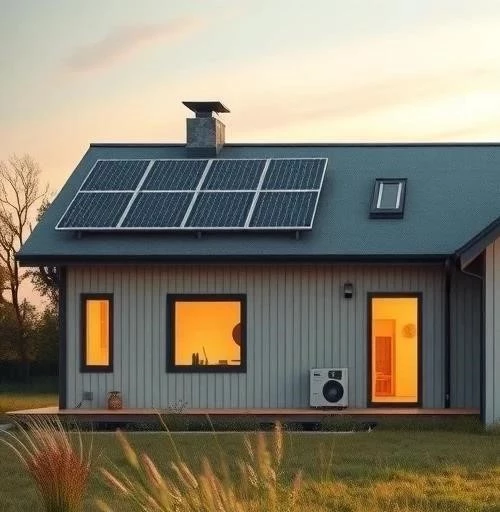
Energy independence does not mean disconnecting from every utility. It means reducing dependence on fuel and grid electricity while keeping the home comfortable. A smart home can coordinate heating, renewable energy and backup systems. The first step is to improve energy efficiency: home insulation and heat loss reduction lower energy consumption before new equipment is installed.
Build an efficient heating system
Choose a heating system to match the building, climate and available energy. A heating boiler can work alongside a heat pump in a hybrid heating system; in suitable conditions, a heat pump can also support gas-free heating. Solar panels and a solar thermal collector provide renewable energy, while a thermal storage tank stores heat for later use. An energy storage battery can hold electricity for evening demand.
Equipment works best as part of an intelligent heating system. A thermostat and temperature sensors support room temperature control, while smart radiators or underfloor heating can adjust individual zones. Weather sensors enable weather-compensated automation, which adapts heating to outdoor conditions. These measures can improve the indoor microclimate and contribute to heating cost savings without sacrificing comfort.
Connect controls and energy supply
A home automation platform can act as an energy management system, coordinating heating control with solar generation and household demand. Consumption monitoring helps residents see when and where energy is used. Some systems let users control the boiler via smartphone, set schedules and receive alerts. Clear settings matter: automation should maintain safe temperatures and allow manual control when needed.
For greater resilience, combine alternative energy sources with backup power. A solar power plant, an energy storage battery and a backup generator can help maintain an autonomous energy supply during an outage, though capacity and local conditions determine how long it lasts. Uninterrupted electricity supply for essential equipment may require a properly sized battery or generator. Professional design should account for electrical safety and maintenance.
Plan for the whole building
Energy saving begins with insulation, efficient equipment and realistic control settings. Compare installation costs, expected output and maintenance before investing. A well-planned system can increase energy efficiency and move a home toward energy independence, but results depend on climate, building condition and usage. Review performance regularly and adjust schedules as household needs change.

2 Comments. Оставить новый
The article clearly explains how energy efficiency, heating equipment and automation can work together. It also appropriately notes that system performance depends on the home and local conditions.
The discussion gives a useful overview of options for managing household energy and preparing for outages. The reminder to retain safe temperature settings and manual control adds practical context.