
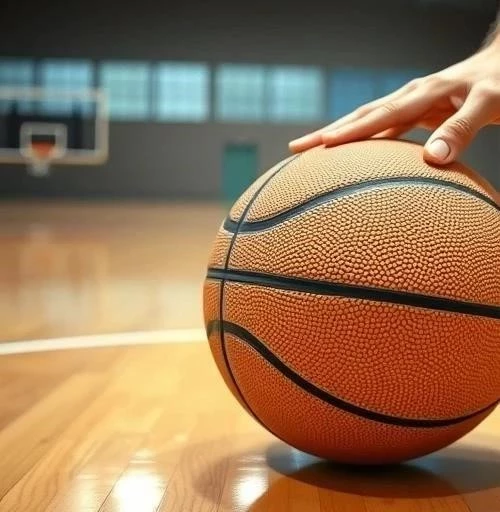
The right basketball should fit the player, the court and the way the ball will be used. A ball that is too large, too heavy or too slippery can make learning harder, while the wrong cover may wear out quickly. Before comparing brands or prices, decide who will play and whether the main court is indoors or outdoors. Then check size, material, grip, construction and inflation.
Choose the Correct Size
Basketball sizes vary by age group and competition, so use the league’s rules when buying for organized play. As a general guide, size 7 is the standard men’s ball, size 6 is commonly used in women’s basketball, and size 5 is a popular choice for children. Younger players may need an even smaller ball. Age recommendations vary, so consider the player’s hand size and strength as well as their age.
- Size 7: Typically used in men’s adult competitions. It is the largest standard size and is heavier than junior balls.
- Size 6: Common in women’s competitions and suitable for many young teens moving up from a smaller ball.
- Size 5: Often used for children and junior training, offering easier control for smaller hands.
When available, check the manufacturer’s circumference and weight specifications rather than relying on the size label alone. A ball that is too big or heavy can make dribbling, passing and shooting uncomfortable. For a growing player, it is usually better to choose a size they can control properly now than to buy a full-size ball they will use only later.
Match the Ball to the Playing Surface
The court surface is one of the most important factors. Indoor courts are usually smooth, and outdoor courts can be abrasive, especially when made of rough concrete or asphalt. Using the wrong ball regularly may wear down its cover and reduce grip.
- Indoor: Look for a ball marked “Indoor.” Models with a composite or other soft synthetic cover are designed to feel comfortable and grip well on a clean gym floor. Higher-end balls may use leather or advanced microfiber; some leather models need a break-in period. These covers can wear quickly on rough outdoor surfaces.
- Outdoor: Choose a ball specifically marked “Outdoor.” Rubber covers are generally durable and suit asphalt and concrete, though their feel may be firmer than that of a premium indoor ball.
- Indoor/outdoor: A dual-use ball is a practical option if you play on both types of court. It is a compromise, not a guarantee that one cover will perform like a specialist ball everywhere. Rough pavement can still shorten its life.
Do not assume that an indoor/outdoor label means the ball is equally suited to every surface. Consider where you play most often and how rough the outdoor court is. If you mainly play in a gym, protect an indoor ball by keeping it off pavement.
Check Grip and Construction
Grip affects control when dribbling, catching and shooting. The ball should feel secure without being painfully rough. Look at the channels—the lines between the panels—as well as the pebbled texture of the cover. Some players prefer deeper channels; others prefer a more even surface. There is no single pattern that suits everyone, so handle the ball before buying if possible.
Check that the ball is round, the panels are even, and the seams are neat and consistent. Avoid visible lumps, cuts, loose edges or areas where the cover appears to be separating. A well-made ball should feel balanced in your hands. Brand reputation can help, but a familiar logo does not replace checking the size, intended surface and quality of the individual model.
Consider the Bladder and Inflation
Most basketballs have an inner bladder that holds air, with a cover and winding layers around it. You do not need to judge the internal construction in detail for casual play, but the ball should hold pressure reliably and bounce consistently. Follow the pressure printed near the valve or in the manufacturer’s instructions; do not inflate by guesswork. Use a suitable pump needle, moisten it before insertion, and avoid forcing it into the valve.
A simple bounce check can help identify obvious problems. Inflate the ball to the recommended pressure and drop it from a consistent height onto a hard, level surface. It should rebound predictably rather than wobbling or bouncing unevenly. This is a practical check, not a substitute for the official pressure guidance or a regulated match inspection.
Shop Smart and Care for Your Ball
Compare the total value, not just the price. A budget rubber ball may be the sensible choice for a driveway or occasional play; a more expensive composite model may suit regular indoor training. Confirm that the product description clearly states the size and intended surface. Reviews can be useful, but prioritize comments from players using it in conditions similar to yours.
After play, wipe dirt and moisture from the cover and store the ball in a cool, dry place, away from direct sun and sharp objects. Avoid leaving an indoor ball outside. Check its pressure regularly, since temperature changes and frequent use can affect how it feels and bounces. With basic care, even a well-used ball can remain reliable for longer.
Quick Buying Checklist
- Choose the size required by the player, age group or competition.
- Select indoor, outdoor or dual-use construction to match the main court.
- Check the grip, seams, shape, valve and stated inflation guidance.
- Choose a price and material suited to how often and where you play.
The best basketball is not automatically the most expensive one. It is the ball that the player can control comfortably, that suits the court, and that is made well enough for the intended use. Make those choices first, and brand and appearance can come afterwards.


5 Comments. Оставить новый
This is a useful starting point for choosing a basketball, with clear explanations of size and indoor versus outdoor use.
The size guidance is clear and practical. I especially appreciate the reminder to consider hand size and strength, not just age.
The advice to check the manufacturer’s measurements instead of relying only on the size label is especially useful.
A helpful overview for anyone buying a first basketball. Matching the ball to the playing surface is an important point that is easy to overlook.
I like the straightforward explanation of how an oversized or heavy ball can make learning basketball more difficult.