
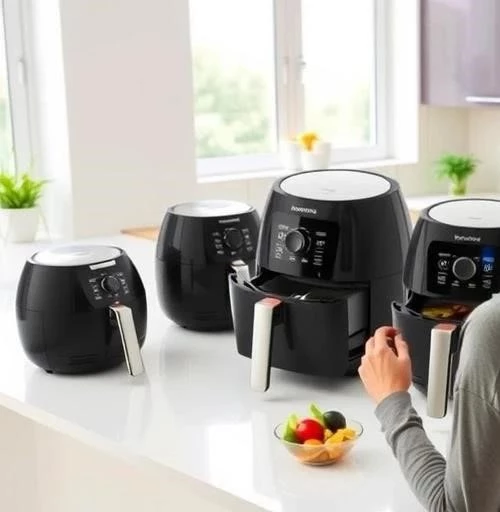
An air fryer is a compact countertop appliance that cooks food by circulating hot air․ It can brown and crisp many ingredients with less oil than deep-frying, but results depend on the appliance, the food and how it is used․ The right choice depends on household size, available space, cooking habits and budget—not simply on the largest capacity or the most features․
Choose the type and capacity
Basket-style models have a pull-out drawer and are often a practical choice for small kitchens and everyday portions․ Their compact cooking chamber heats quickly, though batches may need to be cooked separately․ Oven-style models use shelves or racks and may suit people who want to cook several foods at once․ They usually take up more counter space and can require more cleaning․
Capacity is commonly listed in litres or quarts, but usable space matters more than the headline figure․ A deep basket may hold a generous amount of food while still crowding items that need to sit in a single layer․ Consider the number of people you usually feed and the foods you cook: a couple of portions of vegetables require less room than a family-sized batch of chicken․ If possible, compare the dimensions of the cooking area and the appliance itself․
Check power, controls and temperature range
Higher wattage can support faster heating, but it is not a guarantee of better cooking․ Check that the appliance is compatible with your kitchen outlet and that you can leave enough clearance around it for ventilation․ A clear temperature control and an adjustable timer are useful for adapting recipes․ Preset programmes can save time, but they are not essential; cooking times vary with portion size, ingredients and how full the basket is․
A wide temperature range offers flexibility for gentle heating as well as browning․ A shake reminder can be helpful for foods that benefit from being turned, while a window or interior light makes it possible to check progress without opening the drawer․ Treat these as conveniences rather than reasons to overlook capacity, reliable controls or ease of cleaning․
Consider cleaning and everyday use
Look for a basket and tray that are easy to remove, with smooth surfaces and few hard-to-reach corners․ Check the manufacturer’s instructions before assuming parts are dishwasher-safe․ A non-stick coating can simplify cleanup, but it should be handled with suitable utensils and soft cleaning tools to avoid damage․ Also consider the weight of the basket, the clarity of the display, and whether the appliance can be stored conveniently․
Compare safety, quality and cost
Review the warranty, customer support and availability of replacement parts․ The exterior can become hot, so stable construction, a secure handle and sensible cord placement are worth checking․ Follow the manual’s guidance on ventilation, safe placement and cleaning, and avoid overfilling the basket․ Do not assume that a more expensive model will automatically cook better; compare useful specifications and independent reviews for the foods you plan to prepare․
A practical checklist
- Choose a capacity that matches typical meals, not occasional maximum batches․
- Measure counter and storage space before buying․
- Compare usable cooking area, controls, temperature range and power requirements․
- Check how removable parts are cleaned and whether replacement parts are available․
- Pay for features you will use, rather than presets you are unlikely to need․
Before deciding, compare two or three models using the same criteria․ A well-sized, straightforward air fryer that is easy to clean is often more useful than a larger appliance with features that do not fit your routine․
7 Comments. Оставить новый
The article clearly explains the differences between basket-style and oven-style air fryers. Its emphasis on available space and cooking habits makes the comparison practical.
This guide presents air fryer features in a balanced way. It notes that wattage and preset programmes can be useful without treating them as guarantees of performance.
The discussion of capacity is useful, especially the distinction between advertised volume and usable cooking space. The examples help clarify why basket dimensions matter.
The explanation of cooking results is appropriately measured. It recognizes that timing and browning depend on the food, portion size and how the appliance is used.
The article gives readers practical points to consider, including counter space, outlet compatibility and ventilation. These details add useful context to choosing an appliance.
The overview is organized around relevant buying decisions and avoids suggesting that one model suits every household. The notes on controls and temperature range are helpful.
This is a concise introduction to comparing air fryers. It covers both appliance features and everyday considerations, such as batch size and cleaning.