
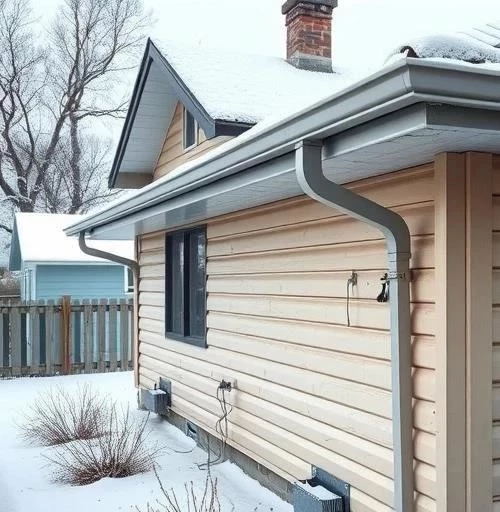
A gutter system in a cold climate must carry rainwater and meltwater away from the roof without failing under ice, snow or repeated temperature changes. The lowest purchase price does not always mean the lowest overall cost: weak components can lead to leaks, repairs and premature replacement. A practical plan balances initial price, installation costs and expected service life.
Choose materials for local conditions
Compare galvanized steel, other metal gutters and PVC systems against local climate conditions. Metal gutters are generally rigid, while PVC is lightweight and may be easier to handle during a do-it-yourself installation. Both need to be rated for outdoor use and temperature variation. In regions with severe winters, select frost-resistant materials and durable fittings designed to tolerate expansion during freezing. Check the manufacturer’s warranty and installation requirements before comparing prices.
Snow load and ice formation matter as much as material. A frost-resistant gutter is not necessarily protected from ice dams or ice inside the outlet. Correct roof detailing, adequate capacity and regular maintenance help limit these risks. Where freezing is a recurring problem, an energy-efficient heating cable and an anti-icing system may be considered; include electricity use and upkeep in the cost comparison.
Size the system accurately
Estimate the roof area draining to each section, then select gutter and downpipe dimensions for the expected rainfall and meltwater flow. A correctly sized system has enough flow capacity to prevent overflow, without paying for oversized parts that the roof does not require. The downpipe diameter calculation should also account for the number and location of outlets. Set the gutter slope toward the outlets and follow the product specification for bracket spacing.
Use a written bill of materials before ordering: gutters, downpipes, brackets, outlets, corners, connectors, end caps and seals. Count fittings carefully and allow for a reasonable amount of cutting waste. This estimate makes it easier to compare suppliers and avoid paying for unused parts.
Reduce installation and material costs
Lowering material costs does not mean choosing the thinnest product. Compare complete systems from several manufacturers, including the price of compatible fittings, delivery and warranty coverage. A low-cost gutter can become expensive if its connectors are difficult to source or its joints leak. Buying a coordinated set can reduce mismatch and improve joint tightness.
Installation savings are possible when the roof layout is simple and the work can be completed safely. Self-installation may reduce labor charges, but incorrect bracket spacing, poor slope or insecure downpipe attachment can cause costly failures. Follow the instructions, use suitable fasteners and check every joint. For complex roofs or work at height, professional installation may be the more economical choice over time.
Plan for maintenance
Clean the system at least seasonally and inspect it after heavy snowfall or storms. Removing leaves and debris protects against blockages; checking joints and brackets allows small defects to be repaired before water damages the facade or foundation. Keep outlets clear so meltwater can drain rather than freeze in the gutter. These simple measures extend service life and reduce repair costs.
The best budget solution is therefore a properly sized, climate-appropriate system with reliable components, sound installation and routine care. Compare total ownership costs—not just the initial system price—to make a cost-conscious choice for cold winters.


2 Comments. Оставить новый
The discussion clearly connects winter conditions with gutter performance and maintenance. Including installation requirements and expected service life in the comparison is a practical way to assess different systems.
The article gives a useful overview of the factors involved in choosing a gutter system for a cold climate. Its emphasis on sizing, material suitability and total cost helps readers look beyond the initial purchase price.