
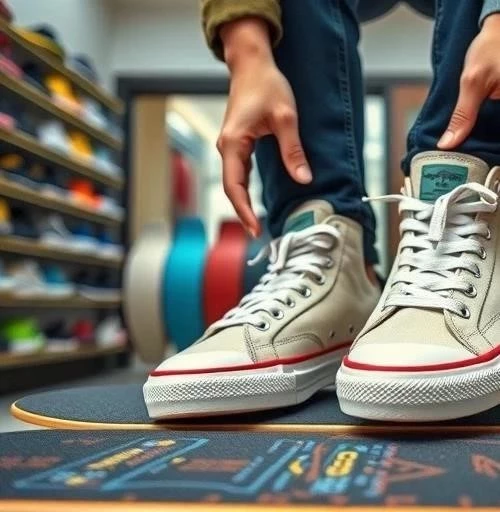
A child’s first skateboard can feel like a tiny spaceship; the right shoes are its landing gear. But there is a useful twist: Saucony is best known for running footwear, not as a specialist skate-shoe brand. So don’t assume every Saucony sneaker is built for board tricks. Treat “skater-style” as a look or intended use, then check the exact model’s construction, fit and suitability before buying.
Start with the kind of skating
For scooting, cruising and occasional trips to the skatepark, comfort and a secure fit may matter most. For frequent practice, hard braking and repeated board contact put extra demands on the shoe. Look for a sturdy upper, a sole that grips reliably, and protection around areas that meet the board. If a product page does not clearly describe these features, ask the retailer or choose a shoe specifically designed for skateboarding. A running shoe may feel light and springy, but that alone does not make it skate-ready.
Fit: a little room, no swimming
Measure both feet while your child is standing, ideally later in the day. Compare the larger foot with the brand’s current size chart; sizes can differ between models, so don’t rely only on the number printed in an old pair. Leave a small amount of growing room at the toe, but make sure the heel stays put and the foot does not slide sideways. Too much extra space can make balancing and pushing awkward. Have your child walk, crouch and imitate a push-off in both shoes. If toes feel pinched or the heel lifts, try another size or shape.
Inspect the details, not just the color
- Outsole: Check for a durable, grippy surface and a pattern that feels secure on a board. Grip matters more than a fashionable silhouette.
- Upper: Reinforced material and well-finished seams may withstand scuffs better than a delicate, lightweight mesh. Inspect the toe and sides especially.
- Closure: Laces can be adjusted closely; hook-and-loop straps can be easier for younger children. Either should hold firmly and stay out of the way.
- Comfort: Padding should feel pleasant, not bulky. Ask about rubbing, pressure or hot spots after a short indoor try-on.
- Flex: The shoe should bend naturally where the foot bends, while still feeling stable underfoot.
Let the child test the choice
Bring the socks they usually skate in, and try shoes on both feet. Check the fit standing up, then walk and make a few gentle board-free movements. A child’s verdict is valuable: “It feels weird” often points to a real issue. Avoid buying a tight pair on the promise that it will stretch, or a very large pair because children grow quickly. Comfort now helps them focus on learning, not on their shoes.
Care, safety and the final call
After each session, brush off grit and let the shoes dry naturally; follow the care label rather than placing them beside a heater. Examine the sole, seams and toe regularly. Worn tread or a loose upper can change how a shoe behaves, so replace damaged footwear instead of hoping it will last one more trick. A helmet and appropriate protective gear remain essential—good sneakers are not substitutes for them.
The simple rule: choose the Saucony model only if its current specifications suit your child’s skating, its fit is secure, and the child finds it comfortable. If the product is primarily a running shoe, reserve it for running and pick a purpose-built skate shoe for regular board sessions. The best pair isn’t the loudest one on the shelf; it’s the one that lets a young skater move confidently, safely and happily.

6 Comments. Оставить новый
I appreciate how this treats the child as part of the fitting process, not just a measurement on a size chart. A walk, crouch, and pretend push-off can reveal more than a label ever will.
I like the article’s reminder that a sporty silhouette isn’t a safety certificate. It turns shoe shopping into a small detective mission: inspect the sole, check the fit, then let the child try a few skating motions before deciding.
A useful reality check for anyone drawn in by a familiar brand name. The article separates running-shoe reputation from skate-specific performance without making the choice feel intimidating.
The “little room, no swimming” idea is wonderfully memorable. Growing feet need space, but a loose shoe can make a board feel like a slippery raft. That balance is a practical detail parents can actually use.
The shoe inspection checklist has the spirit of a tiny workshop: look closely at seams, toes, sides, and grip before the first scrape against the board. Practical, clear, and refreshingly unswayed by color alone.
This is a thoughtful guide because it asks how often the child will skate instead of pretending one shoe suits every adventure. Occasional cruising and regular practice are different journeys—and the footwear should match.