
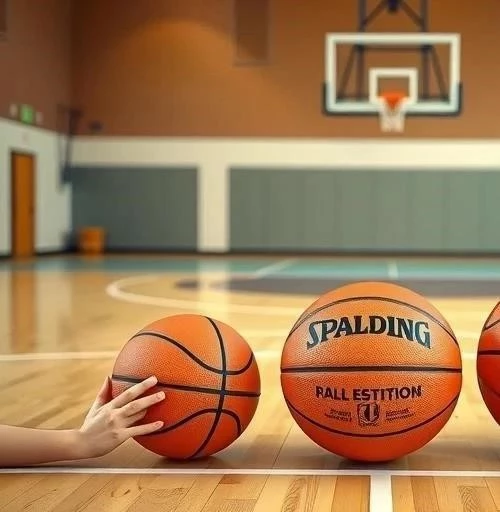
A basketball should feel like an extension of your hand—not a planet you’re trying to steer. Choose the right size and dribbling becomes more natural‚ passing more precise‚ and shooting less like a wrestling match. Choose the wrong one‚ and even a promising player may struggle to control the ball. Here’s how to find the right fit.
The standard sizes‚ at a glance
- Size 7: 29.5 inches (about 75 cm) in circumference. The standard men’s ball‚ used in most men’s professional and adult competitions. A good choice for many players aged 15 and up.
- Size 6: 28.5 inches (about 72 cm). The standard women’s ball and a common choice for girls aged 12 and up‚ and boys aged roughly 12–14.
- Size 5: 27.5 inches (about 70 cm). A popular junior ball‚ often recommended for children aged around 9–11.
- Size 4: 25.5 inches (about 65 cm). A smaller option for young children‚ commonly around ages 5–8.
- Size 3: About 22 inches (about 56 cm); A mini ball‚ ideal for very young beginners‚ casual play‚ or practicing basic hand skills.
Age ranges are useful starting points‚ not strict rules. Leagues and local programs may use different recommendations‚ so check their requirements before buying a ball for a team or competition.
Let the player‚ not the birthday‚ decide
Two children of the same age can have very different hands‚ strength‚ and coordination. Ask the player to hold the ball at chest height and try a comfortable one-handed grip. Can they spread their fingers around it? Can they control a slow dribble without chasing it across the room? Can they make a shooting motion without forcing the ball forward with both hands?
If the ball repeatedly slips away or feels too heavy to lift with good form‚ consider a smaller size. This is especially important for beginners: a ball that is too large can encourage awkward shooting habits‚ because the player may push it instead of using a smooth‚ balanced motion. A well-sized ball gives developing hands room to learn.
Match the ball to the game
If the player competes‚ follow the league’s rules first. Official size is about consistency: the ball must feel familiar when the game gets fast. For recreational play‚ comfort matters more. A player who enjoys practicing with a manageable ball may develop skills more happily than one struggling to handle an oversized one.
For a family ball‚ think about who will use it most. If several players share it‚ choose the size that suits the regular player or the youngest person expected to practice seriously. A mini ball can be fun for everyone‚ but it won’t replace a regulation ball when it’s time to prepare for a real game.
Choose the right surface‚ too
Indoor: Leather and composite-leather balls are designed for court play and generally offer a softer feel and reliable grip. Some premium leather balls need a break-in period. Check the manufacturer’s instructions‚ because indoor materials can wear quickly on rough pavement.
Outdoor: Rubber or durable composite balls are better suited to asphalt and concrete. They can handle abrasion and are often a practical choice for driveways‚ parks‚ and schoolyards. Their feel may be firmer than an indoor ball‚ but they’re built for tougher surroundings.
Indoor/outdoor: These balls offer a convenient compromise for players who move between a gym and a playground. They may not have the specialized feel or lifespan of a surface-specific ball‚ but for everyday practice they can be a sensible all-rounder.
Before you buy: a quick fit test
- Check the printed size or circumference on the ball or product label.
- Hold it‚ spread your fingers‚ and see whether a relaxed grip feels secure.
- Try a few controlled dribbles and a comfortable shooting motion.
- Make sure the material suits the court where the ball will be used most.
- Check that it is inflated to the manufacturer’s recommended pressure; a poorly inflated ball can feel like the wrong size.
Common mistakes to avoid
Don’t buy a ball just because it is the biggest‚ most expensive‚ or used by a favorite professional. A player’s hands and the rules of their competition matter more than a star’s equipment. Don’t assume every “youth” ball is the same size‚ either—read the label. And don’t judge a ball only by how it feels in the shop: a smooth indoor ball may not be the best companion for a rough driveway.
The simple rule
Start with the official size for the player’s age group‚ gender category‚ and competition. Then check the fit in their hands. If the ball is for casual play‚ prioritize control and confidence. The right basketball is not merely one that meets a measurement; it is the one the player can dribble‚ pass‚ and shoot with sound technique—and wants to pick up again tomorrow.
In short: Size 7 for most adult men‚ size 6 for women and many older juniors‚ size 5 for many middle-grade players‚ and smaller sizes for younger beginners. Confirm local rules‚ test the grip‚ and choose a surface-ready material. When the ball feels manageable‚ the game opens up.

1 Comment. Оставить новый
The best advice here is refreshingly simple: let the player’s hands have the final say. A ball should invite practice, not turn every shot into a negotiation with gravity. I especially like the reminder that the right fit helps build good habits from the start.