
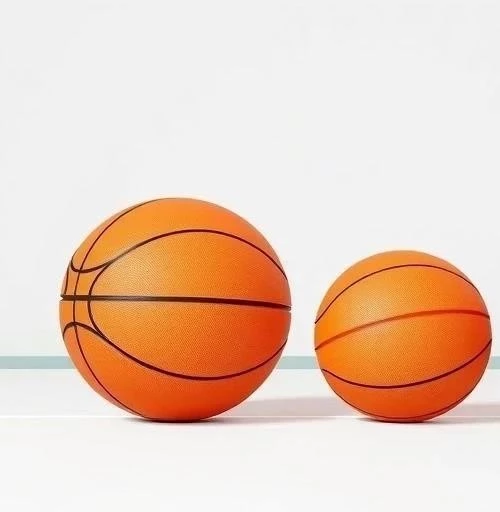
A basketball should feel like an invitation‚ not a stubborn orange planet. The right size helps a player control dribbles‚ pass cleanly and shoot with natural form. Choose by age and competition rules‚ but let hand strength and comfort have the final say: children grow at different speeds‚ and league guidance can vary.
The standard sizes
- Size 7: The standard men’s game ball. It measures about 75–77 cm around and weighs 580–620 g.
- Size 6: Used in women’s basketball and often by young players. Its circumference is about 71.5–73 cm; weight is roughly 510–550 g.
- Size 5: A common junior ball‚ around 68.5–70 cm around and 465–495 g. Some mini-basketball versions are lighter‚ about 360–390 g.
- Size 3: A small option for very young beginners and playful practice; check the maker’s specifications‚ as dimensions can differ.
These figures are useful reference points‚ not a reason to ignore the rulebook. For organized play‚ check the competition’s exact standard. A ball that is too large can make a child push a shot with two hands; too small‚ and familiar game handling may feel different later.
What should a child use?
As a starting guide‚ younger children—often around ages 5–8—usually find size 5 easier to grip. Around 9–11‚ size 5 may still suit‚ while some players are ready for size 6. Players about 12–14 may use size 6 in many youth settings; older teens’ requirements depend on the league and category. These are guideposts‚ not birthday-based laws.
Try this simple test: can the player hold the ball securely‚ dribble without chasing it‚ and release a shot without twisting the whole body? If not‚ test a smaller or lighter ball. Good technique matters more than looking ready for an adult-sized challenge.
Indoor‚ outdoor‚ and feel
Size is only half the story. For a polished indoor court‚ leather or composite materials can offer a softer‚ responsive grip. For asphalt or rough outdoor courts‚ durable rubber is usually the practical choice. Check whether the ball is marked for indoor‚ outdoor‚ or both. A quality surface should feel grippy—not slippery—without catching harshly on the fingertips.
Inflation matters too: follow the pressure printed near the valve. A ball that is overinflated may bounce like a runaway; one that is too soft feels sluggish. Bounce it from shoulder height and notice whether it returns steadily. The best choice combines the correct size‚ dependable grip and a lively‚ predictable bounce.
The quick answer
Choose size 7 for standard men’s play‚ size 6 for women’s play‚ and usually size 5 for children’s introduction to basketball. Then check age-group rules‚ test the grip‚ and consider where the ball will be used. The perfect ball is not simply the biggest one a player can lift: it is the one that lets the game flow from hand to hand.

6 Comments. Оставить новый
A practical guide with a playful pulse. Its best advice may be the quietest: choose equipment that lets good technique emerge instead of making every shot a wrestling match.
This treats growing players like individuals rather than entries on a chart. That is a refreshing way to talk about sport, where confidence can matter as much as circumference.
I appreciate the distinction between a ball for a rough playground and one for a polished court. The right choice can save both a ball and a very frustrating afternoon.
Useful, approachable guidance, especially the simple grip-and-shot test. A tape measure can give you numbers; watching a player move tells you whether the ball feels right.
I like the reminder that a ball should fit the player, not the other way around. That tiny shift turns equipment advice into something much kinder—and probably makes practice more fun.
The “orange planet” image made me smile. It captures the strange feeling of trying to control a ball that seems to have its own gravity.