
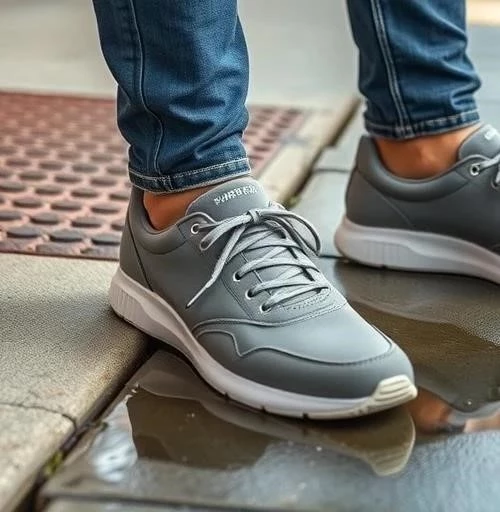
A rainy commute has its own soundtrack: shoes squeaking on the pavement, water tapping at the curb, and the quiet hope that the puddle was shallower than it looked. Waterproof-membrane sneakers can make that soundtrack less dramatic. The right pair keeps rain and slush outside while remaining comfortable enough for errands, work, and long walks. The wrong pair can feel hot, stiff, or oddly clammy—even when no water has entered.
The key is to shop for the weather and the way you actually move, not for the word waterproof printed on a box. A membrane is one part of a footwear system: the upper, seams, tongue, lining, sole, fit, socks, and care all affect the result. Use this guide to find a pair that suits ordinary life, rather than an imaginary expedition across a mountain in a thunderstorm.
First, decide what “everyday” means for you
For one person, everyday means a short walk from a car to an office. For another, it means a 40-minute commute, a dog that loves muddy parks, and a grocery run that somehow becomes a two-hour tour. Think through your normal week before comparing specifications.
- Mostly pavement and light rain: Prioritize a flexible, comfortable sneaker with a grippy urban sole. You may not need a rugged hiking-style tread.
- Long walks in changeable weather: Look for a supportive fit, reliable grip, and a membrane construction intended for regular wet conditions.
- Slush, wet grass, or muddy paths: A more protective upper and deeper outsole lugs can be useful. Check the height of the shoe, too: water can still pour over a low collar.
- Warm, humid weather: Consider whether a membrane is worth the trade-off. A breathable, quick-drying non-membrane shoe may feel more comfortable when rain is occasional and temperatures are high.
This small forecast exercise prevents a common mistake: buying the most weatherproof-looking shoe, then discovering that it is too warm for the climate or too bulky for daily wear.
What a membrane does—and what it cannot do
A waterproof membrane is a thin layer inside the shoe’s upper. Its structure is designed to resist liquid water while allowing some water vapor to escape. In plain language, rain has a harder time coming in than perspiration has getting out. “Some” is important: no membrane makes a shoe perfectly ventilated, and the rate of vapor transfer depends on temperature, humidity, activity, socks, and the rest of the shoe.
Membranes are often paired with a durable water-repellent finish on the outer fabric. That finish encourages droplets to bead and run off instead of soaking the face fabric. It can wear down with use, dirt, and cleaning. The membrane may still block water, but a wet outer layer can feel heavier and reduce comfort. A pair described as waterproof is therefore not a magical sealed capsule; it is a carefully assembled barrier with practical limits.
Also check how high the protection reaches. A low sneaker may keep rain from passing through its upper yet let water enter over the collar in a deep puddle. A gusseted tongue—attached along its sides—can reduce the chance of water and grit slipping through the lacing area. Seams, overlays, and construction matter as much as the membrane name.
Choose the right balance of protection and breathability
More protection is not automatically more comfort. A membrane can make a shoe warmer than a similar airy mesh model, especially indoors or in mild weather. If your feet tend to run hot, seek a relatively light construction, a comfortable lining, and enough room to avoid friction. For cold, wet seasons, the extra barrier may be a welcome shield against persistent drizzle and slush.
Be realistic about the word breathable. It does not mean air flows through the shoe like an open window. Moisture vapor needs a route out, and the process works best when conditions allow it. On a warm day, during a brisk walk, or with thick socks, your feet may still become damp from sweat. If that happens, it does not necessarily mean the membrane has failed. It may mean the shoe is too warm for the day, the sock is holding moisture, or the fit is trapping heat.
For year-round city use, decide which discomfort bothers you more: wet feet during a shower or warm feet on a dry afternoon. If the answer changes with the season, a waterproof pair may be best as a wet-weather option rather than your only sneaker.
Fit: the feature you cannot add later
A waterproof shoe that fits badly is still a bad shoe. Try it on near the end of the day, when feet are often slightly larger, and wear the socks you expect to use. Stand up, walk around, and test both shoes; feet are not always identical twins.
- Toe room: Your toes should be able to spread naturally. On slopes or stairs, they should not repeatedly strike the front.
- Heel hold: The heel should feel secure without painful pressure or excessive slipping.
- Midfoot comfort: Laces should let you adjust the fit without creating a hard ridge across the top of your foot.
- Width and volume: A shoe can be long enough but too narrow, or wide enough but too loose over the instep. Try another width or shape if available.
- Movement: Walk, turn, and bend the shoe where your foot naturally bends. It should not pinch, rub, or feel like a rigid shell;
Do not assume you should size up simply because the shoe has a membrane. A little space can be helpful, especially with warmer socks, but too much movement causes blisters. The best fit is secure and comfortable, with room for toes—not a loose tent for your foot.
Look beneath the upper: outsole, cushioning, and weight
Wet sidewalks turn ordinary rubber into a small engineering challenge. Inspect the outsole and, if possible, try it on a smooth floor. A well-designed everyday sole should feel stable and offer dependable traction on the surfaces you actually encounter. Deeper lugs can help on wet grass or soft ground, while a flatter pattern may feel smoother and quieter on pavement. No tread makes polished tile, painted metal, or ice completely safe; slow down when the surface demands it.
Cushioning is personal. Softer foam may feel welcoming during long walks, but a very soft or tall platform can feel less stable to some wearers. A firmer shoe can feel precise but tiring if you spend hours on hard ground. Walk in the pair for several minutes rather than judging it by a single thumb press in the store.
Weight matters more than it seems. Each step lifts the shoe, and a bulky waterproof design can feel tiring over a full day. Compare similar models in your size, not just their appearance. If a shoe feels clumsy when you walk indoors, wet-weather utility may not make it a good daily companion.
Materials and details worth checking
Read the product description carefully. A water-resistant upper, a water-repellent coating, and a shoe built around a waterproof membrane are not necessarily the same thing. Marketing language varies, so look for clear information about the membrane and construction. If you need dependable protection, ask whether the tongue is gusseted and how the shoe is intended to be used.
Examine the laces, eyelets, lining, and overlays. Laces are not waterproof; water can travel through their openings in a heavy downpour. A higher, well-shaped collar can help, but it should not rub your ankle. Reinforced toe and heel areas may improve durability for frequent use. Reflective details can be useful for dark commutes, while a simple color may be easier to wear with work clothes. Practical style is not a luxury: the shoe only helps if you want to put it on.
Finally, check the return policy. The most convincing product page cannot tell you whether the heel slips or the arch feels uncomfortable on your particular foot. A careful indoor try-on is part of choosing, not an afterthought.
Common buying mistakes
- Choosing by membrane label alone. The membrane cannot fix poor fit, an unsuitable sole, or a shoe that is too warm for your climate.
- Expecting total protection in every situation; Water can enter over the collar, through an opening, or after the shoe is submerged beyond its design limits.
- Buying a trail shoe for a city routine without testing it. Aggressive lugs and a stiff build may be useful off-road but feel awkward on pavement.
- Ignoring socks. Cotton can stay damp against the skin. Moisture-managing synthetic or wool-blend socks may feel more comfortable, depending on temperature and preference.
- Assuming wet feet always mean a leak. Sweat, soaked socks, or water entering at the collar can mimic a failed membrane.
Care that keeps the barrier working
After a wet walk, remove loose dirt and wipe the upper with a damp cloth. If the manufacturer permits, use a gentle cleaner made for the shoe’s materials. Avoid harsh solvents, aggressive scrubbing, and high heat. Do not place the sneakers on a radiator or use a hot dryer: heat can damage adhesives and materials. Remove the insoles, loosen the laces, and let the shoes dry at room temperature with good airflow. Paper can help absorb moisture; replace it if it becomes saturated.
When water stops beading on the outer fabric, the surface treatment may need refreshing. Use a compatible water-repellent product and follow its instructions. Cleaning first matters: dirt can interfere with the treatment. Reapplication does not repair a torn membrane or make a low shoe suitable for deep water, but it can help the upper shed rain more effectively.
Alternate shoes when possible. Giving a pair time to dry between wears helps manage interior moisture and can extend its useful life. Store it in a dry, ventilated place rather than leaving it sealed in a damp bag.
A quick fitting-room test
- Wear your usual walking socks and lace the sneakers as you would for a normal day;
- Walk briskly for a few minutes. Notice heel movement, pressure points, and whether the shoe bends naturally.
- Step up and down, turn, and gently shift your weight. Look for a stable feel, not just soft cushioning.
- Check toe room while standing. Your foot should not slide forward or feel squeezed when you bend your knees.
- Ask yourself whether you would happily wear the pair on a dry day too. If not, it may be specialized gear rather than an everyday choice.
The best choice is the one that fits your forecast
For daily wear, a good waterproof-membrane sneaker is a compromise designed with intention: protective enough for rain, comfortable enough for ordinary miles, and light and flexible enough not to dominate your day. Start with your climate and routine. Then judge the fit, traction, warmth, weight, and construction together. Treat labels as clues, not guarantees.
The ideal pair will not turn a storm into sunshine. It will simply let you keep walking while the weather changes its mind—without making every dry afternoon feel like a hike in a raincoat for your feet.
4 Comments. Оставить новый
This guide treats comfort as part of weather protection, which feels refreshingly practical. A shoe that keeps out rain but turns my feet into a greenhouse has only solved half the problem.
A useful little forecast for shoe shopping: match the sole and membrane to the life you actually live. Sometimes the right rainy-day shoe is simply the one you forget you are wearing.
I like the reminder that “waterproof” is not a magic force field. A low collar can still let rain stroll in from above, like it owns the place.
The best advice here may be to picture an ordinary Tuesday, not a heroic mountain expedition. My sneakers mostly face sidewalks, puddles, and errands that mysteriously multiply.