
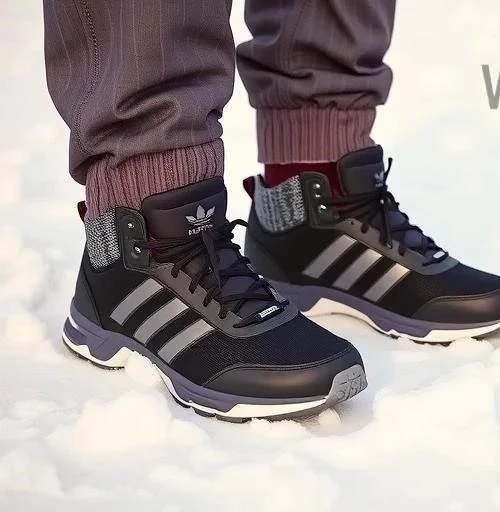
Winter sneakers have to do more than look good. They should keep your feet comfortable in cold weather, cope with wet paths and packed snow, and leave enough room for your toes. That last requirement can make shopping harder if you have wide feet: a shoe that fits in length may press against the sides, while sizing up can leave your heel slipping and your toes too far forward.
When choosing winter Adidas sneakers, assess width, shape, insulation, weather protection, traction and fit together; The right pair is not necessarily the warmest-looking or most heavily cushioned model. It is the pair that matches your foot and the conditions in which you will wear it.
Start by identifying what “wide” means for your feet
Width is not simply a matter of having large feet. Two people who wear the same length may need very different amounts of room across the forefoot. Some have a broad ball of the foot, some have wide toes, and others need extra volume over the instep. A shoe may feel tight in one area and loose in another.
Before shopping, notice where your current shoes cause discomfort. Pressure at the sides of the toes points to a narrow toe box. Tightness over the top can indicate that the shoe is too low-volume or that the lacing is too restrictive. If your heel lifts while the forefoot feels comfortable, the overall size or shape may be wrong rather than simply too narrow.
For a more reliable starting point, measure both feet while standing. Measure in the late afternoon or evening, when feet can be slightly larger, and wear the type of socks you expect to use in winter. Record the length from heel to longest toe and the width across the broadest part of the forefoot. Use the larger foot when comparing your measurements with Adidas’ current size chart. Treat the chart as a guide, not a guarantee: sizing and shape can differ between models.
Look for a roomy shape before choosing a larger size
The most useful feature for wide feet is a last—the shape around which a shoe is made—that gives your forefoot enough space. Check whether the product is explicitly offered in a wide fit or in a wider version in your market. Availability can vary by model, season, country and colour, so confirm the exact product details rather than assuming every Adidas sneaker has the same width options.
If a wide option is not available, look for a design with a naturally less tapered forefoot and a toe box that does not squeeze your toes together. Product photos can provide clues, but they cannot confirm fit. Reviews from people with similar foot shapes may help, especially when they describe the specific pressure points they experienced. A review that says only “true to size” is less useful because it may refer to a narrow or average foot.
Do not automatically order a longer size to gain width. Extra length can make your foot slide forward on descents, reduce stability and cause rubbing at the heel. A larger size is worth trying only if the length is also genuinely short or if the brand’s size chart indicates that you need it. Ideally, the shoe should have room at the toes without feeling loose through the heel and midfoot.
Decide how much winter protection you really need
“Winter sneaker” can describe anything from a lightly lined everyday shoe to a more protective outdoor model. Choose according to your routine. For commuting on cleared pavements in a mild, wet winter, water resistance and a comfortable lining may matter most. For long walks, frequent snow, slush or colder temperatures, you may want more insulation, a higher-cut upper and a construction designed for outdoor use.
Waterproofing and water resistance
Some Adidas models use a waterproof membrane, such as GORE-TEX, or other weather-protective construction. Confirm the specification on the product page: technologies and materials differ across models, and a water-repellent treatment is not the same as a waterproof membrane. Water resistance may be sufficient for light splashes, but it should not be treated as protection against prolonged exposure to deep slush or water entering over the collar.
Even a waterproof shoe has limits. Water can get in through the opening, and damp socks can make feet feel cold regardless of the membrane. A higher collar, well-fitting trousers and sensible care can help keep snow and rain out. Follow the manufacturer’s cleaning and drying instructions; placing wet sneakers directly on a radiator or using intense heat can damage materials and adhesives.
Warmth and lining
Insulation helps retain warmth, but a thick lining also takes up interior space. That matters particularly for wide feet, because a shoe that feels comfortable without a winter sock may become tight once both are in place. Try sneakers with the socks you will actually wear. Your toes should be able to move, and the shoe should not feel compressed around the ball of the foot.
Warmth depends on more than a fleece-like lining. The fit, sock, length of time outdoors, activity level and temperature all matter. A very snug shoe can restrict comfortable movement and make your feet feel colder. If you walk briskly, you may need less insulation than someone standing outside for long periods.
Choose the outsole for the surfaces you encounter
Winter paths can be wet, snowy, muddy or icy, and no single outsole is ideal for every surface. Look for a clearly defined tread pattern and rubber compound intended for reliable grip. Some Adidas outdoor shoes use Continental rubber, but the exact outsole varies by model; do not assume that a familiar brand name or a rugged-looking pattern guarantees performance on ice.
Deep, widely spaced lugs can be useful on loose snow or soft ground. On smooth city pavements, however, a very aggressive trail tread may feel less comfortable or stable than a more versatile pattern. If most of your walking is on wet streets and compacted paths, prioritise a well-designed everyday or outdoor outsole rather than choosing the most dramatic lugs in the catalogue.
Ice is a special case. Ordinary rubber soles can become slippery on smooth ice, even when they have a pronounced tread. For regular icy conditions, consider removable traction aids designed for footwear, and use extra care on steps and slopes. Do not judge grip by appearance alone; when possible, check the model’s stated purpose and read reviews that mention the actual surfaces tested.
Consider Adidas’ outdoor range, but compare each model
Adidas Terrex models are designed for outdoor activities, so they are a sensible place to begin when you need winter-ready sneakers for walking or hiking. Depending on the model, you may find a protective upper, a waterproof option or an outsole aimed at uneven terrain. But “Terrex” does not automatically mean warm, waterproof or wide. Check the precise version and its specifications, then try it on for your foot shape.
For everyday urban wear, Adidas may also offer lifestyle or weather-oriented designs with a more casual appearance. These can work for short commutes and ordinary winter conditions, but a fashion-focused sneaker may not provide the same protection or traction as an outdoor shoe. Decide which matters most: city styling, all-day walking comfort, weather resistance or trail capability.
Model names and seasonal versions change. A shoe sold in one year may be updated the next, and two versions with similar names can have different uppers or soles. Rather than relying on a general recommendation for a particular model, compare the exact product code, fit notes, materials and return terms for the pair you are considering.
Get the fit right with winter socks
Try shoes later in the day, when your feet are not at their smallest, and wear the socks you plan to use most often. Stand up and check both feet. Your toes should not press against the front when you walk downhill or bend your knees. The broadest part of your foot should sit comfortably inside the shoe without being pushed inward by the upper or sole edge.
Walk for several minutes, including turns and a few steps on an incline if the shop allows it. Notice whether your heel stays secure, whether the upper rubs across the little toe, and whether the laces need to be pulled unusually tight to hold your foot in place. A good fit should not require you to tolerate painful pressure in the hope that the shoe will “break in.” Some materials soften, but the basic shape and width are unlikely to change enough to fix a badly fitting shoe.
Check the removable insole, if there is one. Taking it out briefly can help you see how your foot sits relative to its edges, although this is only a rough check and does not replace trying the shoe on. If you use orthotics, bring them to the fitting and confirm that the shoe has enough depth and volume to accommodate them without crowding your toes.
Use lacing to fine-tune comfort, not to hide a poor fit
Different lacing patterns can relieve pressure over the instep or help secure the heel. If the shoe is comfortable at the forefoot but feels tight across the top, skipping one pair of eyelets or loosening the lower laces may help. If your heel moves, a heel-lock technique can sometimes improve hold without tightening the whole shoe excessively.
Lacing cannot create extra width in a narrow toe box. If the sides of your forefoot are compressed even with the laces loosened, try a wider model or a different shape. Continuing to tighten the upper to control heel movement can make pressure elsewhere worse. The goal is a secure heel and midfoot with relaxed, uncompressed toes.
Check weight, flexibility and intended use
A heavily built winter shoe may look reassuring but feel tiring during a long day of walking. Compare the weight and flexibility of the pair with your usual activities. A lighter sneaker may suit commuting and travel, while a more structured outdoor shoe can offer useful support on uneven paths. Neither is automatically better: comfort depends on how the shoe fits and where you will wear it.
Think about how often you will encounter deep snow, mud or rough trails. If those conditions are rare, a versatile waterproof walking sneaker may be more practical than a specialised trail shoe. If you spend hours outdoors, prioritise protection and stable footing over minimal weight or a low-profile appearance.
Shop carefully and use the return period
When buying online, confirm the seller’s return policy before ordering. Check whether the shoes can be returned after an indoor fit test and whether the packaging, labels and original insoles must remain intact. If possible, order two adjacent sizes or width options only when the seller’s rules make comparison straightforward.
Inspect both shoes as soon as they arrive. Try them on indoors with winter socks and any orthotics you normally use. Walk around, test the lacing and compare pressure on both feet; Do not wear them outside until you are sure you will keep them. Keep the box and proof of purchase until the fit has been confirmed.
Common mistakes to avoid
- Sizing up just to gain width: this can cause sliding, heel lift and instability.
- Trying shoes without winter socks: the fit may change once thicker socks take up space.
- Assuming water-resistant means waterproof: read the exact product description.
- Choosing by tread appearance alone: aggressive lugs do not guarantee safe grip on ice.
- Ignoring toe shape: adequate length does not help if the forefoot is pinched.
- Expecting a shoe to stretch substantially: do not count on break-in to solve painful compression.
- Assuming every version of a model is identical: materials, fit and outsole can change between editions.
A quick buying checklist
- Measure both feet while standing, in the socks you expect to wear.
- Check the current Adidas size chart and look for a specific wide-fit option.
- Choose a toe box that lets your toes spread without excess length.
- Match the level of insulation and water protection to your climate and routine.
- Check the outsole’s intended use and remember that ordinary sneakers may not grip on ice.
- Test heel hold, forefoot comfort and any orthotics before wearing the shoes outdoors.
- Confirm the return policy, especially when buying online.
Final advice
The best winter Adidas sneakers for wide feet are the ones that fit your foot shape first and meet your winter needs second. Begin with a comfortable, sufficiently broad forefoot rather than compensating with extra length. Then choose the protection, lining and outsole suited to your everyday surfaces and weather. A careful try-on with winter socks—and a willingness to return a pair that pinches—will usually matter more than a model’s name or appearance.
4 Comments. Оставить новый
The advice to identify where a shoe feels tight is especially useful. A wide forefoot and a high instep need different solutions, so simply sizing up can create new fit problems.
I appreciate the practical measuring tips, especially checking both feet while wearing winter socks. It’s a helpful reminder that a size chart is only a starting point and that fit varies by model.
A clear, sensible guide for people with wide feet. I’d also be interested in seeing specific Adidas models compared for width and winter traction, but the fit advice is a strong foundation.
This makes choosing winter sneakers feel less confusing. The focus on toe-room, heel security, and the conditions you’ll walk in is more useful than choosing based on appearance alone.