
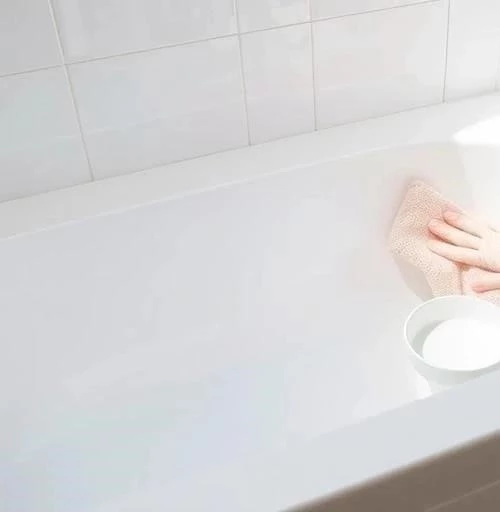
Acrylic bathtubs have a smooth, lightweight surface that is easy to maintain when cleaned regularly. However, the finish can be scratched or dulled by abrasive tools and harsh chemicals. A gentle routine, using products approved by the tub’s manufacturer, helps remove soap residue and everyday grime while protecting the surface.
What you will need
- Warm water
- A soft microfiber cloth or non-abrasive sponge
- Mild dish soap or a cleaner labelled safe for acrylic
- A clean towel for drying
- Optional: white vinegar, if the manufacturer permits it
Check the care instructions for your particular bathtub before using a new product. Finishes and installation materials can differ, and the manufacturer’s guidance takes priority. If you are unsure whether a cleaner is suitable, test it on a small, inconspicuous area and rinse it off promptly.
Routine cleaning
- Clear the tub. Remove bath products, toys, and loose debris. Rinse away sand or grit before wiping; particles trapped under a cloth can scratch the finish.
- Wet the surface. Use warm water to loosen residue. Avoid very hot water if the manufacturer advises against it.
- Apply a mild cleaner. Put a small amount of dish soap in water, or use an acrylic-safe bathroom cleaner according to its label. Do not apply concentrated products unless the directions specifically allow it;
- Wipe gently. Clean the basin, sides, and fittings with a soft cloth or sponge. Use light pressure and small, overlapping strokes. Do not scrub with the rough side of a dual-sided sponge.
- Rinse thoroughly. Wash away all cleaner and loosened residue so that a film is not left behind.
- Dry the tub. Wipe it with a clean, soft towel. Drying helps reduce water spots, especially in areas with hard water.
For ordinary use, cleaning after bathing or several times a week may be enough; frequency depends on how often the tub is used and how quickly residue builds up. A quick rinse and wipe after each bath can make deeper cleaning less necessary.
Removing soap scum and water deposits
Soap scum often responds to warm water and mild dish soap. Let the solution sit briefly, then wipe gently and rinse. For mineral deposits, a diluted white-vinegar solution may help, but only use it if the tub’s care instructions permit acidic cleaners. Apply it to a cloth rather than letting it pool on the surface, leave it for a short time, then rinse very well. Do not use vinegar on a surface or fitting whose manufacturer warns against it.
For stubborn marks, repeat a mild cleaning process rather than increasing pressure or reaching immediately for a stronger chemical. A cleaner designed for acrylic may be appropriate when used exactly as directed. Do not mix cleaners, and never combine bleach with vinegar, ammonia, or other products. Mixing chemicals can release hazardous fumes.
What to avoid
- Abrasive powders and scouring pads: These can leave fine scratches and make the surface look dull.
- Steel wool, stiff brushes, and rough sponges: Use only soft cleaning tools.
- Harsh or unapproved chemicals: Solvents, paint removers, strong acids, and some high-alkaline cleaners may damage acrylic or nearby seals. Check product labels and the tub’s manual.
- Leaving products in contact for too long: Follow the stated contact time, then rinse completely.
- Using a razor or sharp tool: These can gouge the surface while removing residue.
- Standing on the tub edge: Besides risking damage, it can create a fall hazard.
Keeping the tub clean
Rinse shampoo, bath oil, and soap from the tub after use. Keep bottles on a shelf or tray instead of leaving them on the basin, where they can form rings or leak. Use a bath mat only if it is suitable for acrylic, and lift it after bathing so water can drain and the surface can dry. Clean the drain area gently, since hair and residue can collect there; use a drain product only if it is approved for the plumbing and the tub materials.
Ventilation also helps. Run the bathroom fan or open a window when practical to reduce lingering moisture. If hard-water spots return quickly, drying the tub after use is usually gentler than frequent treatment with acidic products.
Scratches and persistent stains
Do not try to remove a scratch by aggressive scrubbing. Some superficial marks may be treatable with a polishing product or repair kit specifically approved for acrylic, but methods vary by finish. Follow the manufacturer’s instructions or consult a qualified repair professional. Deep cracks, chips, or areas that feel rough may need specialist assessment rather than ordinary cleaning.
For a persistent stain, first identify its likely source and check the tub manual for suitable treatments. Avoid experimenting with solvents or combining products. If a stain remains after gentle cleaning, contact the manufacturer or a bathtub-care professional and describe the stain and the cleaners already used.
Simple cleaning schedule
After each use, rinse away visible residue and wipe the basin when convenient. Once or twice a week, wash the tub with mild soap and a soft cloth, then rinse and dry it. Adjust the schedule to household use and water conditions. Consistent, gentle care is generally safer for acrylic than occasional intensive scrubbing.
In brief: use warm water, a mild acrylic-safe cleaner, and a soft cloth; rinse away grit before wiping; rinse the tub after cleaning and dry it. When in doubt, follow the bathtub manufacturer’s care instructions and avoid abrasive tools or unapproved chemicals.


6 Comments. Оставить новый
The article appropriately notes that abrasive tools and harsh products may damage acrylic surfaces.
The guidance balances routine care with caution about testing unfamiliar products and following their labels.
Including a towel-drying step adds a practical detail for reducing water spots after cleaning.
The step-by-step structure makes the cleaning process easy to follow, including the advice to rinse away grit before wiping.
The article provides a clear routine for cleaning an acrylic bathtub while emphasizing gentle materials and thorough rinsing.
The reminder to check the manufacturer’s care instructions is useful, since bathtub finishes and recommendations can vary.