
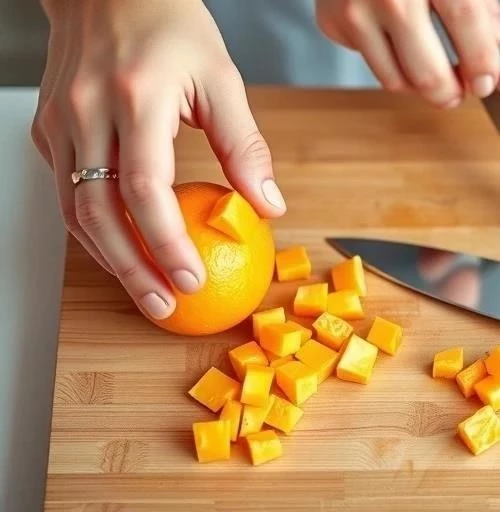
Cutting an orange into neat cubes is easier when you choose a method that suits the dish. For fruit salad or a snack, peeled segments can be diced quickly. For a cleaner, less bitter result—especially in desserts, salsa, or garnishes—remove the peel and membranes first, then cut the flesh into cubes. In either case, a sharp knife, a stable cutting board, and a little patience make the process safer and reduce juice loss.
What You’ll Need
- 1 firm, ripe orange
- A sharp paring knife or small chef’s knife
- A stable cutting board
- A bowl to catch juice, if desired
Wash and dry the orange before cutting, even if you plan to discard the peel. Dirt on the rind can transfer to the flesh as the knife passes through it. If the board slides, place a damp kitchen towel underneath it. Do not try to cut with a dull blade: it requires more pressure and is more likely to slip.
Method 1: Peel, Segment, and Dice
- Trim the ends. Place the orange on its side and slice a thin piece from the stem end and the opposite end. Cut only enough to expose the flesh. This creates flat surfaces and makes the fruit easier to handle.
- Remove the peel. Stand the orange on one flat end. Starting at the top, guide the knife downward along the curve of the fruit, cutting away the peel and as much white pith as you can without removing much flesh. Turn the orange and repeat until it is peeled all around. Trim any remaining patches of pith.
- Separate the segments. Hold the peeled orange over a bowl. Look for the thin white lines that divide it into natural wedges. Cut beside each membrane and lift out the segment. Work slowly and keep your fingertips behind the blade. Catching the juice in a bowl helps prevent waste and gives you juice for a dressing or drink.
- Remove seeds and membranes. Check each segment and pick out any seeds. For tender cubes, lay a segment flat and trim away thick membrane from its sides. Small amounts of membrane are harmless, but removing them gives a softer texture and a cleaner appearance.
- Make the cubes. Gather several segments on the board and cut them lengthwise into strips, then crosswise into pieces of your preferred size. About 1–1.5 centimetres (⅜–½ inch) works well for salads and toppings. Keep the cuts controlled rather than pressing hard; a sharp knife will pass through the fruit with less juice escaping.
Method 2: Fast Cubes for Everyday Use
If presentation is not important, use a quicker approach. Cut off both ends, stand the orange upright, and slice away the peel and pith in strips. Cut the peeled orange into quarters, remove visible seeds, and slice each quarter crosswise into bite-size pieces. This method is convenient for cereal, smoothies, or a quick fruit bowl. The pieces may include some membrane, so they can taste slightly more bitter and feel less delicate than carefully separated segments.
For Especially Neat, Membrane-Free Cubes
Chefs often use a technique called supreming. After peeling the orange, hold it over a bowl and cut down along one side of a segment, just inside its membrane. Make a second cut along the other side and lift out the membrane-free piece. Repeat around the fruit. Once all the segments are free, cut them into evenly sized cubes. This takes longer, but it is worthwhile when the orange is the focus of a dish or you want a polished garnish.
Useful Tips
- Choose the right orange. A ripe orange should feel heavy for its size and have firm skin. Very soft fruit is harder to dice neatly.
- Work over a bowl. Oranges release juice as they are cut. A bowl catches it, while a rimmed board helps keep the work area tidy.
- Match the size to the recipe. Small cubes mix evenly into salsa or yogurt; larger pieces are easier to eat on their own. Aim for pieces of similar size so they look consistent and are simple to portion.
- Keep the knife steady. Use a claw grip: curl your fingertips inward and let your knuckles guide the side of the blade. Never hold a slippery orange in your palm while cutting.
- Use the whole fruit. Save the juice for a dressing, marinade, or drink. If the peel is clean and unwaxed, finely grated zest can add fragrance to baking.
Storage and Serving
Use freshly cut orange cubes for the brightest flavor and best texture. If you need to prepare them ahead, place them in a covered container and refrigerate promptly. They are best eaten within a day; after that, the fruit can soften and release more juice. Drain excess liquid before adding the cubes to a salad, and add them near serving time if the dish contains leafy greens.
In short: trim the ends, peel away the rind and pith, separate the segments, remove seeds, then cut the flesh into even pieces. Choose the quick method when convenience matters, or supreme the orange when you want tidy, tender cubes. A stable board and sharp knife make either approach safer and more successful.

7 Comments. Оставить новый
Explaining how to remove the peel while preserving the flesh makes this guide more helpful than a simple list of cutting steps. The directions are specific enough for a beginner without being unnecessarily complicated.
The article gives a clear, practical explanation of why the cutting method should depend on how the orange will be used. I especially appreciate the reminder to wash the fruit before peeling, since the knife can carry dirt from the rind to the flesh.
The instructions proceed in a sensible order, from preparing the workspace to peeling and separating the fruit. That sequence makes the method easy to understand and helps readers handle the orange more confidently.
The comparison between quick dicing and removing the membranes for a cleaner result is a strong feature. It helps readers choose an approach based on the dish rather than assuming that one method is always best.
The safety advice is useful and well integrated into the instructions. Using a stable board and a sharp knife may seem like small details, but they make the steps easier to follow and help reduce the risk of slipping.
I like the practical suggestion to catch the juice in a bowl while separating the segments. It reduces mess and makes use of something that might otherwise be wasted.
This is a useful, focused guide that explains both technique and purpose. The distinction between removing membranes for a softer texture and leaving them when they are not a concern gives the advice welcome flexibility.