
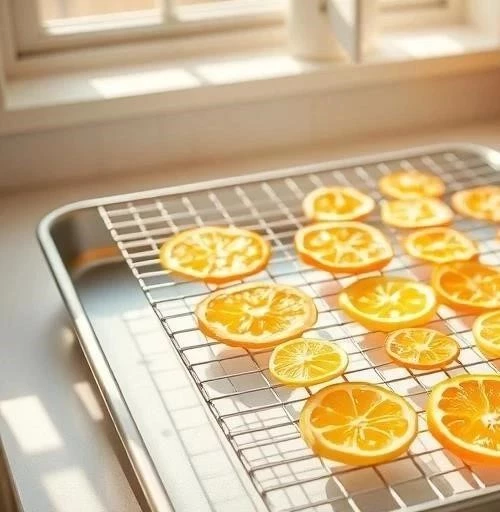
Dried citrus slices are a simple natural decoration for wreaths‚ garlands‚ gift wrapping and seasonal displays. They retain their shape and develop translucent‚ jewel-like colours when moisture is removed slowly. Lemons and oranges can be dried using an oven‚ a food dehydrator or‚ in suitable conditions‚ open air. The method matters: slices that remain damp may spoil‚ while excessive heat can darken or scorch them.
Choose and prepare the fruit
Select firm‚ unblemished lemons and oranges with brightly coloured skins. Wash and dry the fruit thoroughly. Slice it crosswise into even rounds‚ about 3–5 mm thick. A sharp knife helps make clean cuts; a mandoline can produce more uniform slices‚ but use its hand guard. Remove seeds with the tip of a knife. Blot both sides of each round with paper towels to absorb surface juice. Uniform thickness and careful blotting help the slices dry at a similar rate.
Oven method
- Heat the oven to 75–90°C (170–195°F). If the oven’s lowest setting is higher‚ use it and check the fruit more often.
- Arrange the rounds in a single layer on a wire rack set over a baking tray‚ or on a tray lined with baking paper. Leave small gaps between slices so air can circulate.
- Dry for approximately 3–6 hours‚ turning the slices every 45–60 minutes. The exact time varies with thickness‚ fruit size and oven performance. If moisture collects‚ briefly open the oven door to release steam‚ provided this is safe for the appliance.
- Remove slices when they feel dry and leathery‚ with no wet or sticky centre. They may become firmer as they cool. Do not raise the temperature to speed up the process; high heat can brown the peel and leave the centres moist.
Dehydrator and air-drying options
In a food dehydrator‚ spread the prepared rounds on the trays without overlap and follow the appliance instructions. A setting around 55–60°C (130–140°F) is commonly suitable. Drying may take 6–12 hours or longer; check periodically and rotate trays if the unit dries unevenly.
Air-drying is slower and less predictable. Place slices on a clean mesh rack in a warm‚ dry‚ well-ventilated place‚ away from direct sunlight. Turn them daily and protect them from dust and insects. Depending on humidity and airflow‚ drying can take several days. This approach is not advisable in damp conditions because fruit may develop mould before it dries.
Finishing and decorating
Let the slices cool completely before checking them. If any are still soft or tacky in the middle‚ return them to the dryer. For a glossy finish‚ some decorators brush on a small amount of clear craft sealant after drying; follow the product label and allow it to cure fully. To make hanging ornaments‚ thread a needle through the peel and add string‚ or attach slices to a project with craft wire. Dried citrus is brittle‚ so handle it gently;
Storage and common problems
Store fully cooled slices in an airtight container in a cool‚ dry place‚ with paper between layers if needed. Check them occasionally. Discard any slice that develops mould‚ an unusual odour or signs of renewed dampness. Darkening usually indicates excessive heat or prolonged drying at a high temperature; reduce the heat and check more often next time. Sticky centres generally mean that the slices need additional drying.
These slices are intended for decoration‚ not eating‚ especially if treated with sealant or stored for display. For a balanced arrangement‚ combine lemon and orange rounds with cinnamon sticks‚ dried leaves or plain string. The finished pieces can be used on wreaths‚ table settings and wrapped gifts once they are completely dry.

5 Comments. Оставить новый
The article clearly explains how slice thickness and blotting can help the fruit dry evenly.
The oven instructions are practical, especially the reminders to turn the slices and check their texture.
Including approximate temperatures and drying times makes the different methods easier to compare.
The preparation steps are straightforward, and the reminder to remove seeds adds helpful detail.
The guidance on avoiding excessive heat provides a useful note about preventing browning and uneven drying.