
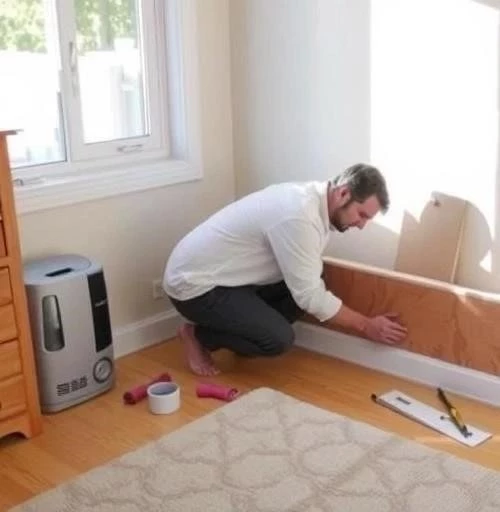
A wooden baseboard can finish a bedroom beautifully, but high humidity makes careful preparation essential. Wood absorbs and releases moisture: if air humidity stays high, the boards may swell, joints can open, and the baseboard may warp. Installation should therefore address both moisture control and secure fixing; appearance alone is not a reliable measure of durability.
Prepare the wood and the room
First, identify the cause of excess moisture. Improve ventilation, check for leaks, and prevent condensation on cold walls or windows. Persistent dampness encourages mold and fungus, which can damage wood and affect indoor air. Let the room dry before work begins. Choose a suitable wood species and inspect each length for cracks or existing distortion. Allow the material to acclimatize in the bedroom, following the supplier’s guidance, so it adjusts to indoor conditions before installation.
Protect before fitting
Apply a moisture-resistant treatment to every face, including cut ends and the back. An antiseptic impregnation can help protect against biological growth, but it cannot replace moisture control. Use a compatible primer, then finish with wood varnish or wood oil as directed by the manufacturer. A moisture-resistant finish slows moisture uptake; it does not make wood waterproof. Treating the pieces before fitting is important because hidden surfaces are harder to reach later.
Fit with room for movement
Measure carefully and plan corner joints before cutting. A 45-degree cut can give a neat outside corner, but check the angle and test-fit each pair; walls are not always square. Leave a small expansion gap where the design or manufacturer recommends it, since wood expansion is natural. For wall fixing, screws and wall plugs (dowels) provide a dependable hold on suitable walls. Mounting adhesive is an alternative on clean, sound surfaces, but it may be difficult to remove and is not right for every wall. Do not use adhesive to bridge damp or uneven areas.
Finish and maintain
Seal visible joints with a compatible flexible sealant where appropriate, without trapping moisture behind the trim. After installation, keep ventilation effective and avoid repeated wet cleaning: use a lightly damp cloth and dry the surface promptly. If condensation or damp patches persist, solve that problem first rather than adding more coating. A sound wood choice, careful acclimatization, protected surfaces, and correct fixing together reduce the risk of deformation and help the baseboard last.
8 Comments. Оставить новый
The discussion of acclimatizing the wood is especially helpful. It explains why installation timing can affect the final result, rather than treating accurate measuring and cutting as the only important steps.
This is a balanced overview because it presents screws and adhesive as options rather than claiming one method suits every wall. The reminder to consider the surface condition makes the guidance more responsible.
The explanation of expansion gaps is valuable for readers who might otherwise fit the boards too tightly. A brief reference to following the manufacturer’s specifications also keeps the advice appropriately flexible.
The article makes a useful distinction between treating the wood and controlling the source of moisture. That point matters because coatings can slow moisture absorption, but they cannot correct a leak or persistently damp room.
The article combines preparation, protection, and fitting in a logical order. That structure makes the recommendations easier to follow and reinforces that durability depends on several steps working together.
The advice is clear and appropriately cautious about moisture-resistant finishes. Explaining that they are not waterproof helps readers avoid assuming that a varnish or oil can substitute for proper ventilation and repairs.
Overall, the guidance is practical without promising that any single treatment will prevent every problem. Its strongest message is that good installation starts with a dry, well-prepared room.
I appreciate the practical emphasis on treating all sides of the boards before installation. Hidden surfaces are easy to overlook, and addressing them in advance is a sensible way to improve long-term protection.