
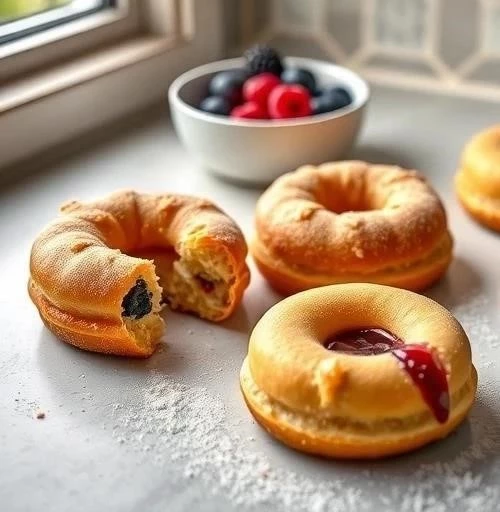
Berry-filled donuts look simple, but a few small mistakes can leave them greasy, heavy, or empty. The key is balanced yeast dough, controlled proofing, and a filling that is flavorful but not watery. This guide explains common problems in home baking and how to prevent them.
Getting the dough right
For reliable donut dough, use flour, yeast, sugar, milk, eggs, and softened butter. Check ingredient temperature: milk should be warm, not hot, or it may harm the yeast. During kneading, the dough should become soft and elastic. Slightly sticky dough is normal; add flour a spoonful at a time rather than turning it into dense dough. Too much flour makes donuts tough, while dough that is too liquid will be difficult to shape.
Allow enough time for the dough to rise in a warm, draft-free place. Proofing time depends on room temperature and yeast activity, so look for dough that has roughly doubled, rather than relying only on the clock. Underproofed pieces can be dense; overproofed ones may collapse or tear during frying.
Preparing the berry filling
Fresh berries and frozen berries both work, but excess moisture is the main risk. Thaw frozen berries and drain them well. Simmer fruit with a little sugar until the mixture thickens, then cool it completely. A runny berry filling becomes a liquid filling when warm and can escape through the dough. Juicy berries are delicious, but they need to be cooked down or thickened.
If using whole berries, gently coat them with a little flour or starch. This berry coating helps absorb surface moisture, though it cannot replace draining or cooking. Avoid overfilling: too much filling puts pressure on the seam and increases the chance of dough tearing or filling leaking out.
Shaping and frying
For shaping donuts, seal the edges firmly and keep the filling away from the seam. Pinch the dough together without stretching it thin. Let the shaped donuts rest briefly before frying, but do not leave them until they are fragile and overinflated.
Oil temperature matters. If the oil is too cool, donuts absorb grease; if it is too hot, they turn into burnt donuts outside while remaining raw inside. Use a thermometer if possible and fry in small batches so the temperature stays steady. Turn each donut carefully and let it drain on a rack or paper towels.
Finishing touches
Let the donuts cool slightly before adding filling with a piping bag, especially if the filling is soft. This reduces pressure on the crust and helps prevent leaks. Dust with powdered sugar just before serving. A dependable donut recipe, careful proofing, dry berries, and steady oil temperature make golden, tender donuts far more achievable.



2 Comments. Оставить новый
This is a helpful, practical guide. I especially appreciate the emphasis on checking the dough rather than relying only on proofing time, and on cooling and thickening the berry filling to prevent leaks.
Clear advice for avoiding common donut problems, from tough dough to runny filling. The reminders to avoid overfilling and seal the seams carefully are especially useful for home bakers.