
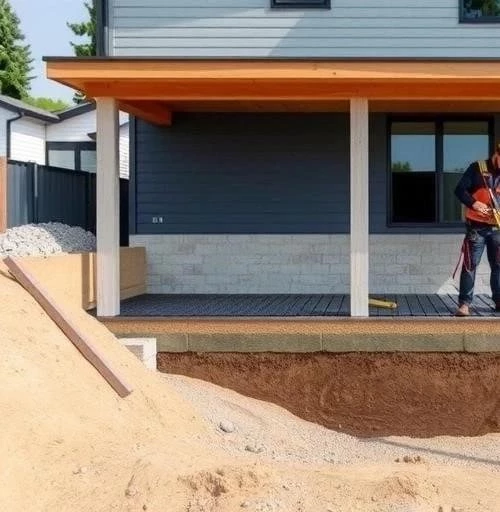
A foundation is the quiet part of a country house: buried, unseen, and expected to outlast the people who built it. That makes a strip foundation a tempting place to cut costs—and a dangerous place to cut corners. The smart goal is not the cheapest pour, but construction cost reduction that protects foundation durability, structural reliability, and building longevity.
Spend on knowledge before concrete
Begin with geological surveys. Soil type, groundwater, slope, and frost conditions determine the laying depth and base width. A load calculation should account for the house, occupants, snow, and future changes such as a heavy stove or extension. These findings prevent both oversizing and underbuilding. Guesswork can make the cost of a strip foundation look low on paper, then turn into cracks, repairs, and high operating costs.
Save by designing precisely
Ask a qualified designer to match the house foundation to the site and building codes. The right concrete grade, foundation reinforcement, and section dimensions are more valuable than simply ordering extra material “for safety.” Compare building materials by performance and delivered cost, not price alone. A clear construction estimate should show quantities, labor, delivery, and a reserve for genuine surprises. This is cost optimization, not a race to the bottom.
- Foundation installation stages: set out the footprint, excavate, prepare and compact the base, fit formwork, place reinforcement, pour the concrete mix, cure it, then backfill.
- Prevent pouring mistakes: check formwork strength, reinforcement position, concrete delivery, and weather. Place concrete consistently and compact it properly; avoid adding water casually.
- Control quality: record dimensions and materials, inspect each stage, and protect fresh concrete while it cures.
Protect what you have built
Foundation waterproofing limits moisture damage, while site drainage directs rain and groundwater away from the house; Base insulation and frost protection can reduce seasonal soil movement where climate and design call for them. These measures add upfront cost, but may extend the service life of the base and reduce future foundation repair and maintenance. Choose them according to site conditions, not as a package of fashionable extras.
Economical construction means balancing initial spending with load resistance and long-term performance. Do not economize on competent design, suitable concrete, or careful workmanship; do question unnecessary excavation, excessive dimensions, and wasteful ordering; Keep photographs and material records for later checks. Periodically inspect visible foundation areas, drainage, and nearby ground for standing water or new cracks. Early attention is usually simpler than major repair.
The long view
A well-planned strip foundation is not merely a trench filled with concrete; it is a small engineering agreement between the house and the ground beneath it. Thoughtful choices lower avoidable costs without sacrificing safety. The result is a dependable base, manageable operating costs, and a home prepared to serve for decades.


6 Comments. Оставить новый
A soil survey is the plot twist a house project needs before the concrete arrives. It’s a practical reminder that the ground beneath a home has its own story—and guessing the ending can be expensive.
I like the idea that the cheapest foundation is often the one that never needs to introduce itself again. The article makes precision feel less like paperwork and more like a quiet form of protection.
The distinction between sensible savings and false economy comes through clearly. I especially appreciate the emphasis on asking what each material does, rather than letting the lowest price do all the talking.
This reads like a useful antidote to the “add more concrete and hope” school of construction. A well-sized foundation is a small victory for both the budget and the future living above it.
I enjoyed how the article treats quality control as a way to save money, not an extra expense. Photographs and records may be humble tools, but they can become the house’s best witnesses years later.
The construction sequence gives the process a reassuring rhythm: prepare, check, pour, protect. It’s a good reminder that durability is built through many careful moments, not one dramatic truckload of concrete.