
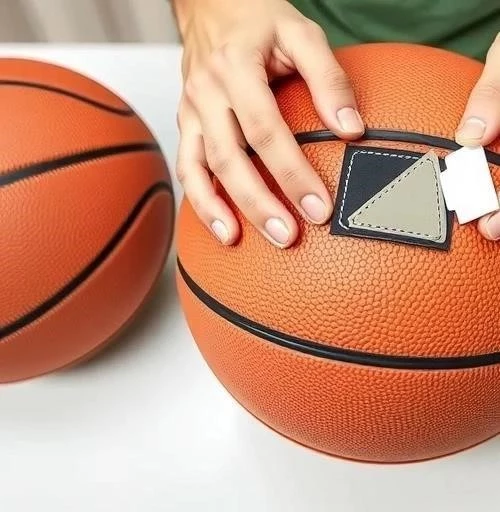
A basketball can sometimes be repaired, but the method depends on where the air is escaping and how the ball is constructed. Most balls have an inflatable inner bladder enclosed by a rubber or composite cover. A small hole in an accessible bladder may be repairable; damage to the outer cover, a failed valve, or a split seam often requires professional service or replacement. A surface patch applied over the cover usually will not seal a leak in the hidden bladder.
Find the leak
- Remove the ball from play and wipe off dirt and moisture. Check the valve, seams, and visible surface for cuts, cracks, or deformation.
- Inflate the ball only to its recommended pressure, printed near the valve or in the manufacturer’s instructions. Do not overinflate it.
- Mix a little dish soap with water and apply the solution around the valve and suspected damaged areas. Bubbles that continue to form indicate escaping air. Rotate the ball and check it systematically; a very small leak may take a few minutes to show.
- Rinse off the solution and mark the leak. If no bubbles appear, leave the ball inflated for several hours and compare its firmness, then repeat the test.
Decide whether a home repair is suitable
If bubbles come from the valve, the valve may be dirty, loose, or damaged. Use a valve tool or repair product only if it is designed for basketball valves and matches the ball’s construction. Do not push sharp objects into the valve. If the leak comes from a seam, a large cut, or a section where the cover has separated, stop: a patch on the outside is unlikely to restore a reliable seal.
A pinhole in an exposed bladder can sometimes be repaired with a rubber or sports-ball bladder patch. However, the bladder is normally inside the ball, and reaching it may require separating panels. Do not cut the cover or pull apart seams just to access a leak; this can permanently damage the ball. If the bladder is not accessible without dismantling the ball, ask a sporting-goods repair service whether it can be repaired, or replace the ball.
Patch an accessible bladder
Use a repair kit specifically suitable for the bladder material, and follow its instructions. Bicycle-tube products are not automatically compatible with a basketball. Work in a ventilated area, keep adhesive away from skin and eyes, and allow it to cure for the full time stated on the package.
- Deflate the ball completely before handling the bladder. Clean and dry the area around the puncture. Remove loose dirt, but do not enlarge the hole.
- Lightly prepare the surface only if the kit directs you to do so. Apply the specified adhesive and patch, pressing from the centre outward to remove trapped air. Do not use household superglue, duct tape, or a random sealant; these can become brittle or interfere with the material.
- Keep the patch still while it cures. Do not inflate the ball early, since pressure can lift the patch before the bond has set.
- When curing is complete, inflate gradually to the stated pressure. Test the repaired spot with soapy water. If bubbles appear, deflate the ball and reassess rather than adding more adhesive over the failed patch.
Check the result and prevent repeat damage
After a successful test, leave the ball inflated for several hours and check that it retains its shape and pressure. Use a suitable pump with a moistened needle, insert it straight into the valve, and avoid forcing it. Store the ball clean and dry, away from sharp objects, extreme heat, and prolonged direct sunlight. Use it on a playing surface appropriate for its cover; rough outdoor courts can wear some indoor balls quickly.
Important: A repair may be temporary and can affect the ball’s bounce or balance. If the ball loses air again, has a damaged seam, or no longer handles consistently, do not rely on it for play. Replacing it is often safer and more practical than attempting repeated repairs.

1 Comment. Оставить новый
The article provides a clear approach to locating a leak and explains why some basketball repairs are not suitable for home fixes. The safety cautions about avoiding overinflation and damage to the ball are useful.