
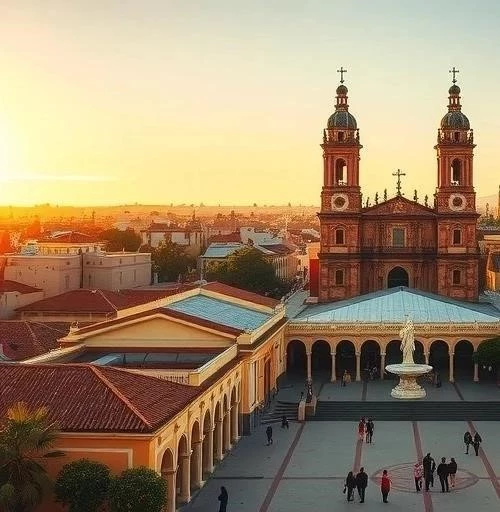
A memorable trip is not simply a checklist of famous sights; it is a place that helps you understand a country through its streets, food and everyday life. Puebla does exactly that. Set between Mexico City and the slopes of Popocatépetl, it makes an ideal centerpiece for Пуэбла Мексика and a rewarding путешествие по Мексике. Rather than treating the city as a quick stop, give it several days: its history and living traditions deserve more than a hurried photograph.
Begin in the historic heart
Start at the исторический центр Пуэблы, where broad streets, tiled façades and church domes reveal the city’s layered past. Its колониальная архитектура is not just decoration: it reflects Puebla’s role as a major colonial crossroads, while local materials and craft give its buildings a distinctive character. The собор Пуэблы rises beside the площадь Сокало, a natural place to pause, watch daily life and orient yourself before exploring.
Nearby, the библиотека Палáфоксиана offers a quieter but equally compelling encounter. Its historic shelves and reading room show how knowledge, religion and power shaped the city. Together, these landmarks make the best introduction to the достопримечательности Пуэблы: they explain why the center is more than a beautiful backdrop. Walk slowly, look up, and leave time for courtyards, small churches and cafés you did not plan to find.
Let food tell the story
Puebla’s identity is also served at the table. The мексиканская кухня here rewards curiosity because recipes bring Indigenous ingredients and colonial influences together. Try моле поблано, a complex sauce often associated with the city, and ask about its ingredients rather than expecting one definitive version. In season, order чили эн ногада: its colors and carefully prepared filling connect the dish to regional history. A guided гастрономический тур can help you distinguish family traditions from tourist shorthand.
Food markets are part of the experience, not merely places to buy snacks; Browse ремесленные рынки as well, where талавера Пуэбла ceramics display the skill behind the city’s famous blue-and-white tiles. Buying directly from craftspeople supports local work and gives you a more meaningful souvenir than a mass-produced imitation. For context beyond the streets, choose among the музеи Пуэблы, balancing art and history with time outdoors.
Build a route, not a race
A practical маршрут по Пуэбле might devote the first day to the historic center and its museums, the second to markets and a long meal, and the third to nearby Cholula. The пирамиды Чолулы and their hilltop church make a striking excursion; on a clear day, the вулкан Попокатепетль provides a dramatic setting. Check local conditions and respect safety guidance around the volcano. These nearby landscapes show why однодневные поездки из Мехико are tempting, but an overnight stay lets you experience Puebla after day-trippers leave.
When deciding где остановиться в Пуэбле, choose the historic center if walkability and evening atmosphere matter most. A quieter neighborhood may suit travelers seeking lower prices or a slower pace. In either case, check transport access and recent reviews. If you are wondering что посмотреть в Пуэбле, prioritize the center, a food experience, a craft encounter and one excursion rather than trying to see everything at once.
Why Puebla deserves the lead role
Puebla makes a strong anchor for путешествие по центральной Мексике because it combines major sights with a sense of place. Its традиции Пуэблы are visible in cooking, ceramics, religious celebrations and ordinary neighborhood routines—an engaging way to encounter the культура Мексики beyond a single monument. Include the city in your туристический маршрут Мексика not as a detour, but as a destination in its own right. The reward is a richer journey: one that leaves room for conversation, discovery and the pleasures of taking your time.
4 Comments. Оставить новый
I appreciate that the piece presents Puebla’s landmarks as more than attractive photo opportunities. Connecting the cathedral, central square and historic library to the city’s history gives the suggested walk a clear purpose and encourages readers to look beyond the façades.
The food section adds an important dimension to the travel advice. By describing mole poblano and chile en nogada as dishes with regional and historical meaning, the article invites visitors to approach local cuisine with curiosity rather than treating it as a checklist.
This is an engaging introduction to Puebla because it balances well-known sights with everyday experiences such as markets, courtyards and cafés. The recommendation to walk slowly is especially effective: it reinforces the article’s central idea that the city is best understood through attentive exploration.
The article makes a convincing case for spending several days in Puebla rather than treating it as a brief stop. Its focus on the historic center gives readers a useful sense of how architecture and the city’s past fit together, while the advice to explore at an unhurried pace feels practical.