
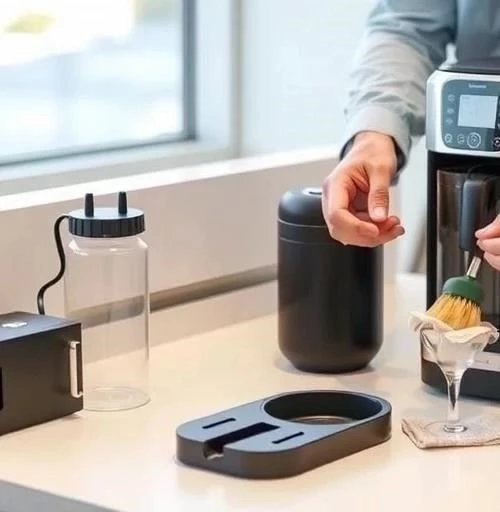
A DeLonghi coffee machine keeps an office running smoothly, but only when its water system is maintained. If coffee preparation slows or the machine makes unusual noises, a dirty filter, scale or a pump blockage may be responsible. Low water pressure is a symptom, not proof that the pump has failed. Start with safe checks before considering repairs: opening the casing can damage the automatic coffee machine and may void its warranty.
Safe cleaning steps
- Switch the machine off and unplug it: safe disconnection from power is essential before any cleaning. Let hot parts cool.
- Remove and empty the water tank. Wash it with warm water, rinse well, and refill with fresh water. Check that it is seated correctly; poor contact can interrupt water delivery.
- Inspect the water filter. Replace it if its service life has ended, following the maintenance instructions for your DeLonghi coffee machine model. A clogged filter can restrict flow and mimic pump failure.
- Run the machine’s recommended rinse or hydraulic system flushing cycle. If scale is likely, perform descaling (decalcification) with a descaling solution approved for the appliance. Follow the on-screen prompts or manual, then rinse the water circuit as directed.
When is pump cleaning appropriate?
“Pump cleaning” usually means restoring normal flow through the system, not dismantling the water supply pump. The coffee machine pump is an internal component; water, electricity and pressure make amateur disassembly unsafe. Use the built-in cleaning cycle first. If the tank is full and correctly fitted, the filter is clear, and flow remains weak after descaling, stop repeated attempts. A persistent pump blockage, leaks, or a pump that runs without drawing water calls for a qualified technician.
Prevent repeat problems
Regular coffee machine maintenance is more reliable than waiting for a breakdown. Empty and rinse the tank often, use a suitable water filter, and schedule preventive cleaning and descaling according to water hardness and the manufacturer’s instructions. In an office coffee machine, frequent use makes a written cleaning schedule especially useful. Avoid vinegar or unapproved chemicals: they can damage seals and leave unwanted residues. These simple steps protect the pump, reduce service interruptions, and help maintain consistent coffee quality.


4 Comments. Оставить новый
I appreciate the practical order of the troubleshooting steps: disconnect the machine, check the tank and filter, then use the recommended rinse or descaling cycle. Following that sequence can help users address common issues without taking unnecessary risks or damaging the appliance.
The warning against opening the machine is especially valuable. Coffee makers combine electrical components, hot surfaces, and pressurized water, so advising readers to contact a qualified technician when symptoms persist is a responsible approach.
The maintenance guidance is useful because it focuses on prevention as well as troubleshooting. One helpful addition would be a reminder to consult the manual for the exact model, since filter replacement and descaling procedures can vary between DeLonghi machines.
The article gives sensible, safety-conscious advice by distinguishing routine flow maintenance from dismantling the pump. That distinction matters because weak water flow can have several causes, including a poorly seated tank or a clogged filter, and does not by itself prove pump failure.