
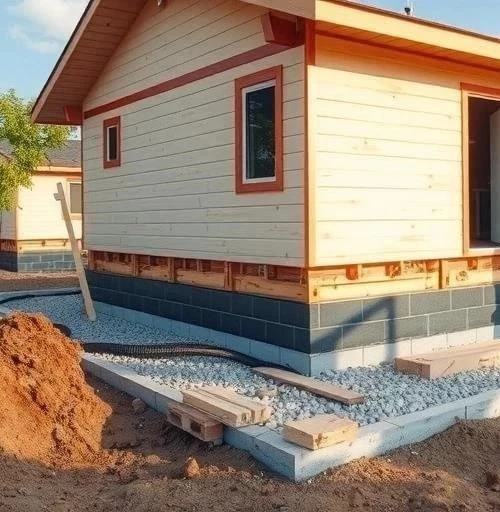
A house plinth is the building’s splash zone: it meets rain‚ snow‚ soil and careless shovels before the walls do. Saving money here is not about choosing the cheapest finish. It is about designing the plinth construction so water has nowhere to linger and repairs do not become an annual ritual.
Begin below the visible surface
Good foundation protection starts with a survey of soil‚ slope and groundwater. A drainage system around the house‚ paired with reliable groundwater runoff‚ can be cheaper than repeatedly fixing damp masonry. Specify plinth waterproofing before cladding‚ seal joints carefully‚ and direct roof water away from the building. Where there is a crawl space‚ plan its ventilation too: trapped moisture can quietly undermine an otherwise sound structure.
Plinth insulation should be selected as part of the foundation’s thermal insulation‚ not added as a decorative afterthought. Continuous insulation helps prevent freezing‚ limits heat loss and reduces condensation. Choose moisture-resistant‚ frost-resistant materials suited to the local climate; protect exposed edges from impact and sunlight. Correct installation matters as much as the product label.
Spend where it counts
Material selection sets both the initial plinth cost and future operating costs. Prepare a detailed estimate that separates excavation‚ drainage‚ waterproofing‚ insulation‚ labor and finish. Compare complete systems—not just the price per tile. A concrete plinth may offer a robust‚ simple base; brickwork can suit a traditional façade but needs sound moisture protection. For cladding‚ façade panels are often quick to install and easy to replace. Clinker tiles resist weather‚ while natural stone brings character at a higher price. Artificial stone can give a similar look with less weight. Plinth plaster is usually economical‚ provided the substrate and coating are made for damp‚ frost-prone conditions.
Use premium finishes only where they are visible or vulnerable. A discreet‚ durable surface on less exposed sides may create real savings during construction without compromising structural durability. Avoid odd material combinations that require custom trims or specialist labor; standard sizes and locally available components make the estimate more predictable.
Think in decades‚ not invoices
Quality plinth finishing is a small part of a building budget‚ but poor detailing can threaten the foundation’s service life. Check drainage after heavy rain‚ keep soil below the finish line‚ and repair cracks before water gets behind the cladding. These habits extend durability and keep repair costs modest. The smartest economy is not a cheap plinth: it is a dry‚ insulated‚ maintainable one that protects the house quietly for years.



5 Comments. Оставить новый
The advice to compare complete systems rather than tile prices is especially sharp. A bargain finish can become an expensive disguise if the waterproofing beneath it is an afterthought.
A quietly persuasive case for spending wisely rather than lavishly. Protect the vulnerable edges, keep water moving away, and save the showpiece materials for the parts of the plinth the world actually sees.
I like how this turns a hidden construction detail into a whole-system puzzle: slope, groundwater, roof runoff, ventilation, insulation, and cladding all have to cooperate. The house may not send thank-you notes, but its dry walls will.
The “splash zone” image makes the plinth’s job instantly clear: it is the house’s first line of defense, not a place to gamble on the cheapest finish. A useful reminder that good drainage can be less expensive than a lifetime of damp surprises.
This article gives practical choices without pretending one material suits every home. Concrete, brick, panels, clinker, stone, and plaster each get a place in the conversation—and the budget gets to remain part of it.