
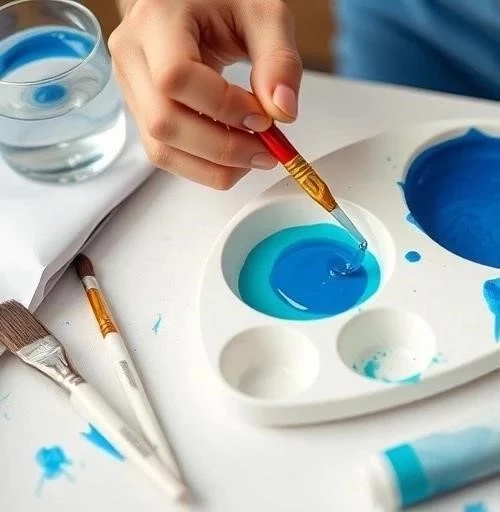
Acrylic paint is a shape-shifter: straight from the tube, it can stand up like frosting; with a little water or medium, it can glide like a watercolor wash. The trick is to loosen it without stripping away the qualities that make acrylics durable.
Start with the paint, not the water
Squeeze a small amount onto a palette and add water a few drops at a time, mixing thoroughly after each addition. For ordinary brushwork, begin with roughly one part water to four parts paint, then adjust until the paint moves easily but still covers the surface. The ideal consistency depends on your brush, surface, and effect.
Use clean water and a separate mixing cup. If the paint becomes watery, transparent, or streaky, you have probably gone too far. Excess water can weaken the binder—the invisible film that helps pigment stick—and may leave a fragile, uneven layer. There is no magic ratio for every brand, so test before committing.
Choose a medium for a bigger change
- Fluid or glazing medium: thins paint while preserving its binder. Great for transparent layers and smooth color.
- Flow improver: helps paint travel across a surface, especially for fine lines. Follow the label; concentrates usually need dilution.
- Retarder: slows drying rather than simply thinning. Use sparingly and according to directions.
For delicate glazing, a medium is usually a safer choice than adding lots of water. Mix it in gradually; too much can leave paint tacky or alter its finish.
Test before the grand gesture
Try the mixture on a scrap of the same material. A good blend brushes on without dragging, keeps a coherent color, and dries into an even film. If it beads up, the surface may need preparation; if it looks patchy, add a little paint or medium and test again. Stir rather than shake to avoid bubbles.
Keep the palette covered while you work, and rinse brushes before paint dries in them. Never pour leftover diluted paint back into the original container. With a few measured drops, acrylic can shift from bold block color to a translucent veil—without losing its grip on the canvas.
8 Comments. Оставить новый
A good reminder that thinning paint is a balancing act, not a race toward translucence. I’ll be keeping a scrap beside my palette—the humble test piece may save the grand gesture.
I appreciated the reminder that a fragile layer can be the cost of chasing transparency with too much water. The medium suggestions make glazing sound less like guesswork and more like a controlled little magic trick.
Practical without being dry—almost like a studio companion tapping the palette and saying, “One drop at a time.” The tips about bubbles, covered palettes, and leftover paint add the sort of details beginners rarely know to ask.
The distinction between thinning and slowing drying is especially useful. Retarder isn’t just “more watery paint”; it changes the clock, which is a lovely way to think about the different tools.
I like that this treats water as a guest, not a flood: a few drops can transform acrylic, but the binder still needs to hold the party together. The scrap-test advice is the quiet hero here.
Acrylic paint sounds almost architectural in this guide—water changes the flow, while the binder keeps the walls standing. Clear, practical advice for anyone who has ever watched a promising wash turn into a streaky puddle.
The descriptions of beading, dragging, and patchiness give readers a useful visual vocabulary. Instead of memorizing a formula, you learn to read what the paint is telling you.
This is refreshingly honest about ratios: paint doesn’t obey one universal recipe. The small-batch approach feels like a tiny experiment, with the test surface serving as both notebook and safety net.