
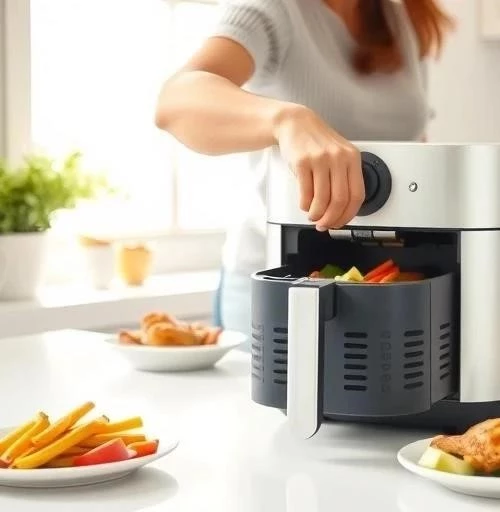
A DEXP air fryer cooks by circulating hot air around food. This can produce a browned‚ crisp surface with less oil than deep-frying‚ but it is not a “set and forget” appliance: food size‚ basket loading and the exact model all affect the result. Use the instructions for your model as the final authority. DEXP devices differ in controls‚ capacity and preset programs‚ so settings for a DAF-2208D may not match an AGR-1400 or another model.
Identify your model and prepare it
Find the model number on the appliance label‚ packaging or manual. Download or consult that model’s guide before cooking‚ especially for the maximum fill level‚ approved accessories and cleaning rules. A manual for a similar-looking air fryer is not a reliable substitute.
Place the unit on a stable‚ level‚ heat-resistant surface with open space around its air vents. Keep it away from curtains‚ water and the edge of the counter. Check that the basket‚ tray or bowl is correctly assembled and dry. Wash removable food-contact parts with warm soapy water‚ rinse and dry them; wipe the appliance body with a damp cloth. Never immerse the main unit‚ cord or plug in water.
For the first run‚ follow the manual’s directions. Some models may have a slight new-appliance smell‚ so manufacturers commonly recommend running the empty appliance briefly in a ventilated room. Do not assume a particular time or temperature: use the model’s instructions‚ and stop if you notice smoke‚ sparking or a burning-plastic smell.
Loading and starting the appliance
- Put the prepared food in the basket or on the supplied rack. Leave gaps for air to circulate. A crowded basket cooks unevenly‚ so make multiple batches rather than piling food high.
- Slide the basket or bowl fully into place. On models that require it‚ the appliance will not start unless the drawer is seated correctly.
- Switch on the unit and choose a preset if it suits the food‚ or set the temperature and cooking time manually. On touch-control models‚ select the temperature and time using the marked buttons; on other models‚ turn the dials. Symbols and button sequences vary‚ so check the manual.
- Press Start‚ if your model has a separate start control. During cooking‚ turn or shake small items such as fries halfway through. Use oven mitts: the basket‚ tray and escaping steam can be very hot.
- Check that food is cooked through before serving. If needed‚ return it for a few minutes and check again rather than adding a long cooking period all at once.
Choosing time and temperature
Presets are useful starting points‚ not guarantees. They may be calibrated for a particular portion size‚ and frozen food‚ thick cuts or a full basket can need more time. Begin with a recipe or the package directions‚ then inspect and adjust. If converting an oven recipe‚ start checking earlier than its stated finish time: the smaller cooking chamber may heat food faster‚ but results depend on the recipe and appliance.
As a broad starting guide—not a DEXP-specific program—many air-fryer recipes cook vegetables around 180–200°C‚ potato fries around 180–200°C‚ and chicken pieces around 180–200°C. Thin items usually need less time than thick ones. These ranges do not replace a recipe‚ the model manual or safe internal-temperature guidance. Use a food thermometer for meat and poultry; colour alone cannot confirm safety.
For a better result‚ dry washed vegetables before seasoning‚ use only a light coating of oil where appropriate‚ and arrange pieces in one layer when possible. A little oil can improve browning‚ but pouring oil into the appliance or filling the basket with liquid is not a substitute for a pan. Do not cook loose‚ very light ingredients that could be blown into the heating element.
Cookware‚ safety and cleaning
Use the supplied accessories or oven-safe dishes that fit without blocking airflow. Do not cover the entire basket with foil or parchment: restricted circulation can impair cooking‚ and unsecured paper may lift toward the heater. Follow your manual’s advice about liners and accessories. Keep water away from hot oil or grease‚ and never move the appliance by pulling its power cord.
When cooking is finished‚ switch off and unplug the unit if the manual directs you to do so. Set the hot basket on a heat-resistant surface and let it cool before cleaning. Remove crumbs and grease after each use; wash removable parts according to the instructions and wipe the interior gently. Avoid abrasive pads and do not scrape non-stick coatings with metal utensils. A clean appliance is not merely more pleasant to use: accumulated grease can smoke and affect later food.
Troubleshooting and good habits
- Food is pale or soft: reduce overcrowding‚ dry ingredients well‚ turn or shake them‚ and add a short cooking interval if necessary.
- Food browns unevenly: check that the basket is not overloaded and that pieces are similar in size. Turn food partway through cooking.
- There is smoke: switch off the appliance if safe‚ unplug it and let it cool. Check for excess grease‚ food residue or an unsuitable ingredient. Do not pour water into a hot unit.
- The controls do not respond: confirm the appliance is plugged in and the drawer is fully inserted. Consult the model manual rather than forcing a control or dismantling the unit.
The most dependable way to use a DEXP air fryer is to combine its model-specific manual with careful observation: start with a sensible recipe‚ avoid overfilling‚ check food before the timer ends‚ and adjust in small steps. That approach is safer and more consistent than relying on a preset as if every portion and every DEXP model were identical.
5 Comments. Оставить новый
This is a careful, useful introduction for someone using an air fryer for the first time. I especially appreciate the reminders about ventilation, keeping the unit away from water, and stopping if there is smoke or sparking.
The emphasis on checking the exact model manual is valuable because air fryer controls and limits can vary. The safety guidance is practical and helps readers avoid relying on settings meant for a different appliance.
The explanation of why an overloaded basket can cook unevenly makes the advice easy to understand. Recommending several batches instead of piling food high is a practical detail that could improve results.
The cleaning instructions are clear about the difference between removable parts and the main appliance body. The article also gives useful first-run precautions, though the supplied text appears to stop before the operating instructions are complete.
The article sensibly avoids giving one-size-fits-all times and temperatures, which is important when models differ. Consulting the appliance’s own guide is a responsible recommendation rather than guessing at settings.