
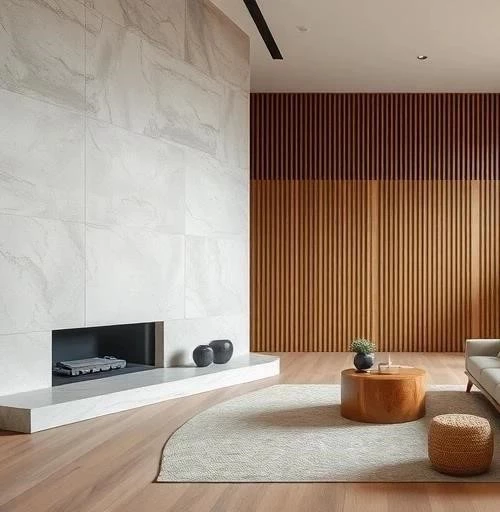
In a Japandi living room, stone is more than a beautiful surface: it gives the room a slower rhythm․ Japanese minimalism values quiet and restraint; Scandinavian style brings warmth and ease․ Together, they make natural stone in the interior feel less like a grand gesture and more like a landscape brought indoors․ Choose earthy shades and a calm color palette, then let one stone wall become the room’s quiet focal point․
Let texture soften the sound
A stone living room finish can influence living room acoustics, but stone alone will not provide sound insulation․ Hard surfaces reflect sound, extending reverberation and making voices or music seem sharper․ For echo reduction and acoustic comfort, balance the natural stone texture with sound-absorbing layers: soft furniture, heavy curtains, a living room rug and thoughtful textile elements․ This soft-surface acoustics approach tempers reflections without hiding the stone’s character․
Consider a textured accent stone wall rather than covering every surface․ Travertine in the interior brings gentle pores and a warm, matte stone surface; limestone finish feels calm and chalky․ Slate in the living room adds a darker, grounded note, while marble finish offers a brighter, more formal shimmer․ Use acoustic panels where sound needs extra help, or combine wooden panels with acoustic slats to diffuse reflections․ The goal is not silence, but a room where conversation feels close and comfortable․
Build a natural rhythm
The combination of stone and wood is a Japandi classic: pair a stone wall or fireplace surround with timber, linen and wool․ Textured stone masonry can contrast beautifully with smooth cabinetry, while a stone fireplace creates a natural anchor․ Keep the finish of walls and floors selective—perhaps light stone in the interior on the hearth, with wood underfoot—to avoid a cold, echoing effect․ A small sample of each material, viewed in daylight, can reveal whether their tones truly belong together․
Use zoning to make the room work as well as it looks: place the seating area near the fireplace, then use a rug and curtains to define its acoustic boundary․ This eco-friendly design relies on durable natural materials rather than decoration for decoration’s sake․ The balance of textures and materials is the secret to a cozy Japandi living room: stone for presence, wood for warmth, and fabric for softness․ The result is a minimalist interior with natural textures—and a quieter, more welcoming voice․
8 Comments. Оставить новый
The goal of a room where conversation feels close and comfortable is a beautiful one. This article shows how thoughtful textures can shape that feeling.
I like how this makes stone feel less like a monument and more like a quiet companion. The reminder to soften its echo with rugs and curtains is especially useful.
I appreciated the honest note that stone reflects sound rather than magically insulating a room. Good design advice should be beautiful and practical.
A helpful reminder that an accent wall can have more presence than an entire room wrapped in stone. Restraint makes the texture feel intentional.
The idea of treating a stone wall as a landscape brought indoors is lovely. It turns material choice into atmosphere, not just decoration.
This gives Japandi style a more tactile voice. The stone can be the punctuation mark, while wood and fabric write the rest of the room.
A thoughtful guide to balancing beauty with comfort. Stone may hold the room’s gaze, but linen, wool, and timber make it feel ready to live in.
The material pairings read like a calm little palette: chalky limestone, warm wood, and soft textiles. I’m inspired to test samples in daylight before choosing.