
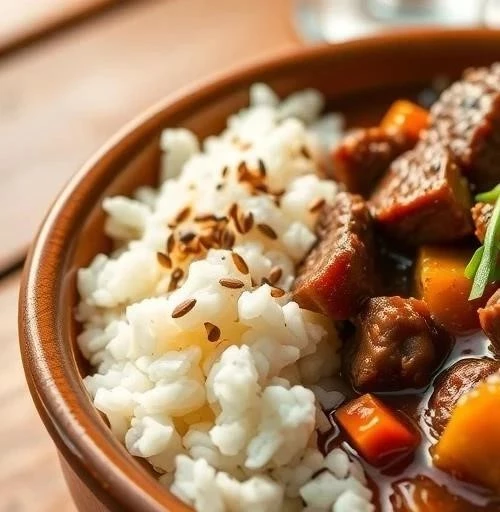
This beef stew with sesame rice brings together two qualities that make a meal worth returning to: deep, slow-cooked flavor and a satisfying contrast of textures. Tender beef and a colorful vegetable stew provide warmth, while fluffy rice and toasted sesame keep every bite lively. It is a practical beef recipe for home cooking, and the gentle Asian notes come from soy sauce, ginger and sesame oil—not from complicated techniques.
Ingredients
- 600 g beef, cut into bite-sized pieces
- 1 onion, 1 carrot and 1 bell pepper, chopped
- 2 garlic cloves, minced, and 1 teaspoon grated ginger
- 1 tablespoon sesame oil and 1 tablespoon neutral oil
- 1 tablespoon tomato paste, 2 tablespoons soy sauce and 400 ml broth
- 1 teaspoon spices, such as paprika and black pepper; a little salt
- 200 g rice, water, aromatic herbs and toasted sesame
Method
- Rinse the rice until the water runs clear. Cook it in lightly salted water according to the packet instructions. Drain if needed, then keep covered so it stays warm and fluffy. Stir in a few drops of sesame oil and reserve the toasted sesame for serving.
- Pat the beef dry; this helps it brown instead of steam. Heat the neutral oil in a heavy pan and sear the meat in batches. Crowding the pan lowers its temperature, so take the extra minute: a good browned surface builds a richer base for the stew.
- Add the onion and carrot and cook until softened. Stir in the bell pepper, garlic and ginger, then add the tomato paste and spices. Fry briefly to deepen their flavor. Pour in the soy sauce and broth, scraping the browned bits from the pan.
- Cover and simmer gently for about 90 minutes, or until the beef is tender. This slow stewing of meat is the reason not to rush the process: a steady, low heat softens the beef without drying it out. Check occasionally and add a splash of broth if the sauce becomes too thick. Finish with aromatic herbs and adjust the seasoning.
Serve and enjoy
Spoon the braised beef and vegetables over the rice, then scatter toasted sesame on top. The sauce should cling to the meat and lightly season the grains; add a little broth if you prefer it looser. This hot dish works especially well as a hearty dinner because it combines protein, vegetables and rice in one comforting plate. For a brighter finish, add fresh herbs or a squeeze of lemon.
Pan cooking makes the preparation straightforward, but the order matters: sear first, soften the vegetables, then simmer. That sequence gives the beef stew a fuller flavor than simply boiling everything together. The result is tender beef, savory sauce and aromatic rice—a balanced, filling meal that brings a little character to everyday home cooking.

8 Comments. Оставить новый
The advice to sear the beef in batches is especially useful. It explains how to build flavor rather than simply listing steps, and the slow simmer sounds well suited to making the meat tender.
Keeping the rice covered after cooking is a small but worthwhile instruction. It should help preserve the fluffy texture that contrasts nicely with the tender beef and vegetables.
The instructions give helpful reasons for the key techniques, particularly drying and browning the beef before adding liquid. That makes the method easier to follow with confidence.
I appreciate that the method builds flavor in stages, from browning the meat to briefly frying the aromatics and tomato paste. The result sounds satisfying without relying on elaborate techniques.
The recipe is clear about why low, steady heat matters for beef. That explanation helps set realistic expectations for the cooking time and should prevent the temptation to rush the simmer.
The combination of ginger, soy sauce and sesame gives the dish a recognizable direction while the tomato paste and broth keep the stew comforting. The flavor balance sounds thoughtful.
This sounds like a practical meal for a relaxed evening. The ingredients are familiar, and the option to add broth if the sauce thickens too much is a useful detail for home cooks.
I like the balance between a hearty stew and a simple rice side. The sesame oil and toasted sesame add a clear finishing touch without making the recipe seem complicated.